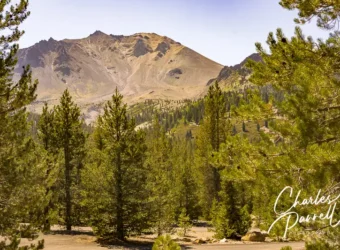
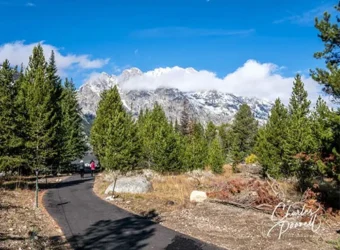
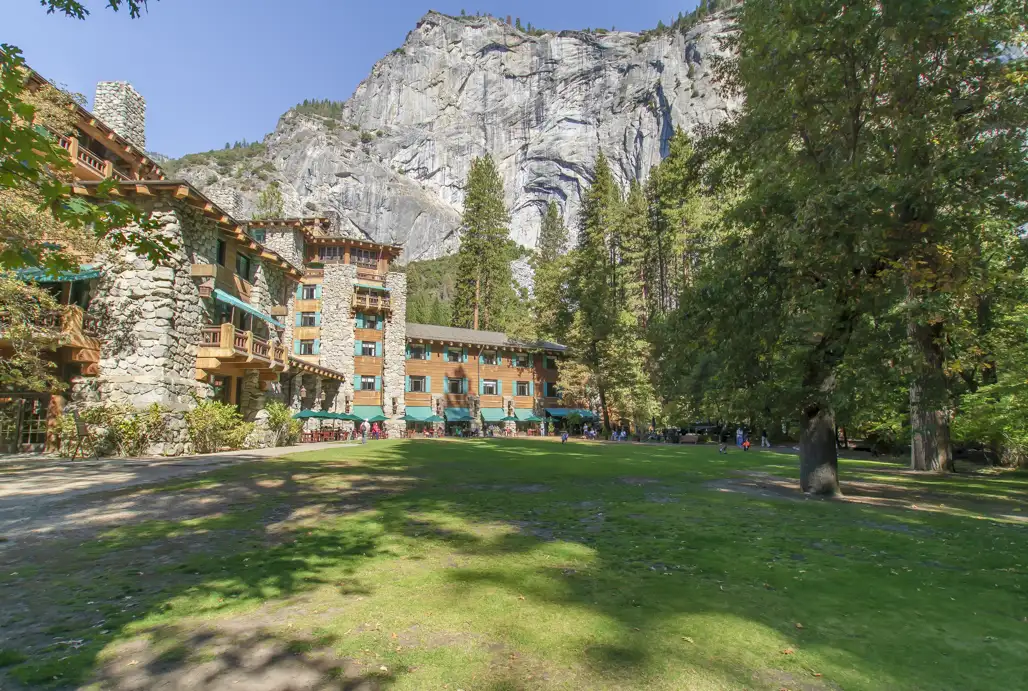
Located about three hours northeast of Sacramento, Lassen Volcanic National Park offers visitors a diverse landscape dotted with active geothermal features. Dominated by Mount Lassen which erupted in 1915, the park boasts an impressive collection of steam vents, mudpots and boiling springs, many of which are readily accessible. Add in wildflower-filled meadows, pristine mountain lakes, and the ruins of the last eruption and you have a park that truly stimulates all of the senses.
Insider Tips
Sulphur Works, which is one of the most active geothermal areas in the park, is a must-see for wheelchair-users and slow walkers. There’s accessible parking in the paved lot, with barrier-free access to a level sidewalk that leads past mudpots, steam vents and boiling springs. The crosswalk has curb-cut access, so wheelchair-users can enjoy the geothermal features on both sides of the street. All in all it’s a quarter-mile out-and-back jaunt; and although other areas of the park boast these geothermal features, this is the only accessible option.
One of the most accessible trails in the park is located in the Devastated Area, about 10 miles south of the Loomis Museum. The hard-packed dirt trail leads past the area devastated by the 1915 eruption of Mount Lassen. Interpretive plaques with audio descriptions are located along the trail, and signs of the eruption and the subsequent rebirth of the forest are evident along this easy half-mile loop. Additionally there are a few accessible picnic tables located near the trailhead, so it also makes for a nice lunch stop.
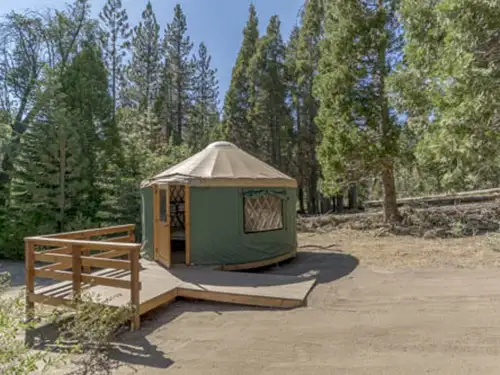
Spend the night on the shore of Manzanita Lake in one of four accessible camping cabins. All of the accessible cabins have parking in a level area with ramp access up to the front porch. They include level thresholds, wide doorways and adequate pathway access. The one-room cabins are furnished with a 19-inch high double bed, while the two room cabins include a 19-inch high double bed and three single beds. They all include a dining table with chairs, and a propane heater. Each cabin has a locking door, screened windows and a bare wood floor. Add in an accessible picnic table and a fire ring and you have everything you need to rough it in style.
Located east of the Salinas Valley between Hollister and King City, Pinnacles is California’s newest national park. Formed by an ancient volcanic eruption, the extruded magma was further sculpted over time by the wind and rain. Today these pinnacle-like geological features seem to magically rise out of the chaparral-covered ground. A healthy chunk of backcountry occupies the center section of the park, and serves as a divider between the more developed east and west sections. Wildlife – including everything from the common black-tailed dear to the endangered California condor – thrives in this rural location. And you just can’t beat the night skies, as the park is located miles away from the light pollution of the metropolitan cities.
Insider Tips
Pinnacles National Park is a prime site to spot some of the still endangered California condors. One location they seem to favor is the ridge just southeast of the campground. The best times to look for them are in the early mornings and late afternoons when they like to catch the thermals, or in the evenings when they come in to roost in the trees. And if you’d like a closer look at them, there’s an accessible viewing scope just across the street from the East Pinnacles Visitor Center.
The longest accessible trail in the park — the Prewitt Point Trail — is located on the West Side. This one-mile loop begins off the patio of the West Pinnacles Visitor Contact Station, and winds along the hillside and offers excellent mountain views. There’s about a 70-foot elevation gain along the way, with level spots to rest after each uphill stint. This hard-packed dirt trail passes the trailhead to the Jawbone Trail, then continues on to the Pinnacles Overlook, before it winds back down to the start. It’s best to take this trail in the morning though, as there’s precious little shade along the way.
Pinnacles Campground boasts 10 accessible tent cabins in loop B. They all have a ramped entry, as well as steps up to the wide front door. There’s level access over the thresholds and all of the tent cabins include two singles and a queen-sized bed, with ample room to maneuver a wheelchair inside. The solar powered units also include a fan and a light. Outside there are two Adirondack chairs, an accessible picnic table, a grill and a bear box at each site. And although the cabins contain beds with mattresses, guests must provide their own bedding.
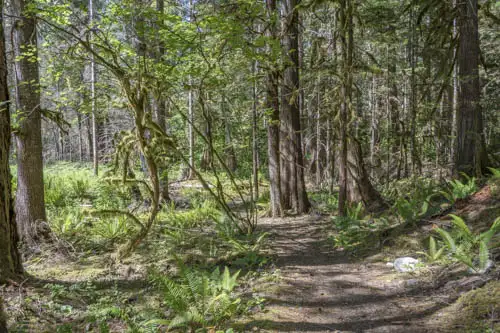
Located on Washington’s Olympic Peninsula, Olympic National Park occupies nearly one million acres filled with sub-alpine forests, wildflower-filled meadows, rainforest habitat and a rugged coastal shore. The entire park can be accessed from Highway 101, which circumnavigates the Olympic Peninsula; and each area of the park features a small visitor center or ranger station which offers exhibits on the local ecosystem and the history of the area.
Insider Tips
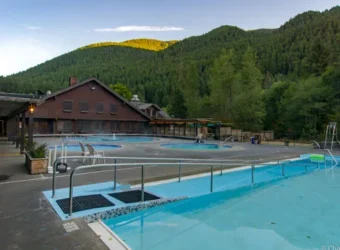
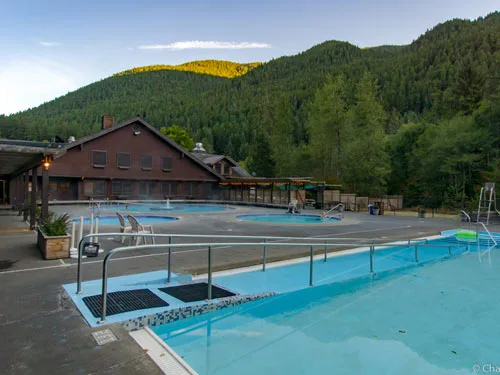
Save some time for a soak at Sol Duc Hot Springs when you visit the park. There’s ramp access to the Sol Duc Hot Springs front office, with barrier-free access to the pools in back. The mineral wading pool is reserved for children under three, but the Large Mineral Fountain Pool and the Freshwater Pool feature ramp access. There is also a portable pool lift available for these pools or for the Medium Mineral Pool, which isn’t ramped.
One of the most accessible waterfalls in the park — Madison Falls — is located on Olympic Hot Springs Road, just south of Highway 101. A .1-mile paved level trail leads from the picnic area through the forest to the base of Madison Falls. The overlook features lowered railings for optimal wheelchair viewing, as well as a bench for slow walkers.
For a very comfortable – and romantic – overnight in the park be sure and book a cabin at Kalaloch Lodge, which is located on the Pacific Coast. This remote lodge offers an accessible cabin, with a great coastal view, as well as a small restaurant and grocery store. Everything you want and need for a blissful getaway!
Nicknamed the “American Alps”, North Cascades National Park is one of the most rugged and remote national parks in the US. Filled with black bear, mountain goats and bald eagles, the park is also home to a historic hydroelectric dam. That said you just can’t beat the scenery in this northwestern gem, which ranges from jagged mountain peaks, evergreen forests and alpine meadows, to crystal-clear lakes and a collection of formidable glaciers.
Insider Tips
Don’t miss the Gorge Creek Falls Overlook, located along State Route 20, halfway between Newhalem and the Colonial Creek Campground. This unusual overlook features two grated footbridges that are located on each side of the highway, where visitors can look down and get a bird’s eye view of Gorge Creek Falls. Best of all, they are both wheelchair-accessible.
The Happy Creek Forest Walk is a nice accessible trail, although it’s easy to miss the poorly marked turnoff. Start looking for it on the right as you head east on State Route 20, just past milepost 134; and don’t feel bad if you have to make a U-turn up the road and double back. There’s level access over to the .3-mile hard-packed dirt and boardwalk trail that meanders through the fir, cedar and hemlock forest, before it crosses over the cascading waters and loops back to the trailhead. This old growth forest is also a great place to escape the midday heat when the mercury rises.
Located across from the Skagit Visitor Information Center in Newhalem, the Skagit General Store makes an interesting stop. The building dates back to 1922, when the store was established as an employee commissary for the workers on the Skagit Hydroelectric Project. Today it offers a good variety of general grocery items, snacks, sandwiches and delicious homemade Skagit fudge. It’s also the only place along the State Route 20 section of the park that offers anything to eat.
The hottest, driest and lowest point in North America, Death Valley is the largest national park in the lower 48 states. And with over three million acres of wilderness area, there’s a huge diversity in the flora and fauna throughout the park. From majestic sand dunes and salt flats, to snow capped peaks, a lush oasis and even a massive crater, there’s something for just about everyone at this remote national treasure.
Insider Tips
A stop at Badwater – the lowest point in the US — is a must do on any Death Valley itinerary. There’s boardwalk access out to the salt flats, and from there you can roll as far as you like. It’s best to hit this area in the morning though, as it can get quite hot later in the day. Additionally, don’t forget the insect repellent, as the biting flies that are common in Death Valley really like this area of the park – especially in the summer.
Many visitors flock to Zabriskie Point and Dantes View, off of Highway 190; while most folks entirely pass up the scenic 20 Mule Team Canyon Drive, which is located between the two. This 2.5-mile scenic drive winds up and down the colorful eroded badlands, and offers an off-the-beaten-track experience without having to trek through the desert for days.
Although there’s no shortage of food offerings at Furnace Creek, head on over to Timbisha Shoshone land and try something different for lunch. Just follow the signs to Timbisha Village Tacos from highway 190, between the Furnace Creek Inn and Furnace Creek Ranch. There aren’t many choices on the menu – Indian tacos, burritos, taco salad and shaved ice – but the food is tasty and the prices are reasonable. And although their hours vary, they are usually open for lunch. To-go food is also available.
Located south of the John D. Rockefeller, Jr. Memorial Parkway and north of Jackson, Wyoming, Grand Teton National Park encompasses over 310,000 acres filled with glacial lakes and bordered by the magnificent Teton Range. There’s no shortage of wildlife in the park either, and visitors commonly encounter elk and bison along the park roads. No mater where you travel in this rugged mountain park, there’s an abundance of scenic windshield views along the way. Grand Teton National Park is truly one of the great – and often overlooked — natural treasures of the American West.
Insider Tips
Although the Jenny Lake Scenic Drive is a must-do, most folks entirely miss a beautiful accessible stroll along the way. The access point is near the end of the drive, at a pullout on the right which boasts an accessible parking spot. From there, a paved service road winds a half-mile through the woods to the campground, and then continues along a .16-mile path to the ranger station. From there, you can connect to the accessible portion of the Jenny Lake Trail. As an added bonus, this route isn’t listed on any park maps, so it’s largely devoid of visitors. Plus it’s very accessible.
For a look at the most iconic structure in the park, head over to the Mormon Row Historic District. Located off of Antelope Flats Road, this historic district dates back to the 1890s when Mormon families began to establish homesteads in the area. The historic T. A Moulton Barn, which has adorned many a calendar, is located just across from the parking area. Even if you can’t walk far you, can still enjoy this historic wooden structure framed by the towering Tetons.
Colter Bay Village Cabins offers two accessible cabins, each with a roll-in shower. Cabin 458 is double the size of cabin 456, yet since both these cabins have the same bed configuration and are in the same rate category they rent for the same price. Cabin 458 is definitely a hidden treasure of a deal!
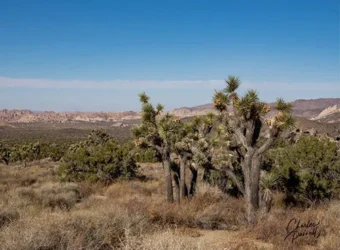
Named for the prolific yucca plant that’s found within its borders, Joshua Tree National Park features two distinct desert ecosystems within its 800,000-acre expanse. From cholla and ocotillo cactus, to unusual rock formations sculpted by the harsh desert winds and torrential rains, this Southern California national park is filled to the brim with unique plants and animals. And although the landscape may appear a bit foreboding, rest assured there are a number of wheelchair-accessible trails and attractions in this desert wonderland. Add in a nice collection of scenic drives that offer some some jaw-dropping windshield views, and you have an excellent choice for wheelchair-users and slow walkers.
Insider Tips
The Oasis of Mara, which is located near the North Entrance, offers an accessible half-mile loop trail. Honey mesquite trees dot the desert landscape, which is bordered by mountains in the distance, while a ring of California Fan Palms mark the presence of water — the oasis. Be sure to take a close look in the underbrush near the palms for some Gambel’s Quail, as it’s one of their favorite haunts.
Located on Pinto Basin Road, just a few miles south of the Park Boulevard intersection, the Cholla Cactus Garden boasts a quarter-mile trail through a mature cholla forest. There are a few ruts here and there, but for the most part, they are pretty easy to dodge. There’s also a one-inch lip up to the boardwalk sections of the trail, but most folks can manage it with a little assistance. Even if you can’t do the whole trail, you’ll be surrounded by chollas just by walking 10 feet into the forest.
The Bajada Nature Trail, which is located in the south area of the park, is the oldest accessible trail in the park. This quarter-mile trail passes through the bajada — a broad slope of alluvia material at the base of a mountain — and offers a wonderful view of the surrounding desert. There are interpretive plaques along the way, and although there are a few sandy patches here and there, all-in-all this 1998 “all access trail” has held up fairly well.
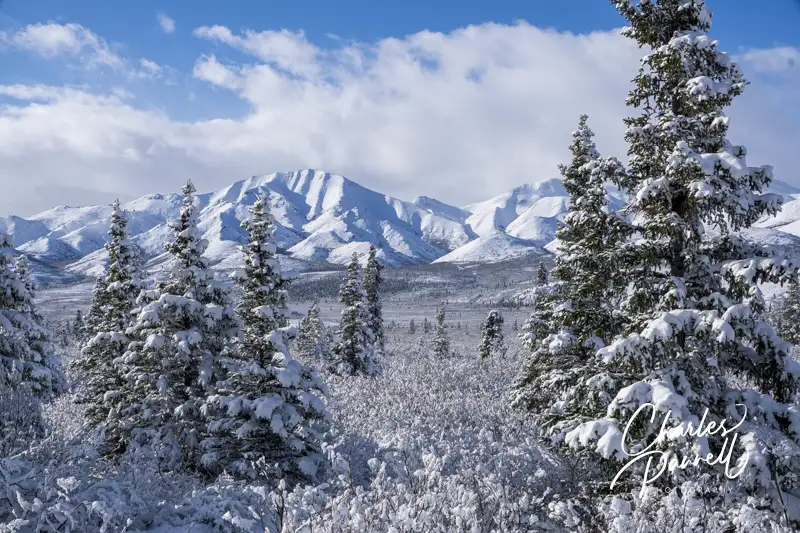
Located about 240 miles north of Anchorage and 120 miles south of Fairbanks, Denali National Park (www.nps.gov/dena/index.htm) is one of the crown jewels of the 49th State. One of Alaska’s eight national parks, Denali occupies just over six million acres of wild land bisected by a seasonal road. And if all that sounds a bit rugged for your taste, rest assured it is possible to plan a wheelchair-accessible Denali visit. Granted, scaling the 20,310 namesake mountain may not be on your to-do list; however the park also offers a nice selection of wheelchair-accessible trails, attractions and tours suitable for non-mountaineering visitors.
Getting There
A top concern about a wheelchair-accessible Denali National Park visit is actually getting to the park. Although there’s no airport there, Denali is easily accessible by rail and car. The peak visit time is from late May through early September, but that’s primarily because of the train schedules and the unpredictable weather. Still if you have a vehicle, and a bit of a sense of adventure, late spring and fall can also be beautiful times to enjoy Mother Nature’s majesty in Denali.
Alaska Railroad
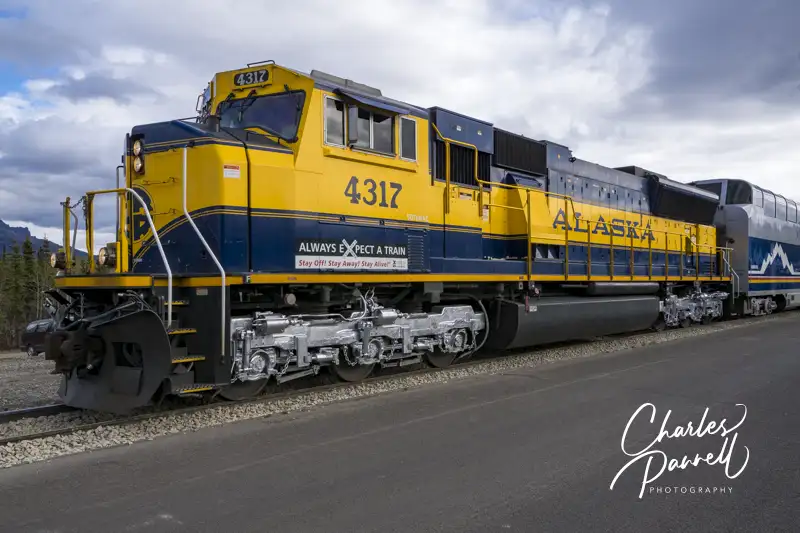
Daily train service is available from Anchorage and Fairbanks on Alaska Railroad’s (www.alaskarailroad.com) Denali Star during the summer months. The northbound train departs from Anchorage, and takes three hours to get to Denali. It stops in Wasilla and Talkeetna along the way. The southbound Fairbanks to Denali nonstop route takes four hours to get to Denali. And the good news is, all the stations include lift boarding, and the GoldStar Dome Cars feature elevator access, accessible seating and accessible lavatories downstairs. Additionally, most of the major cruise lines also offer cruise tour packages that include a Denali stop, on their own accessible railcars.
If you’d prefer to drive, accessible rental vans are available in Anchorage from Alaska Mobility (www.alaskamobility.com). After you pick up your van, just hop on The George Parks Highway (Highway 3). Also designated as a National Scenic Byway, this well traveled route runs between Fairbanks and Anchorage, and offers access to the park. The drive on this well maintained paved road is doable in a day from Anchorage; but plan for extra time as there’s no shortage of viewpoints and roadside stops along the way. And for information on places to stop en route, visit themilepost.com, an excellent Alaska road trip resource.
Wheelchair-Accessible Denali Shuttles
Accessible shuttle bus
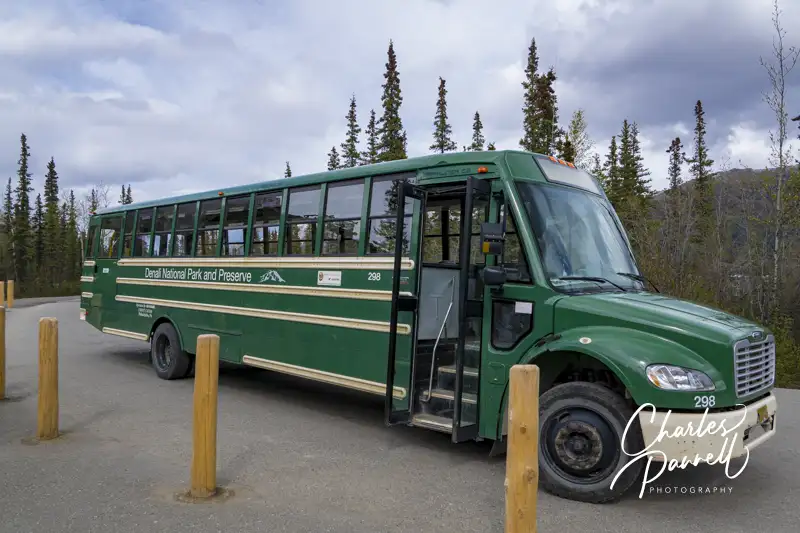
Another wheelchair-accessible Denali feature is the free accessible shuttle bus system. After the winter snow is cleared in late spring, the road into Denali National Park is open to private vehicles to the Savage River area. Transportation further into the park is only available from concessionaires, and it’s largely dependent on road conditions.
That said, the free shuttle bus system operates in the Riley River area near the park entrance, and in the Savage River area 15 miles down the road. And all of the shuttle buses and shuttle bus stops wheelchair-accessible. The Savage River Loop and the Riley Creek Loop shuttles run all day and stop at a number of trails and attractions along the way. The Sled Dog Demonstration Shuttle, which runs from the Denali Visitor Center to the sled dog kennels, departs 40 minutes prior to the demonstrations, and returns shortly after they are completed.
The shuttle bus schedule is available at www.nps.gov/dena/planyourvisit/courtesy-shuttle-buses.htm, and it’s also posted at all the shuttle stops. Printed schedules are not available in the park, and cell phone service is limited, so it’s best to save a screen shot of the schedule for planning purposes.
Riley Creek Hikes
McKinley Station Trail
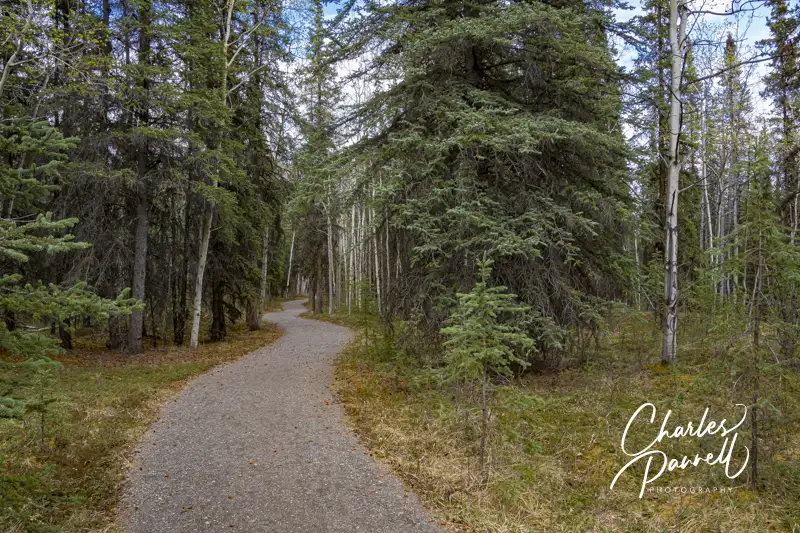
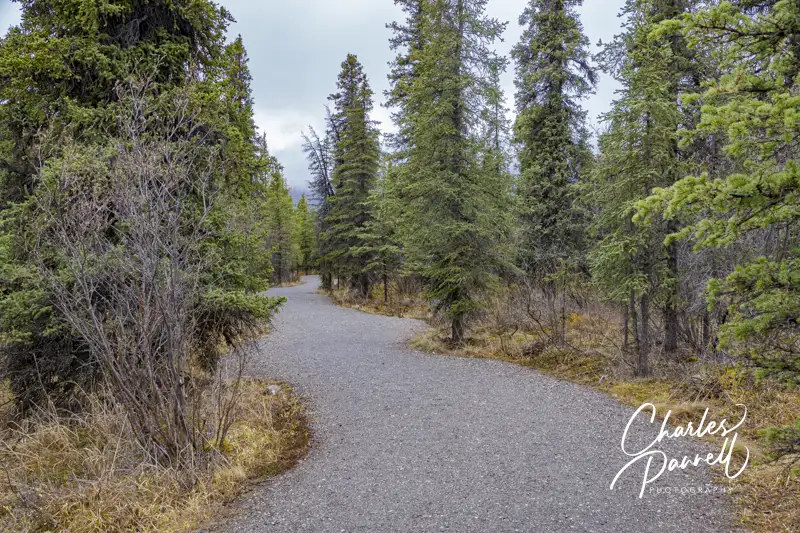
If you’d like to try a hike in the Riley Creek area, then hop on the shuttle, get off at the Riley Creek Campground and explore the McKinley Station Trail. This 1.6-mile hard-packed dirt trail runs from the campground to the visitor center. Although it’s not completely level, it offers an undulating — and accessible — route through the forest. There are also a few accessible boardwalk sections along the way. Be forewarned though — there’s a short cut to the visitor center about half-way along the route, but it goes straight uphill. Stick to the original trail for a gradual accessible path to the visitor center.
If you’d prefer a shorter walk, check out the Spruce Forest Loop, which is located right behind the visitor center. This .15-mile trail meanders through the forest, and offers visitors a good introduction to the vegetation and wildlife found in the park. It’s also very convenient, as you can just take the shuttle to the visitor center and hop on the trail from there.
Sled Dog Demonstration
Sled dog demonstration
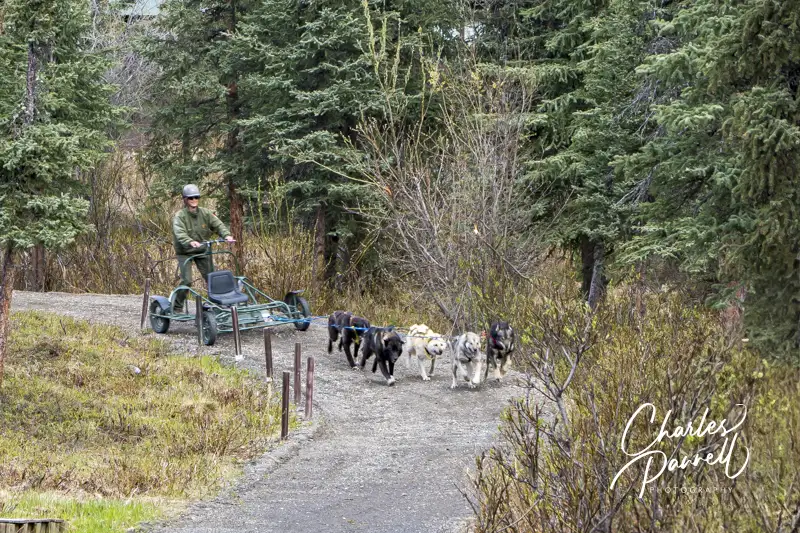
The Sled Dog Demonstration is another wheelchair-accessible Denali must-do. Although accessible shuttle service is available from the visitor center, you can also drive over to the kennels. There’s plenty of accessible parking available at the kennels; however it’s a longer jaunt from the parking lot than it is from the bus stop, so slow walkers might want to opt for the shuttle. It should also be noted that the Roadside Trail that runs from the visitor center to the kennels has a steep grade and numerous obstructions, and it’s definitely not an accessible option to get to the kennels.
The sled dog demonstration is fun to watch, as the team is hitched to a wheeled sled that speeds around a dirt track. Accessible seating for wheelchair-users and slow walkers is available in the front, so everyone is guaranteed a good view. A ranger is on hand to answer questions about the sled dogs — which are still used in the winter in the park — and folks can walk though the sled shed and around the kennels after the demonstration. Best of all, there’s no charge for this educational demonstration.
Savage River Hikes
Mountain Vista Trail
Last but not least, save some time to explore the Savage River area of the park, which offers a few accessible trails, and some great scenery. The shuttle stops at the Mountain Vista and Savage trailheads; and if Mount Denali is “out” (not obscured by cloud cover), you’ll get a great view from several vantage points along the way.
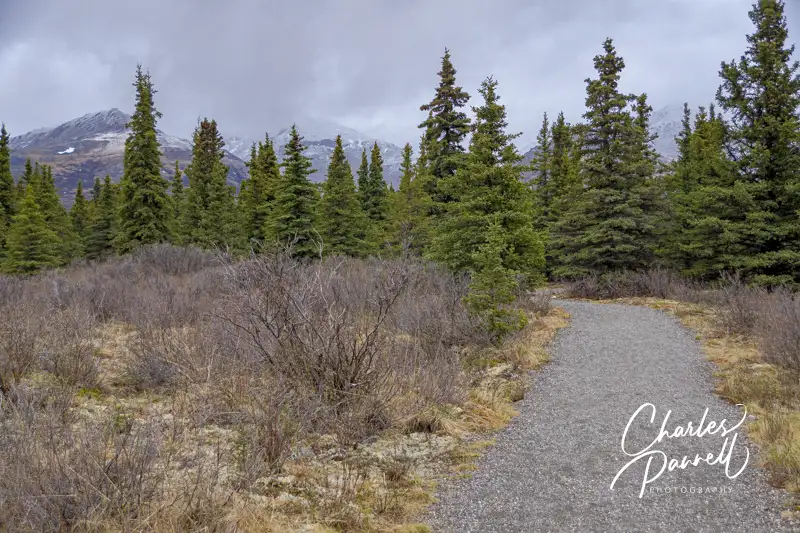
The Mountain Vista Trail is the most accessible trail in the area. This .6-mile hard-packed dirt trail begins near the shuttle stop, behind the accessible vault toilets and picnic shelter. It winds through the tundra, and offers several impressive views of the Alaska Range along the way. And you never know what wildlife you’ll run across, so keep your ryes peeled. Pack along a picnic lunch and enjoy it at one of the accessible tables at the picnic shelter, while you wait for the shuttle to Savage River.
Savage Cabin Trail
The shorter Savage Cabin Loop begins just to the left of the Savage River Campground shuttle bus stop, near the accessible vault toilet. The .3-mile loop is fairly level — with a few undulations — and is covered in compacted gravel. Midway along the route, you’ll find a historic cabin that was constructed by the Alaska Road Commission in 1924. It was originally used as a ranger cabin, but today it’s an interpretive site. Although the cabin isn’t accessible, you can still get a good glance at the inside from the doorway. And the docent programs are usually presented outside, in an accessible space. Even if there aren’t any docents at the cabin it still make a nice stop on this short jaunt.
Wheelchair-Accessible Denali Lodging Resource
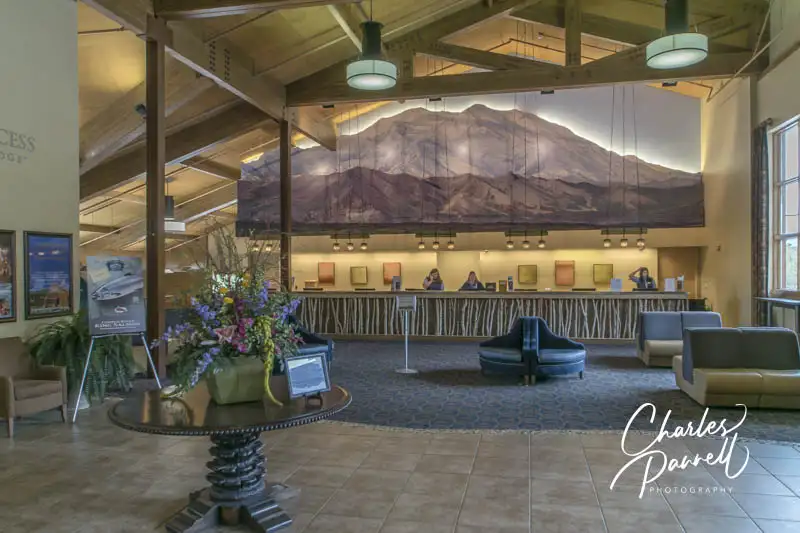
Lobby at the Denali Princess near Denali National Park
Of course, the final piece of the access puzzle in Denali National Park is lodging. There are no hotels or lodges in the park, but the campground has accessible spaces, and there are a number of accessible lodging choices nearby. Visit emerginghorizons.com/wheelchair-accessible-denali-lodging-options for more information.