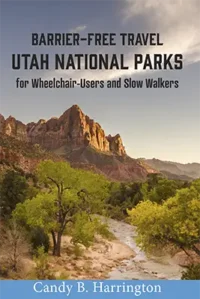
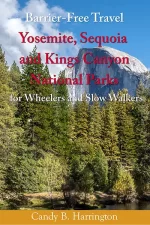
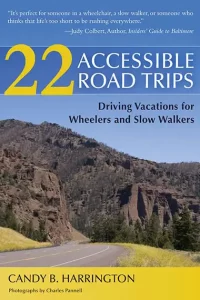
If you’re planning to visit Utah’s Mighty Five National Parks, and wondering if they are wheelchair-accessible, then pick up the newest edition of Candy B. Harrington’s Barrier-Free Travel; Utah National Parks for Wheelchair-Users and Slow Walkers. This essential resource offers essential insider tips to plan a wheelchair-accessible Utah national parks getaway.
Wheelchair-Accessible Utah National Parks
This new edition includes:
Updated information on new access additions.
Fly-drive trip planning information, including accessible van rentals.
Access details and photographs of 33 wheelchair-accessible properties, including all in-park lodging options.
Information about ranger-led tours, loaner wheelchairs and the free America the Beautiful Access Pass.
The scoop on how to nab free accessible bus tours in Bryce Canyon National Park and Zion National Park.
Detailed access information on accessible trails, viewpoints, picnic areas and attractions — in and near the parks.
Information about barrier-free camping options in all the parks.
Insider tips on where to go for the best windshield views, accessible picnic spots and sunset photos.
This inclusive title is the most recent addition to Harrington’s national park series; and although it’s written for wheelchair-users and slow walkers, stroller moms will also appreciate the access information in this guide. It will help everyone plan a truly accessible Utah national parks vacation.
Says Harrington, “I’m very excited to report that Utah National Parks not only added more accessible features since my last edition, but they also maintained the ones they already had. I’m particularly happy to see the access improvements in the Pa’rus Trail as well as the continued upkeep of the accessible Bryce Canyon Shared Use Path.”
For more information wheelchair access in Utah’s National Parks, visit emerginghorizons.com/barrier-free-travel-utah-national-parks-for-wheelchair-users-and-slow-walkers/ and order your copy of Harrington’s newest access resource today.
Barrier-Free Travel Utah National Parks for Wheelchair-users and Slow Walkers
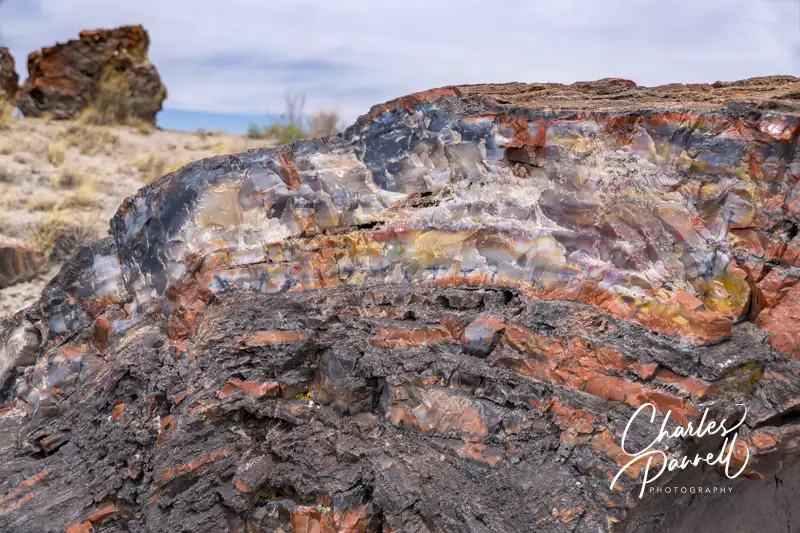
Located about an hour east of Winslow, Petrified Forest National Park (www.nps.gov/pefo/) boasts the largest concentration of petrified wood in the world. Not only does this Arizona gem offer some dazzling desert scenery, but it also includes a number of accessible trails and overlooks for wheelchair-users and slow walkers. And since the park is located right off Interstate 40, it’s an excellent addition to any Grand Canyon road trip.
The Basics
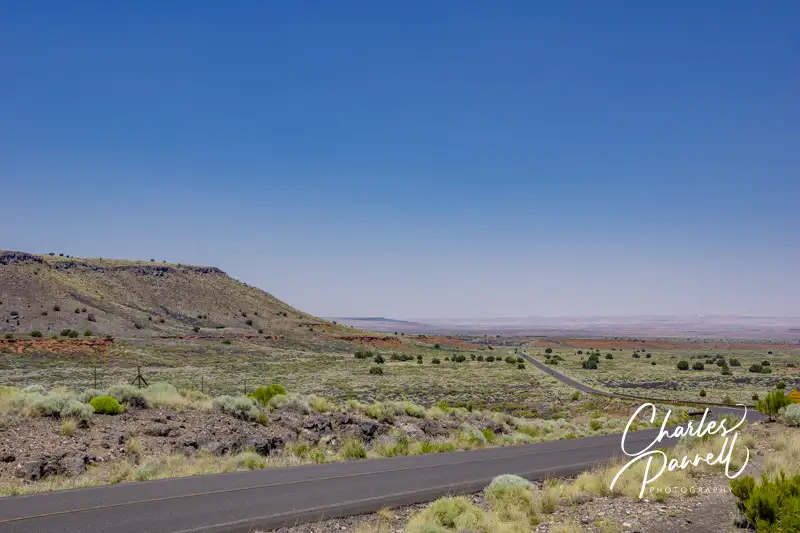
Windshield View on Highway 180
It’s easy to do a one-way jaunt through the park, stop at a few trails and viewpoints along the way, then reconnect to the highway and continue on your journey. If you’re traveling east, take the Highway 180 exit (exit 285) and use the south entrance of the park; and if you’re traveling west, take exit 311 and use the north entrance. Either way, after you’ve explored the 28-mile route, it’s simple to hop back on the interstate.
The whole drive takes an hour without any stops, and although there are some wonderful windshield views along the way, there are also some very scenic turnouts and sights that are definitely worth a stop. It should also be noted that the gates to this national park open at 8:00 a.m. and close at 5:00 p.m., so plan accordingly to avoid disappointment.
The Painted Desert Visitor Center, which is located near the north entrance, makes a good first stop in the park. Accessible parking is located near the entrance, with level access to the building. Inside there’s a small gift shop, a ranger information desk and accessible restrooms. Pick up a park map, then head out to explore this national treasure.
Views and More
View at Tawa Point
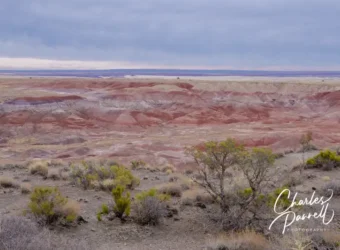
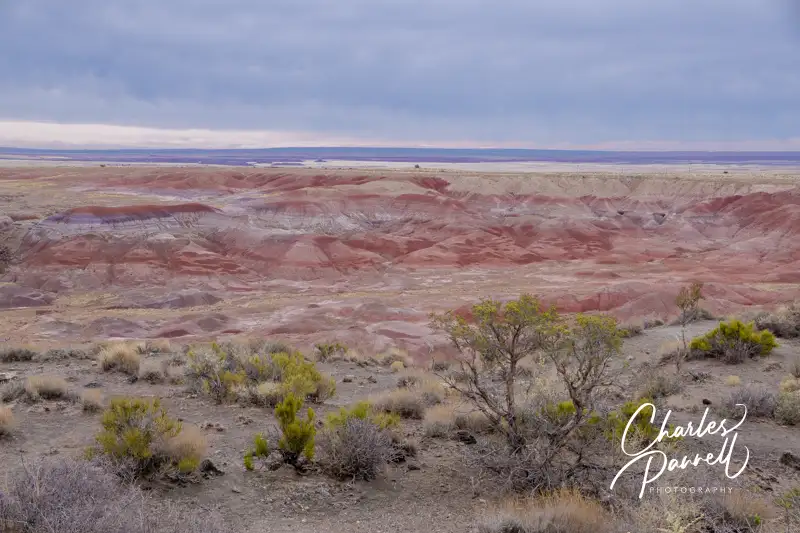
Although there are no shortage of scenic views in the Petrified Forest National Park, make sure and stop at Tawa Point, just past the north entrance, for that first expansive view of the Painted Desert. Accessible parking is located near curb-cut access up to a short .1-mile paved trail out to the viewpoint. The last 20 feet of this path is a bit steep for manual wheelchair-users; however you can get a good view of the colorful desert from any place along the trail, or even from the parking lot.
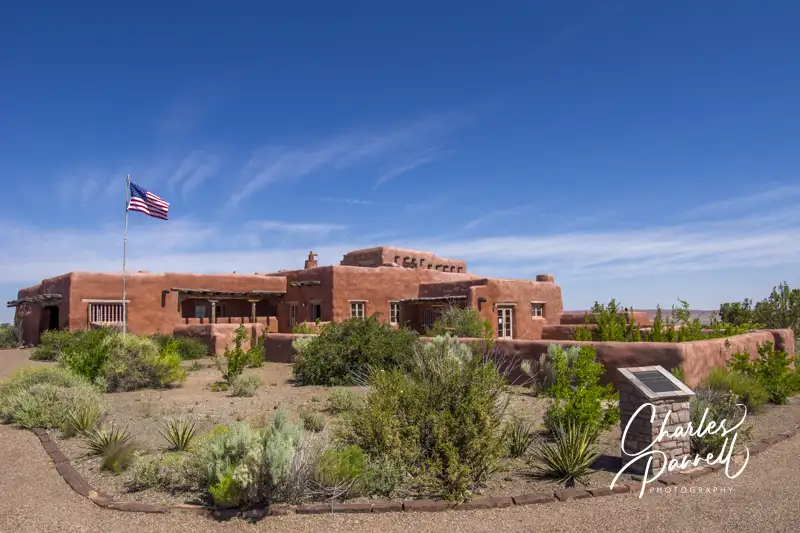
The Painted Desert Inn, which is located just a half-mile up the road, is also worth a stop. This former Harvey House features accessible parking, and level access to the building. There inn houses a number of historic exhibits, but you just can’t beat the panoramic desert view from the second floor of this split-level structure. Additionally, there’s a 300-foot paved level pathway out to nearby Kachina Point, which offers an equally impressive desert view.
Painted Desert Inn
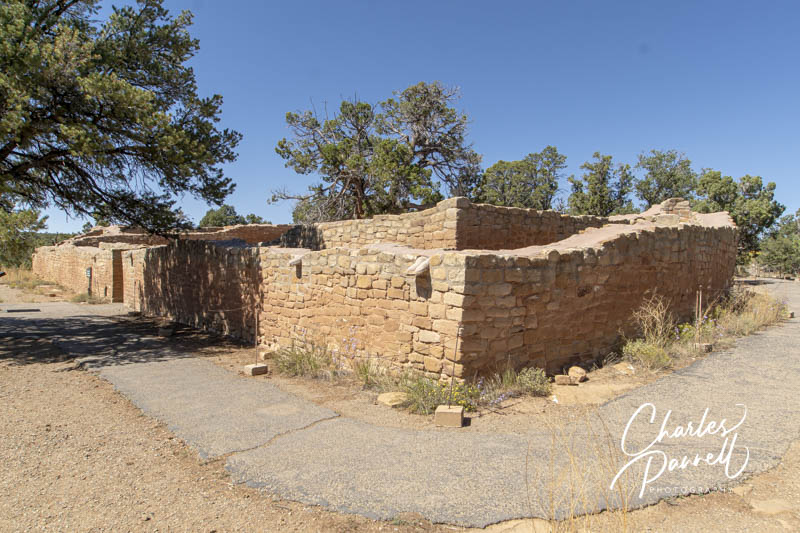
Another worthwhile stop is Puerco Pueblo, which is a few miles up the road, just past the railroad tracks. Accessible parking with curb-cut access up to the sidewalk is located near the accessible vault toilets. From there it’s about a 200-foot walk out to a .3-mile paved trail that circles the ruins of these ancestral Puebloan homes which were occupied from 1250 to 1380.
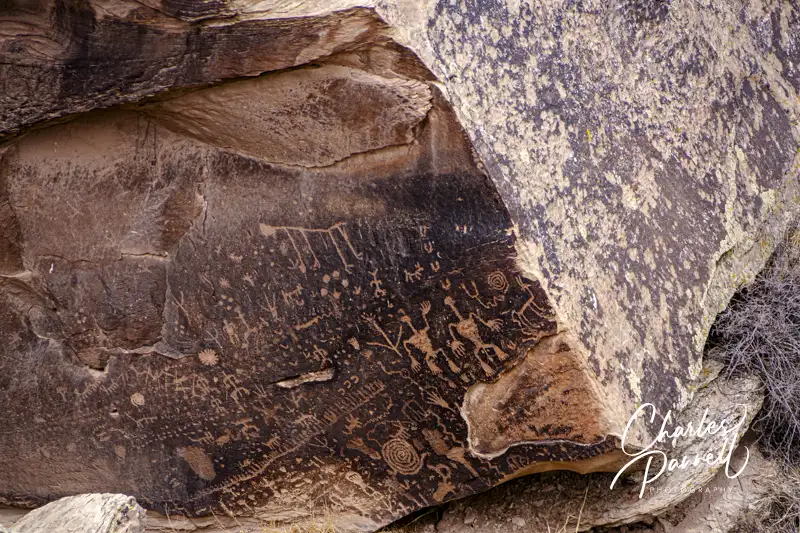
And don’t miss Newspaper Rock, which is short drive down the road. That site features a 200-foot paved level trail out to some Puebloan petroglyphs, which were created 2,000 years ago. There’s an accessible spotting scope at the overlook, which offers a good view of the 650-plus petroglyphs.
Petroglyphs on Newspaper Rock
Petrified Wood Galore
Crystal Forest
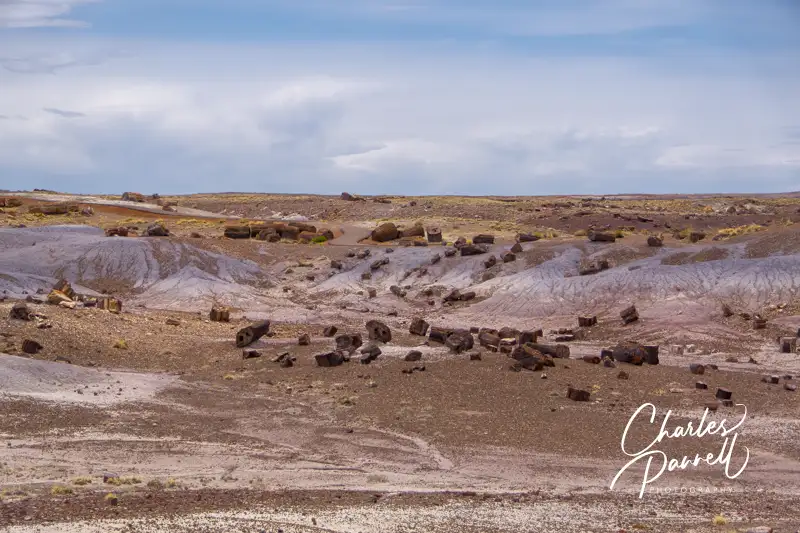
There’s also a substantial collection of petrified wood sites — such as the Crystal Forest — along the main park road. Although a paved .8-mile trail leads past the petrified logs at this site, it’s got a section or two of 20% grade, so it’s not a good choice for wheelchair-users and slow walkers. That said there is a 400-foot paved level path that leads out to the trailhead, that offers a good overview of the remains of this ancient forest.
Rainbow Forest Visitor Center
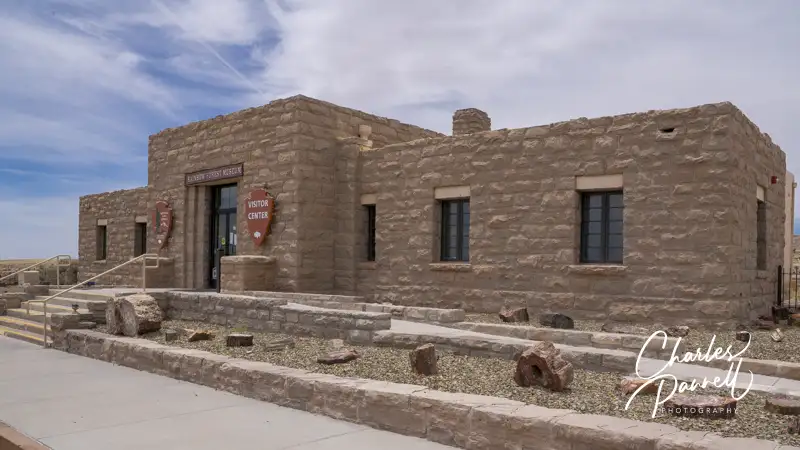
Finally, don’t miss the Rainbow Forest, which is located just north of the south entrance. There’s accessible parking near the Rainbow Forest Visitor Center, with ramp access up to the front door. Inside there’s barrier-free access to the interpretive exhibits, ranger information desk and accessible restrooms. There’s also plenty of room for wheelchairs and scooters in the theater, where a movie about the park is shown throughout the day.
The Giant Logs Trail is located out back, and although this paved trail starts out level, the access ends 600 feet later at the Mather plaque, where steps block the rest of the route. Still, there’s a good view of the site from this point, or even from the back of the visitor center.
And if you’d like to grab a bite to eat before you hit the road, stop in at the curio shop at the far end of the parking lot. There’s level access to the shop, which offers snack items, gifts and souvenirs. All in all, Petrified Forest National Park is well worth the short detour off the interstate.
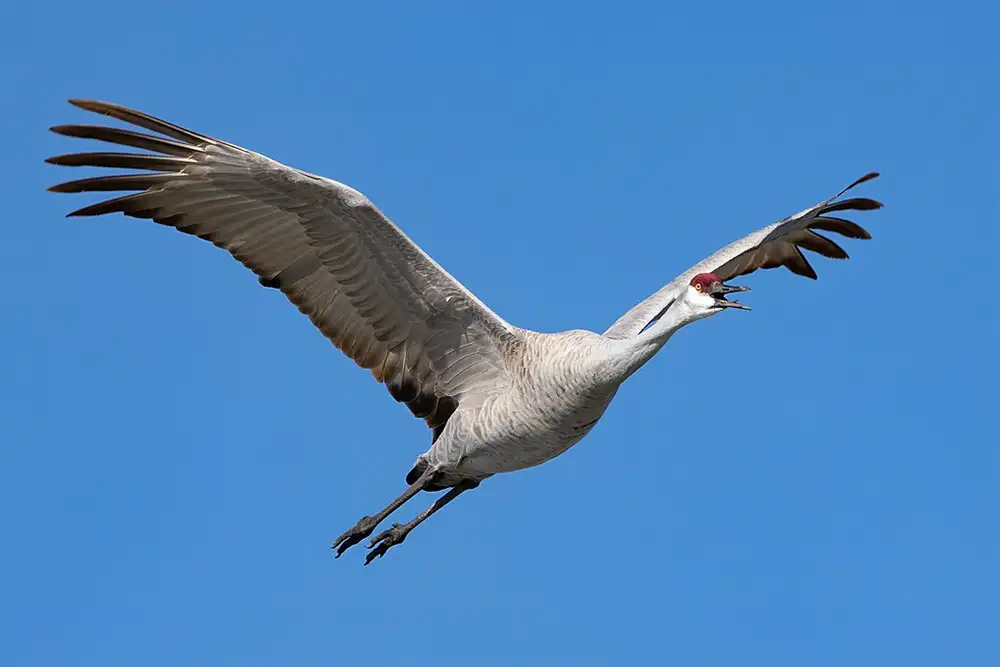
Every fall Sandhill Cranes take to the Pacific Flyway in a mass migration from their breeding grounds in Alaska and British Columbia, to travel to their wintering areas in California. And one of their favorite places to winter is in the California Delta near Lodi. In fact, from October to February masses of these majestic birds can be seen feeding in the fields that line the roads of this rural agricultural area.
And to celebrate their yearly return, the Lodi Sandhill Crane Association presents the annual Lodi Sandhill Crane Festival. Now in its 27th year, the 2025 event will run from Friday November 7 to Sunday November 9, with most of the events happening over the weekend. And the good news is, not only are the festival venues wheelchair-accessible, but there’s no admission charge to many of the festival events.
Exhibits, Presentations and More
The bulk of the festival events take place at the Hutchins Street Square Community Center in downtown Lodi. There’s barrier-free access to the building, with plenty of room for wheelchairs and scooters to maneuver. For a full schedule of the downtown exhibits and educational presentations, visit lodisandhillcrane.org.
The festival kicks off with the opening night reception on Friday evening. Attendees can nosh on hors d’oeuvres and beer and wine, while enjoying a program that includes the presentation of the Lodi Sandhill Crane Association Conservation Award. Top it off with a silent auction and for a fun opening event.
The educational presentations about the life and habits of the Sandhill Cranes are a perennial favorite of festival attendees. These weekend sessions include speakers, videos, and hands-on projects. And there’s even a few activities for kids. Additionally there’s a variety of vendors and exhibitors that focus on birding, wildlife, and of course the Sandhill Cranes. Box lunches will be for sale in the exhibit hall, while snacks will be available to purchase in the rotunda.
One of the highlights of the Lodi Sandhill Crane Festival is the Art Show. There are two divisions. One division is photography and the other is fine arts, which includes oils, watercolors, pastels and sculptures. There are two subject areas within each division — Sandhill Cranes in California and other California wildlife in their natural habitat. There are lots of creative entries, and the best part is that the winners are picked by the attendees. So be sure and stop by and vote for your favorites.
Take a Tour
A more remote aspect of the Lodi Sandhill Crane Festival are the local tours. Led by naturalist guides, these tours cover all aspects of the migratory cranes, and include a variety of landscapes. Although some tours are not a good choice for wheelchair-users and slow walkers because of the rough terrain, several other tours are doable.
At the top of the list is the Consumnes River Preserve Guided Wetlands Walk. Led by Mary DuBose, this three-hour morning walk begins at the Consumnes River Preserve Visitor Center. It includes a one-to-two-mile walk over a smooth level trail and some boardwalks. You’ll not only see the Sandhill Cranes on this walk, but also find a nice selection of ducks, geese, raptors and woodland birds along the way. There is a $20 charge for this tour.
The Crane Fly-In tours are also good choices for wheelchair-users and slow walkers. They take place at the North and South Units of the Woodbridge Ecological Preserve. These offerings include a short presentation, before the Sandhill Cranes descend en masse to their nightly resting spots. It’s quite a sight to see! Both the North and South Units have level access to a wheelchair-accessible viewing area for the program. The South Unit Tours are priced at $30, while the North Unit tours are $40. And if you’d like to get up early, there’s also a Fly-Out tour at the North Unit that’s priced at $45.
It’s also important to note that all participants in the North and South Unit tours must also posses a current hunting or fishing license, or purchase a Lands Pass at wildlife.ca.gov/licensing/lands-pass.
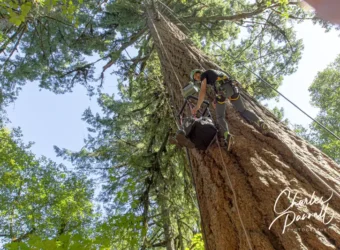
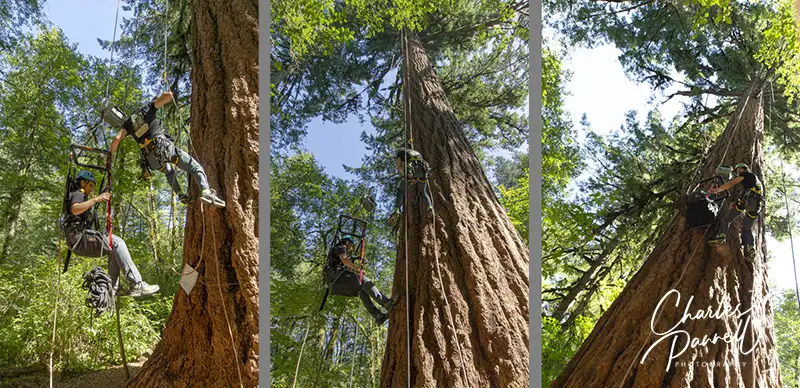
Old growth trees are magnificent. Standing near the base of one of these stately giants, you can gaze up and see its branches reach skyward; and if you’re lucky, you might also spot a forest creature frolicking among them. But have you ever wondered what the view is like from some 200 feet up one of these ancient trees? Well, thanks to Leo Fisher, founder of Tree Climbing at Silver Falls (www.treeclimbingatsilverfalls.com/adaptivetreeclimbing), everybody — including wheelchair-users, slow walkers and folks with multiple mobility issues — can experience the splendor of life in the forest canopy in Northwestern Oregon.
An Innovative Concept
Leo comes from a long line of Swiss mountaineers, so it’s no surprise that he started rock climbing at an early age and then became an arborist. After a short stint in law school, he decided he preferred the forest to the courtroom, so he set out to share his love of these stately giants with others. And that’s why he founded Tree Climbing at Silver Falls.
Make no mistake about it, Leo didn’t just hang up his shingle and proceed to offer recreational climbs in Silver Falls State Park. It took over two years of environmental reviews and extensive work with the park management before they could even begin. In the end, because Leo and his crew respect and protect the fragile old growth ecology, they were given the green light. And inclusion was on Leo’s mind from the beginning, as he wants everyone to be able to enjoy this sport.
For most climbs, wheelchair-users are transferred from their wheelchair to a full body harness, with adequate back and neck support. The ascender, which is also attached, is controlled by climbers on a phone app, and they can go up and down at their own speed. And if they lack hand control the ascender can be remotely controlled by the leader. If for whatever reason you cannot get our of your wheelchair, the team can attach a harness to your wheelchair to enable you to climb; however this rarely happens, as most folks can be accommodated in the full body harness.
Most slow walkers who don’t need extra back or neck support can usually use a standard harness and a power ascender. In the end, wheelchair-users and slow walkers can be accommodated in a variety of ways, with everything customized to each individual participant.
The Wheelchair-Accessible Tree Climbing Experience
Tree Climbing at Silver Falls State Park, Oregon
Leo’s wheelchair-accessible tree climbing experience begins on his website, with a detailed questionnaire about each climber’s abilities. It’s important to be honest about your abilities and limitations (especially the weight questions), so that the the team can craft the most optimal experience for you.
The tree used for the accessible climbs is located near the Howard Creek trailhead in Silver Falls State Park. There’s a large level parking lot nearby with an accessible porta-potty; and folks can drop off wheelchair-users and slow walkers near the trailhead close to the tree. It’s a short 50-foot walk or roll on a wide level dirt trail to the accessible climbing site.
All climbs begin with a short orientation and then a safety briefing. Then folks start with a short 10-15 foot climb, with an assistant at their side. The climbers set their own pace, and go up and down at a speed comfortable for them. Each climb is different, and the assistant is there to help out when needed, mostly for guiding climbers and getting branches out of their way. Climbers spend about two hours in the tree, and the whole experience lasts between three and four hours. And of course, there’s plenty of time for photos.
Participants are encouraged to bring along some water and snacks, and of course a sense of adventure. Additionally, if you want to get a group of friends together, there’s room for eight climbers at the accessible climbing site. So get ready to enjoy a day in a old growth giant and learn about the forest ecosystem. It’s truly a once in a lifetime experience — and it’s accessible.
Located about 20 miles southeast of Salem, Silver Falls State Park is the crown jewel of the Oregon State Park system. There’s no shortage of majestic waterfall views, and if you’d like to get a closer look, there are also several wheelchair-accessible trails to explore. Add in accessible picnic areas, restrooms, food service and visitor facilities, and you have the complete package. And if you’d like to spend a few nights, there’s a nice selection of wheelchair-accessible cabins nears the rivers edge. So pack the car and get ready to experience a cornucopia of natural beauty at Silver Falls State Park.
South Falls District
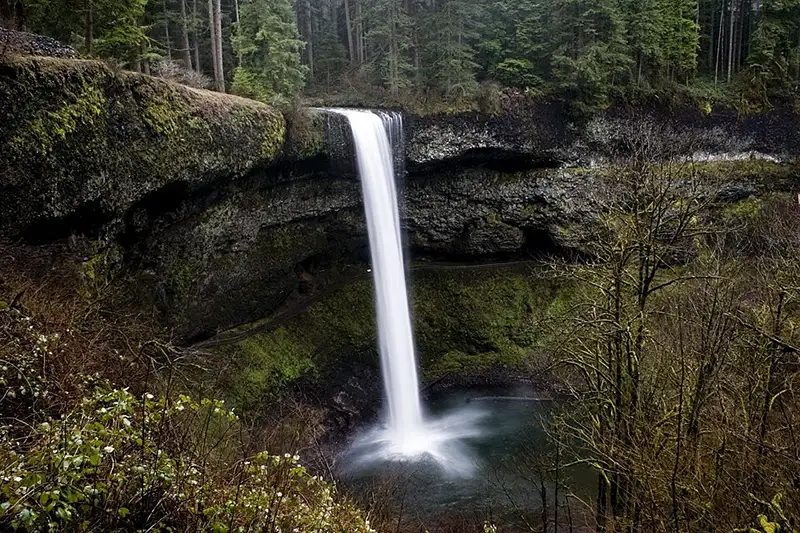
South Silver Falls
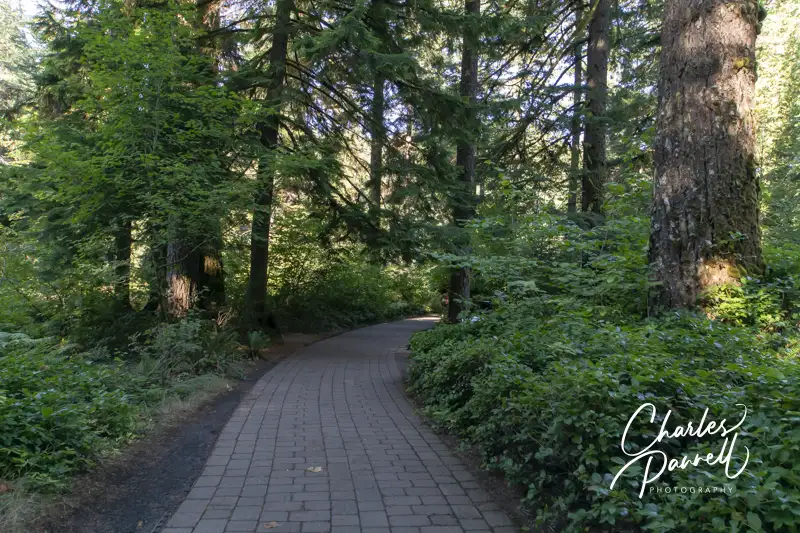
The South Falls District is the most developed area of the park. It features accessible parking in the main lot, near the accessible restrooms and the information board. A wide paved trail leads to the left past the South Falls Café to the stone circle. From there bear left and continue along past the Nature Store. Take the next left and follow the trail out to the viewpoint. This is the closest view of the South Falls, and it’s about .25 from the parking lot. There is a small wall along the rim, and depending on the season some foliage may obstruct your view, so continue along the paved trail for a better vantage point.
After you return to the main trail, take the next left for a better falls view. This viewpoint is about .3 from the parking lot, and a bit downhill, but there’s a bench and a clear view at the end.
The trail past this point is not accessible, but if you head back towards the parking lot you can see the other side of the area. This time, take the right trail from the parking area and wind around the back of the South Falls Cafe and past the second set of restrooms to the Stone Kitchen Shelter on the right. Constructed by the CCC in 1936, this community kitchen was renovated in 2005. There’s an accessible pathway that leads past a picnic area to the right and up to the kitchen, and bypasses the steps in front.
And just past the Stone Kitchen Shelter, there’s a nice accessible boardwalk that winds through the forest. The access ends after the boardwalk, but it’s still a nice little jog through the forest. And a pleasant place to have a picnic lunch.
North Falls District
The North Rim Trail in the North Canyon District
The North Canyon District also has some accessible features, as this area recently underwent a major renovation. It’s located just past the north entrance to the park, and it should not be confused with the North Falls parking area, which is located further south along the road.
There’s accessible parking in the large lot with level access to the accessible restrooms and picnic area. There are a number of tables on the grass under the trees, plus one accessible table near the parking lot with an accessible drop-off are nearby. There’s no shortage of picnic choices here.
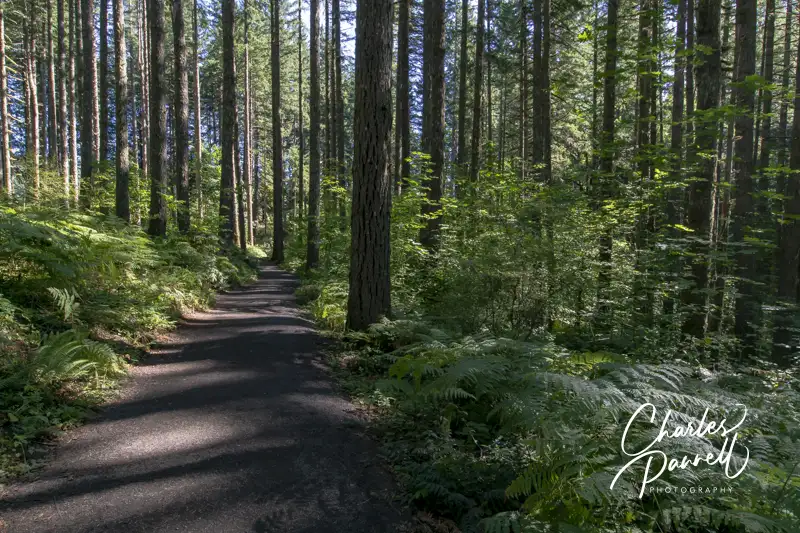
The North Rim Trail begins just to the left of the restrooms. This wide hard-packed dirt trail is covered with crushed rock in the beginning, and then transitions to a dirt trail. It winds through the forest and passes the North Canyon Nature Play Area, where kids can play on nature-themed play equipment. There’s also another picnic area along the route, which is in a level dirt area and has room at the end of the tables for wheelchairs. It’s a more secluded option than the main picnic area.
The trail continues along through the forest, crosses a bridge and has a minimal elevation gain. At about the .6-mile point, there’s an accessible viewpoint with an interpretive plaque and a nice view of the North Falls. After that the trail loses its access, as there are steps, ruts, and elevation gains. Still it makes for a nice 1.2-mile out-and-back hike through the forest, and it offers a great view at the end.
A Taste of Mother Nature
South Falls Trail
The South Falls Campground also boasts a doable trail for many folks. You can access the trail in two places — near the campground entrance and campsite 2, or near the amphitheater and campsite 41. The entrance near campsite 2 has a bridge with about a three-inch step, but there is also an alternate entrance from the campground road.
The whole trail is about 1.25 miles long, but only the end sections are doable, as the middle has narrow pathways, rocks and other obstacles, steep sections and some overgrown foliage. From each entrance the trail is doable for about .4 mile. These sections boast a wide trail in good repair, that meanders along a stream and through the forest with a minimal elevation gain. It’s a good trail for birders, as there’s no shortage of wildlife along the way. Best bet is to take the trail as far as you can manage, and then double back. It’s a beautiful taste of nature.
And if you’d like to spend the night in the campground, accessible campsites 58, 60, 86 and 91 feature a paved driveway, a raised grill, an accessible picnic table and are near the accessible restrooms. As an added bonus, campsite 91 also has a covered picnic table. If you want to bring your rig, campsites 2, 3 and 4 are accessible sites with power. To be honest, this is a pretty level campground and most of the campsites are doable for wheelchair-users — the big difference is the distance from the bathrooms.
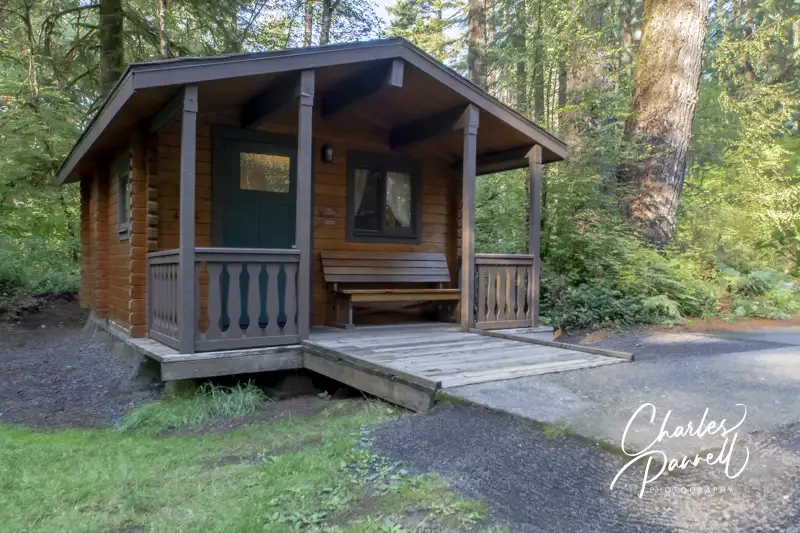
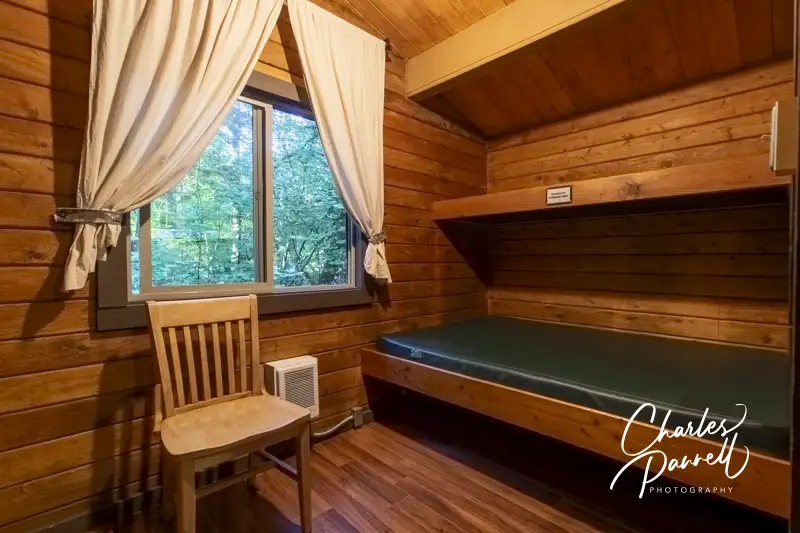
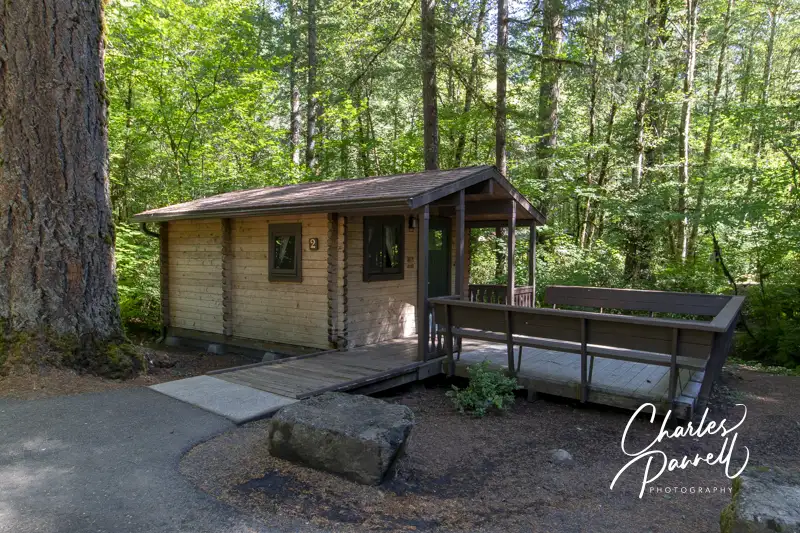
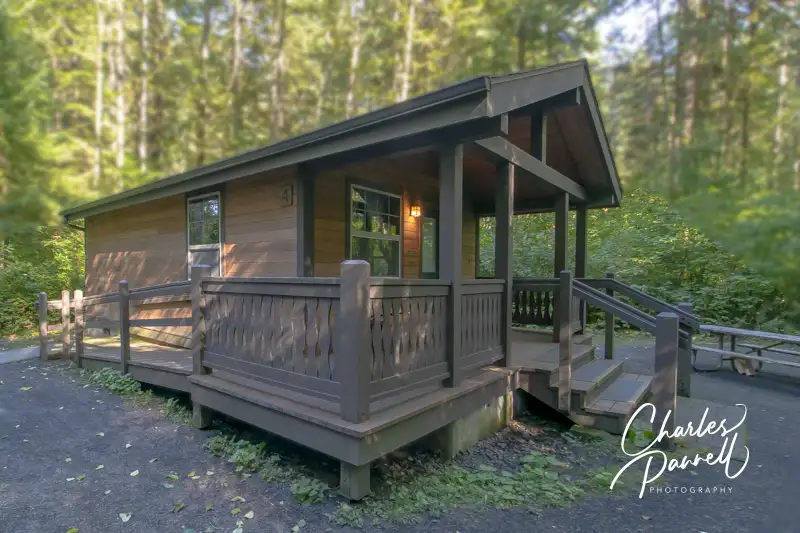
If you want to overnight in the park, but don’t really want to pitch a tent, then consider one of these wheelchair-accessible camping cabins. Located in the cabin village, Cabin 1 is the most private. It features a wide paved driveway and ramped access up to the front porch.
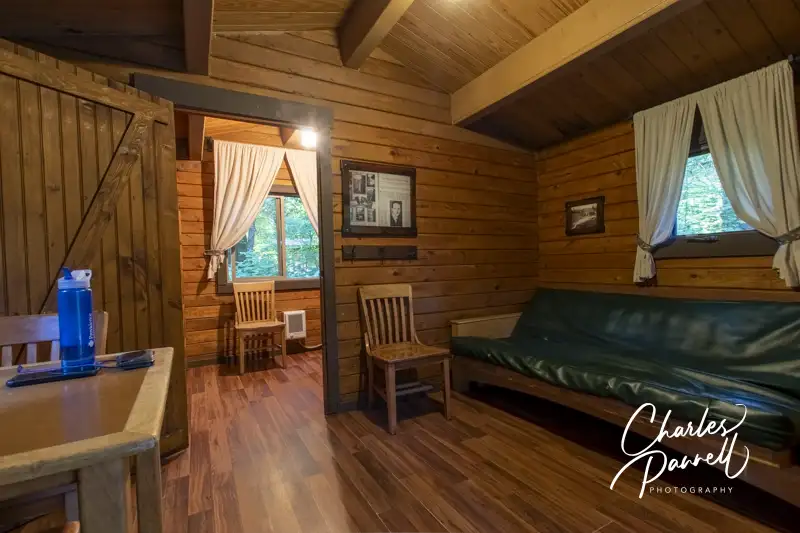
This two-room cabin features electricity, lights, a heater, and plenty of room to maneuver a wheelchair. The front room is furnished with a table with four chairs and a 19-inch high futon; while the other room includes a bunk bed (20-inch high bottom bunk) and a 24-inch high double bed. And outside there’s an accessible picnic table, a raised grill and plenty of room to roll around the level site. This cabin can sleep six, and does not allow pets.
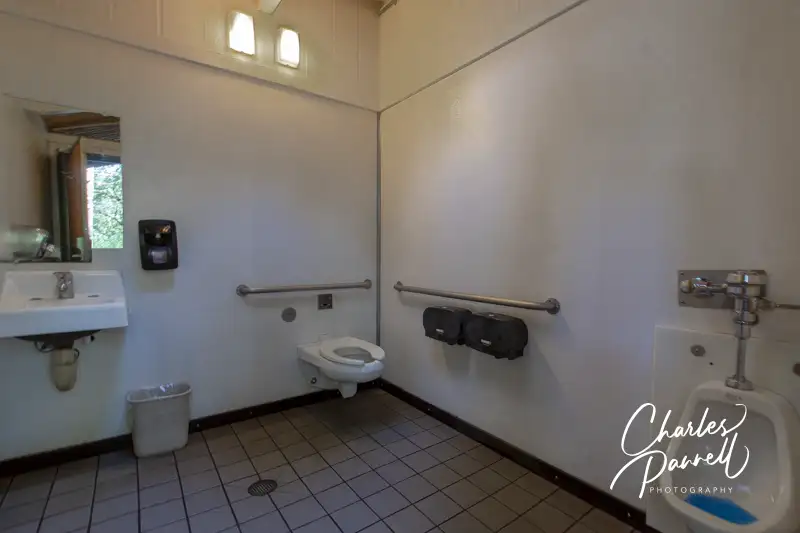
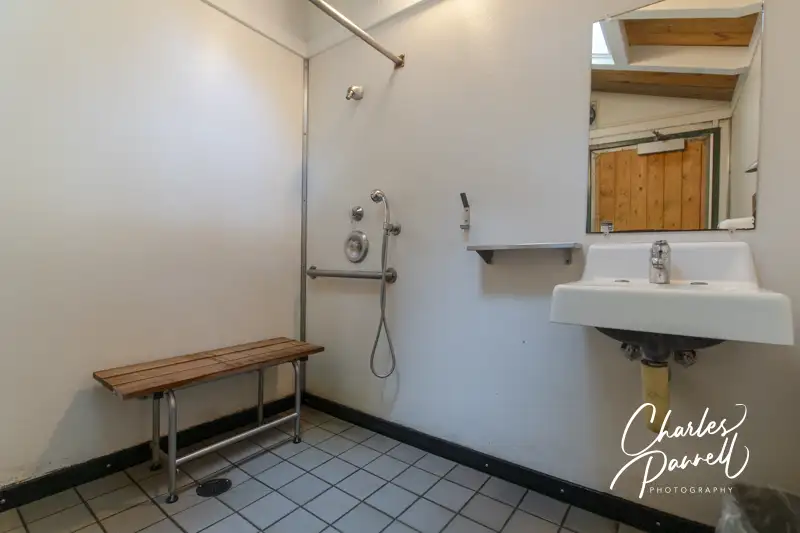
The shower house is about 120 feet away, and it includes a private room with a roll-in shower with grab bars, a fold down shower seat and a hand-held showerhead. It also has a small changing area and a roll-under sink with a lowered mirror. The bathroom is next door and includes a toilet with grab bars on the back and left walls (as seated), a urinal and a roll-under sink.
Cabin 1
Inside Cabin 1
Bedroom in Cabin 1
Toilet and sink in Showerhouse
Shower Room in Showerhouse
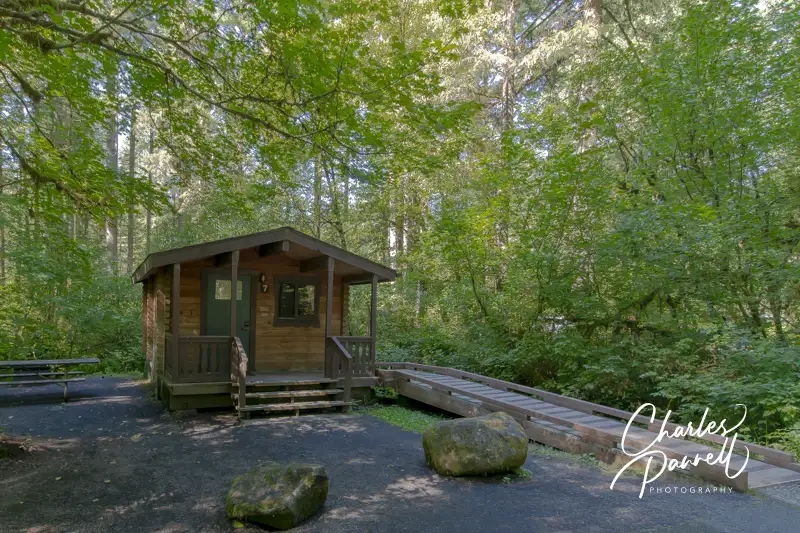
Cabins 3,4 and 7 are also accessible choices in the cabin village. They have the same access features as cabin 1, and they all sleep six and don’t allow pets. Cabin 3 has a large accessible deck, cabin 4 has a side ramp and a large porch, and cabin 7 is the closest to the bathroom.
Additionally, there’s an accessible cabin in the campground (19) which sleeps four people and accepts pets. It’s not as private as those in the cabin village but it’s still a nice accessible place to overnight in Silver Falls State Park.
Cabin 2
Cabin 4
Cabin 7
Barrier-Free Travel California National Park Road Trips for Wheelchair-Users and Slow Walkers
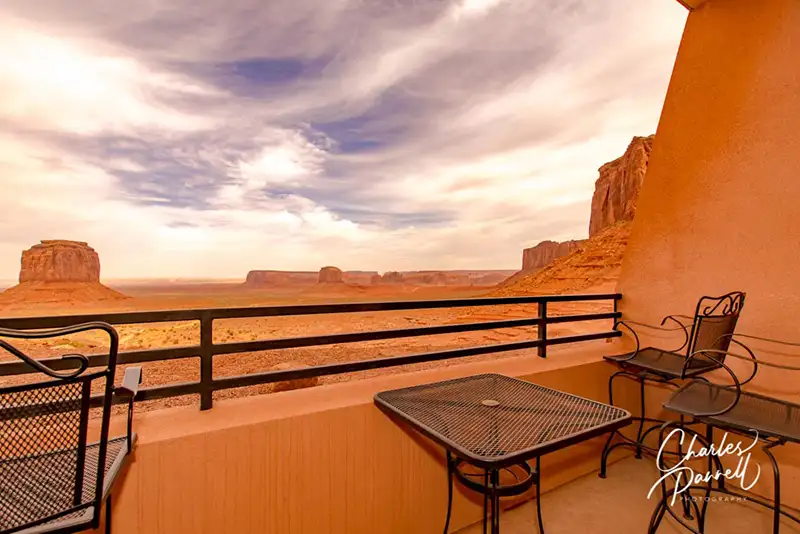
View from Room 103 at the View Hotel – Typical of all Rooms
Monument Valley Tribal Park (navajonationparks.org/tribal-parks/monument-valley/) is a must-stop on any Southwestern road trip. Located on the Arizona-Utah border, this chunk of Navajo land boasts an impressive collection of sandstone formations towering as high as 1,000 feet above the rich red desert. And there’s no better place to stay in Monument Valley than at The View Hotel (monumentvalleyview.com). Not only does this property have a spacious wheelchair-accessible guest room, but it also offers panoramic desert views from private balconies.
Stay a Spell
Located off scenic Highway 163 at the end of Monument Valley Road, The View Hotel is pretty hard to miss, as there aren’t many structures in the area. And that’s also part of its beauty – isolation.
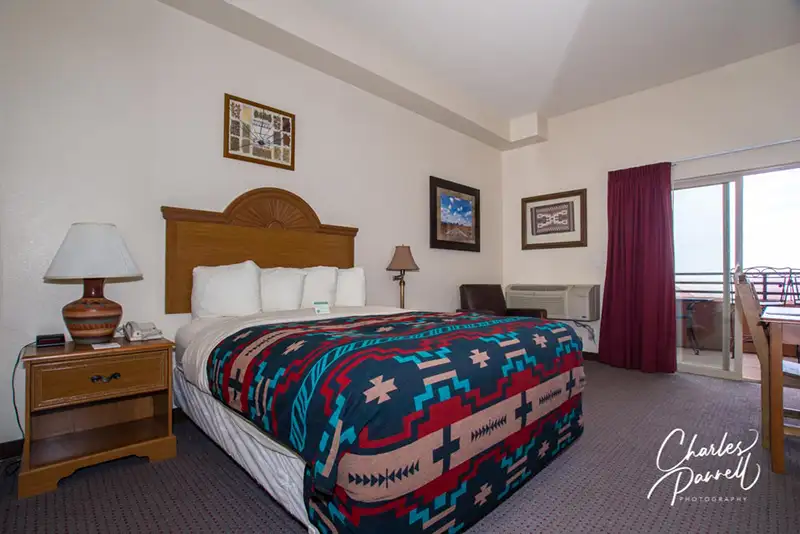
There’s plenty of accessible parking in front of the property, with level access to the lobby. Room 103, which features wide doorways, a lowered peephole and lever handles, is located just around the corner. It’s furnished with a 28-inch high king-sized bed, with wheelchair access on both sides. An easy chair, desk, refrigerator, microwave and a chest of drawers round out the furnishings.
Room 103 at the View Hotel
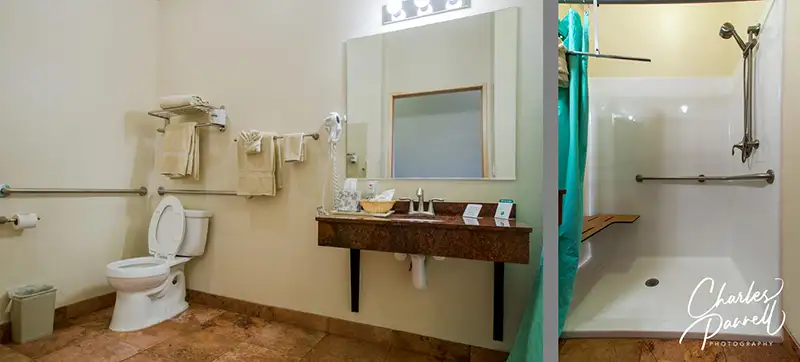
The bathroom is equipped with a roll-in shower with a built-in shower bench, grab bars and a hand-held showerhead. There is a slight one-inch lip on the shower threshold, but most people won’t have any problems with that. And with the full five-foot turning radius in the bathroom, there’s plenty of room to navigate even the largest wheelchair. The toilet blocks the transfer space to the shower bench, but if you can manage the slight shower lip on the opposite end, it shouldn’t be a problem.
Bathroom in Room 103
And then there’s the view from the balcony. It’s the perfect spot to enjoy a sunset.
There is good access throughout the public areas of the property as well, with elevator access to The View Restaurant and The Trading Post gift shop on the second floor. There’s also a loaner wheelchair available at the front desk.
Explore Monument Valley
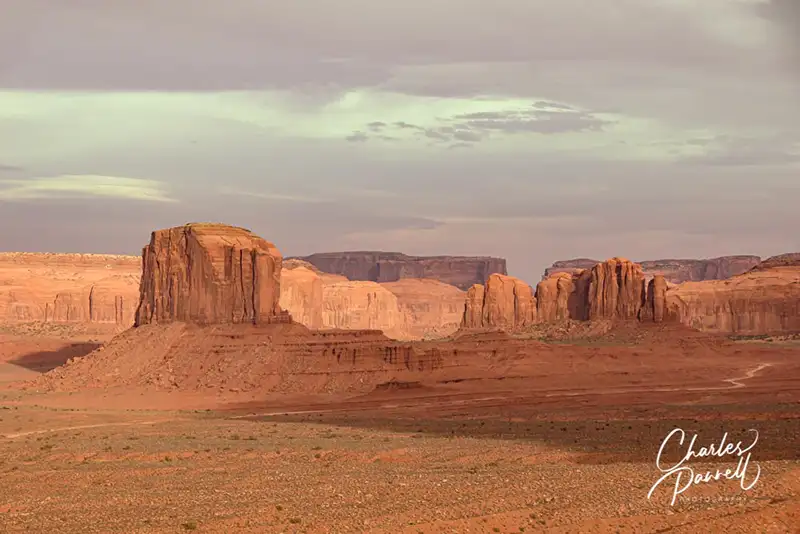
Monument Valley
Known as “the place where the earth meets the sky”, there’s no shortage of scenic spots to enjoy in Monument Valley. The best place to begin your visit is at the Welcome Center and Navajo Market, which are located near the park entrance on Monument Valley Road.
Accessible parking is available in front of the Welcome Center, with level access up to the front door. Inside, there are interpretive exhibits about the history of the area, and about the many films and commercials that were made there. There’s barrier-free access throughout the building, and to the terrace out back, which offers a panoramic view of the Mitten Buttes and Merrick Butte. As you survey the landscape, you’ll begin to understand why so many westerns were filmed there. Next door there’s also accessible parking near the Navajo Market, which features a variety of local vendors, and boasts everything from artwork and jewelry, to baskets and even wood carvings. There is level access to many of the shops, and although some are a bit small, most vendors will happily bring items out to you.
Don’t miss the scenic 17-mile drive through Monument Valley. The unpaved and bumpy road begins near the hotel; and although four-wheel-drive isn’t required, it’s not advised for low clearance vehicles. Make sure and plan an adequate amount of time to complete the drive though, as you you can only go 5 mph. It’s also best to avoid the drive in the rain.
Finally, it’s important to remember that Monument Valley is on Navajo land, so national park passes are not valid there. There is an entrance fee to drive over the land, even if you are a hotel guest.
Barrier-Free Travel Utah National Parks for Wheelchair-users and Slow Walkers
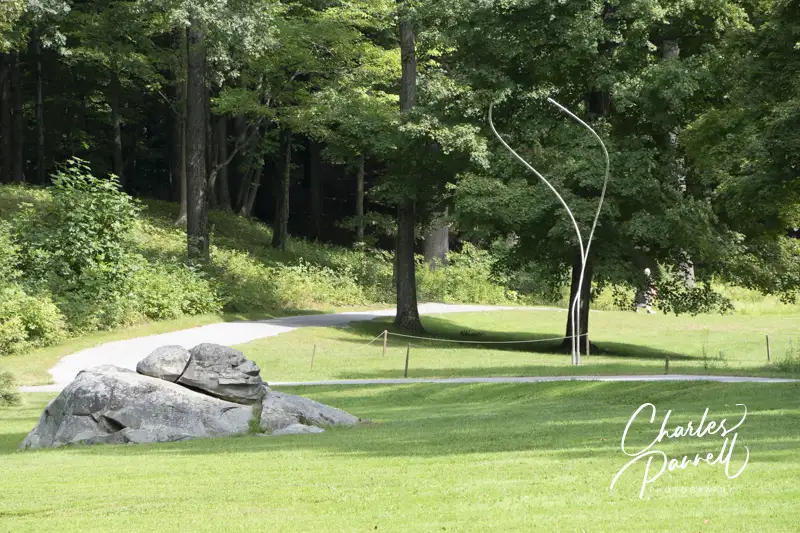
Located in the Hudson Valley three miles from Cornwall, Storm King Art Center (stormking.org) isn’t your average art installation. For starters it’s located on a 500-acre parcel dotted with meadows, ponds, hills and forests, that offer a taste of the natural beauty and diversity of the area. Add in over 100 small-scale and larger-than-life sculptures in a variety of mediums, and you have one of the region’s largest — and most diverse — outdoor sculpture parks. And although there are a few hills and rocky patches in certain parts of the landscape, Storm King Art Center is still an excellent choice for wheelchair-users and slow walkers.
Access with a Capital A
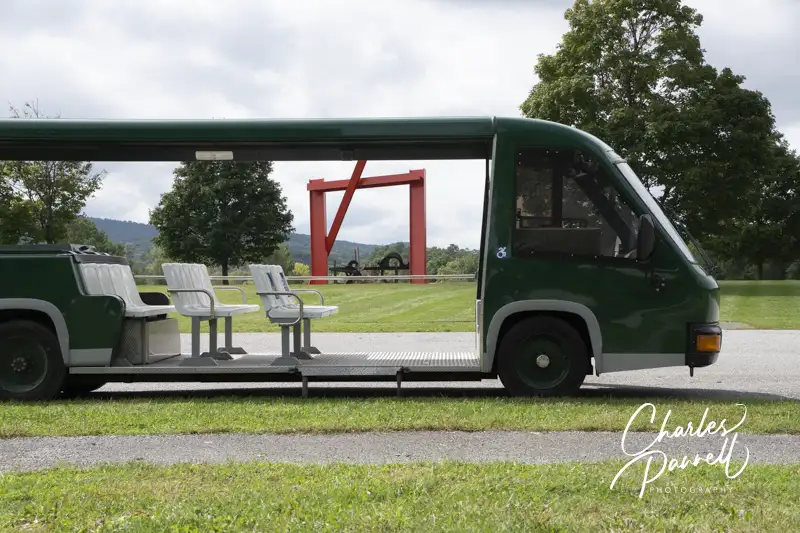
Storm King Art Center Tram
Wheelchair access is first-rate at the Storm King Art Center, starting with their large parking area. There’s accessible parking with level access over to the outdoor lobby, which features accessible restrooms, visitor information and ticketing windows. From there, you have several choices.
The easiest way to explore the park is to hop on the wheelchair-accessible tram. There’s ramp access to the tram, and you can stay in your own wheelchair or transfer to a bench seat. The tram stops at all the major areas of the park, and it’ a great option for slow walkers too.
Alternatively, you can walk over to Museum Hill, the focal point of the park. It’s a .4-mile level walk through the South Fields to the elevator which goes up to Museum Hill. As an added bonus, you can check out some of the sculptures on your stroll through the South Fields.
Although the bulk of the park is flat and easy to navigate in a wheelchair, there are some steep and rocky areas. The free visitor map is an excellent resource, as it points out all the paved pathways, as well as the steep areas, uneven paths and stairs. The park also operates an accessible cart service to help visitors navigate over areas with inaccessible terrain. For more information or to reserve a ride, call (845) 534-3115.
Explore the Grounds
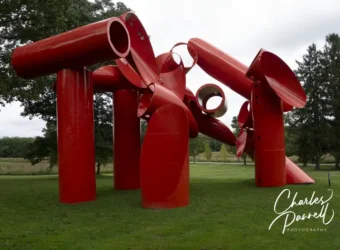
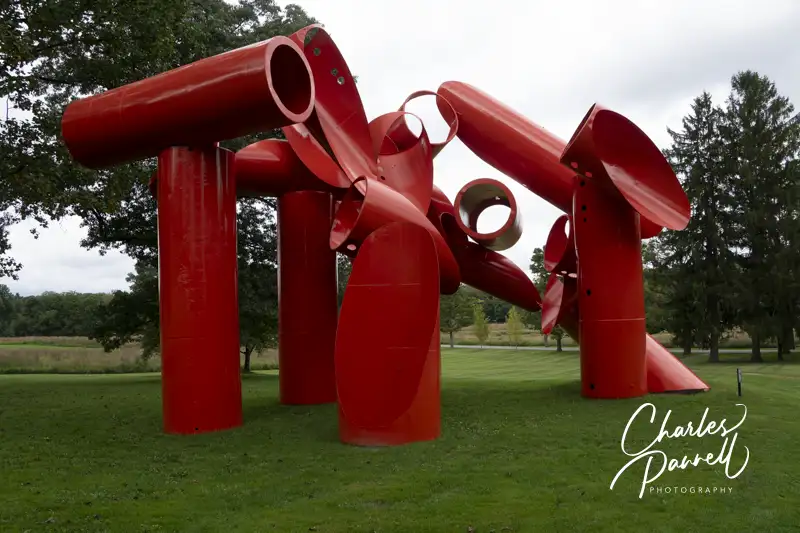
Iliad by Alexander Liberman
The grounds are filled with varied landscapes, and although there are hills here and there, you can also use the accessible tram to bypass them. The best bet is to start with Museum Hill. There’s ramp access to the Museum and ample room to maneuver a wheelchair through the galleries, which offer rotating exhibits. There is a step down to one of the galleries, but it’s also accessible from outside. And if you’re a slow walker, you might want to pick up one of the loaner wheelchairs at the Museum Store.
Museum Hill is fairly level, and it’s dotted with abstract cubes, tubes, triangles and a variety of other shapes. Two favorite pieces are also located on Museum Hill — City on the High Mountain, by Louise Nelson and Dwellings by Charles Simonds. Both of these pieces are located near the Museum, so they’re relatively easy to find.
The North Woods, which is located near Museum Hill, is one of the least accessible areas in the park. Although there are some fairly level paths through the lower part, the upper areas are rocky and steep. Still there’s plenty to see in the lower areas, which are located near the tram stop.
New pieces are continually added to the collection at Storm King Art Center, and sometimes there are also special exhibitions. And don’t miss the four Alexander Calder sculptures! Take some time to explore all the areas of the park, and if you get tired, catch the accessible tram and head back to your car. Alternatively you can use the tram as a tour vehicle to see the whole park, as it offers a good look at many of the sculptures along the route.
Grab a Bite to Eat
If you’d like to take a break and grab a bite to eat, stop in at the Storm King Café, which is located near the parking lot in the North Woods. The tram stops near the café, and there’s level access over to the entrance, and plenty of room to maneuver a wheelchair inside. Offerings include a selection of sandwiches, salads, cookies, snacks and soft drinks.
If you’d prefer to pack along your own lunch, there are plenty of places to picnic on the grounds. Management welcomes guests to bring in their own food, but no cooking is allowed in the park. Accessible picnic tables are available near the parking area, or you can bring a blanket and and enjoy your lunch anywhere on the grounds, except for Museum Hill. Pick a spot with a view, and enjoy the sculptures during your lunch break.
It’s also important to note that peak times at the Storm King Art Center are on weekends in September and October. If you don’t like crowds, it’s best to avoid those times. And no matter when you visit, it’s a still good idea to arrive early. That way you’ll have a more serene and crowd-free experience in this beautiful outdoor space.
Barrier-Free Travel the Grand Canyon for Wheelers and Slow Walkers
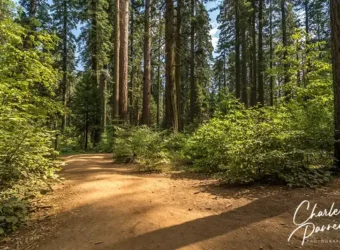
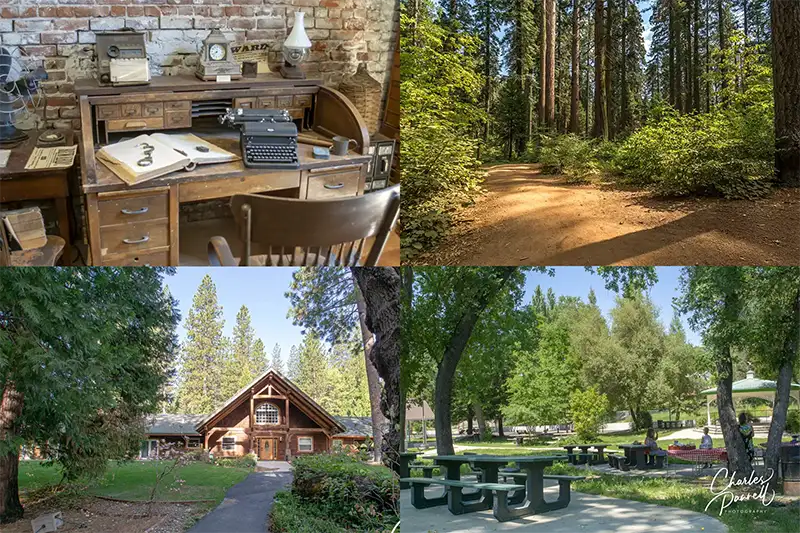
From historic museums to wine tasting, and even a grove of giant sequoias, there’s a definite diversity in California’s Calaveras County. And if you’d like to spend a night or two, there’s also a good selection of comfortable inns and lodges. The good news is, many of the lodgings, attractions and trails are excellent choices for slow walkers and wheelchair-users. So pack your suitcase, gas up the car and check out this Calaveras County Wheelchair Travel Guide for a fun weekend in the California Gold Country.
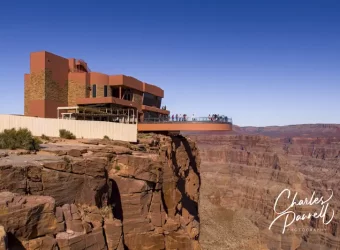
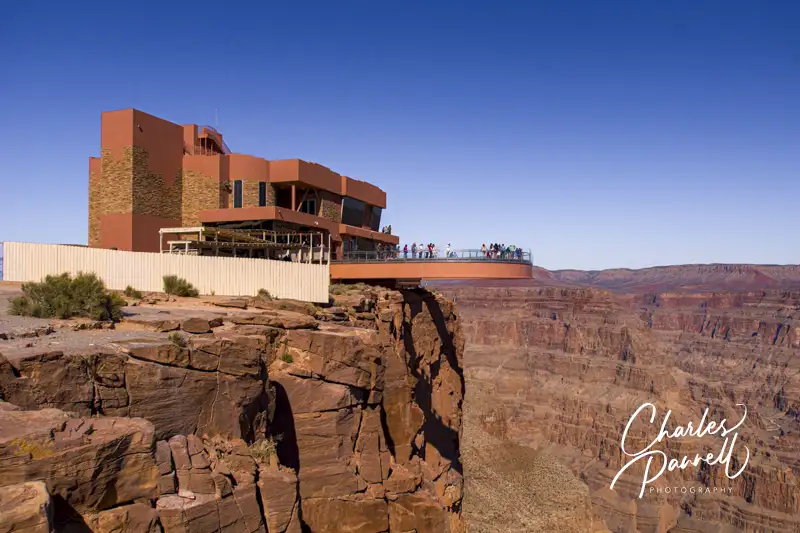
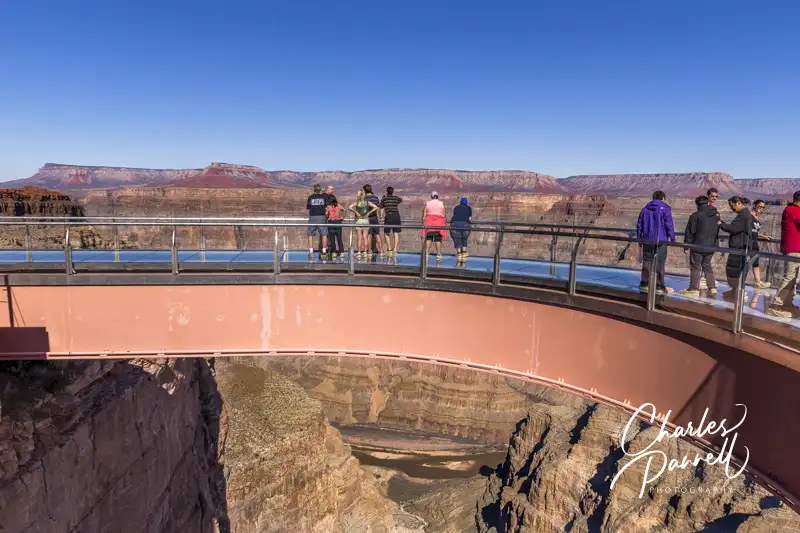
Located 130 miles southeast of Las Vegas, Grand Canyon West (grandcanyonwest.com) is not part of the US National Park System. It’s located on the Hualapai Reservation, and it’s home to the Grand Canyon Skywalk. This massive cantilever glass bridge extends out over the canyon rim and gives visitors a panoramic view of the canyon below. And although it’s outside the jurisdiction of the US government, this popular attraction offers good access for wheelchair-users and slow walkers. You can roll right out on the skywalk, and enjoy the beautiful canyon.
The Basics
Grand Canyon West is not located anywhere near the popular South Rim or the more remote North Rim of Grand Canyon National Park. It’s about a four-hour drive from the South Rim, and over six-hours from the North Rim. It’s definitely not a doable day trip from either of those sites. On the other hand, it’s just a two-hour drive from Las Vegas, so if you get an early start it makes a good day excursion from there.
It should be noted that because Grand Canyon West is not part of the US National Park system, national park passes are not valid for admission. Unfortunately the entrance price tag isn’t cheap either, but many consider it a treat and a once-in-a-lifetime experience. Still, leave room in your budget for the hefty entrance fee — usually about $100 per person.
On the Skywalk at Grand Canyon West
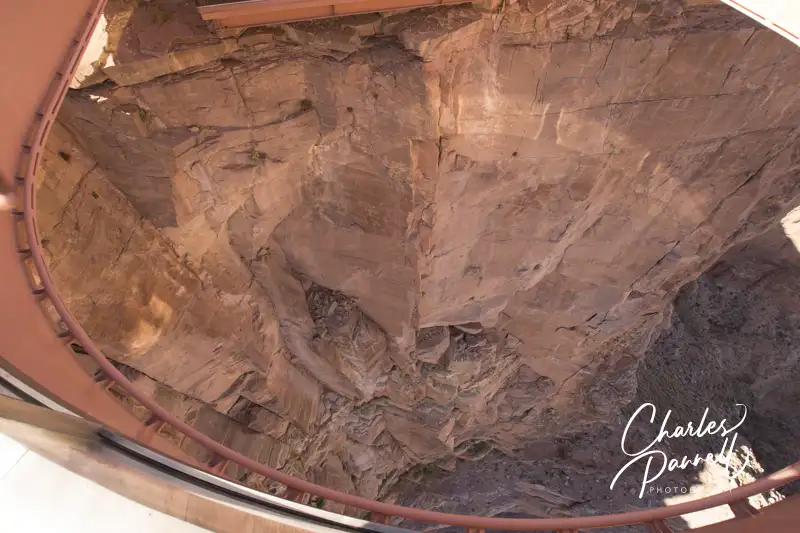
The Skywalk itself is considered an engineering marvel, as it extends out over the canyon and provides unobstructed views below. If you’re a little hesitant, don’t worry, as it’s incredibly sturdy. It’s built to withstand an 8.0 earthquake and winds up to 100 miles-per-hour. Still, looking straight down through the glass at the canyon floor may cause temporary vertigo in some people. If that happens, there’s one simple cure — just close your eyes.
The Grand Canyon Skywalk Experience
Vertical View from the Skywalk at Grand Canyon West
There are three main sections to Grand Canyon West, and a wheelchair-accessible shuttle connects these areas with the entrance plaza. Eagle Point is where the Skywalk is located, Guano Point is an abandoned mining site with some great canyon views, and Hualapai Point is home to the lodge, ranch and western village.
The Skywalk itself offers great wheelchair access. There’s ramp access up to the entrance and level access to the adjacent locker area. Nothing is permitted out on the skywalk, so all purses, cameras, backpacks and bags must be left in the lockers. Ambulatory visitors are asked to wear disposable booties on the skywalk, but there are no restrictions for wheelchair-users.
From the locker area, you can just roll right out to the skywalk, to get a bird’s eye view of the canyon below. It’s truly a breathtaking experience, and you can spend as much time on the skywalk as you want. And since cameras are prohibited on the skywalk, staff photographers are on hand to photograph visitors. Granted there’s an extra charge for this, but it’s a highly recommended souvenir.
It’s important to note that Grand Canyon West gets extremely busy with bus tours after 11 AM. Best bet for a more memorable experience is to get an alpine start and hit the Skywalk when it opens at 8 AM. Spend some time at Guano Point and Hualapai Point afterwards, enjoy the native dancers, browse through the crafts market and then have a bite to eat. And as you head out, the bulk of the crowds will be entering the site. Truly, it’s the most relaxing way to enjoy the Grand Canyon Skywalk.
Barrier-Free Travel the Grand Canyon for Wheelers and Slow Walkers
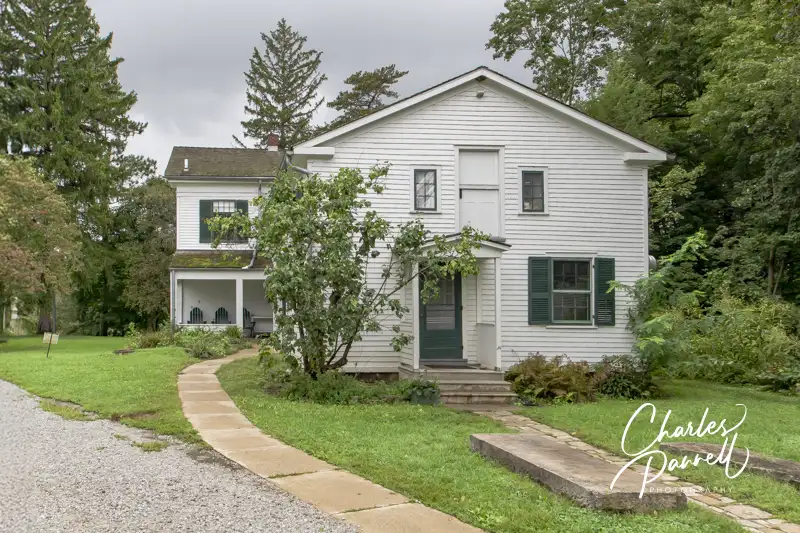
Planning a family reunion can be quite a challenge, especially if it’s a multi-day event that requires overnight lodging. On the other hand, a large house or cabin allows folks to visit and reminisce for the entire weekend. And although finding a reunion house is one thing, finding one that is wheelchair-accessible can be an added challenge. And in that respect Stanford House (www.conservancyforcvnp.org/experience/plan-your-visit/retreats-lodging/) — which is located in Northeastern Ohio’s Cuyahoga Valley National Park (https://www.nps.gov/cuva/index.htm) — fills the bill perfectly.
Historic Stanford House
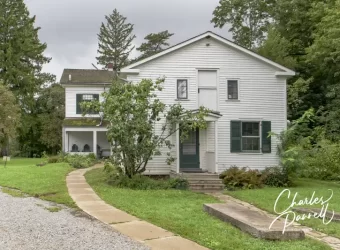
Located near Boston Mills Visitor Center, Stanford House was built in 1843 and can accommodate up to 30 overnight guests. And the good news is, access features have been added over the years to this historic home, so today it’s a great multigenerational lodging choice.
There’s accessible parking in front of the two-story home, and a barrier-free pathway over to the front porch. The grand old home features wide doorways, wood floors, good pathway access and wheelchair access on the first floor. The home is decorated with vintage wallpaper, stately wood moldings and historic chandeliers; while several comfortable rocking chairs line the accessible front porch.
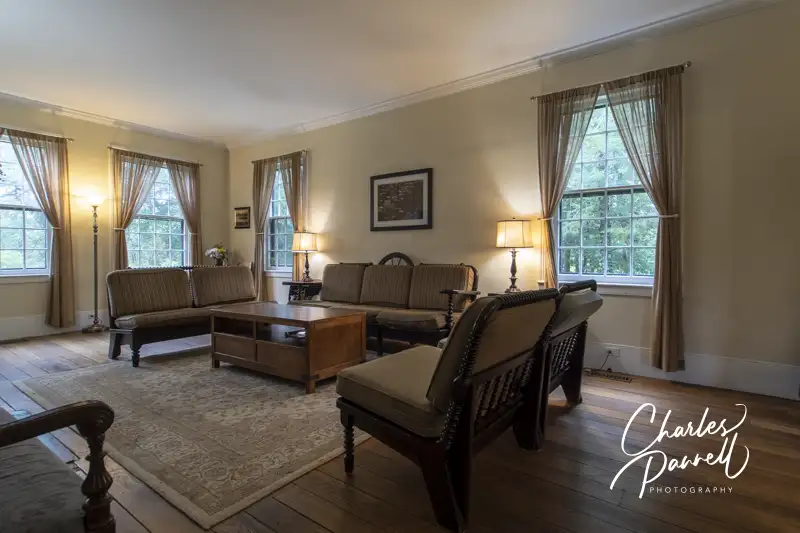
The living room is furnished with a sofa, two love seats, a settee and a few chairs; and there’s still plenty of room to maneuver a wheelchair or scooter around the period pieces and reproductions.
Living Room in the Stanford House
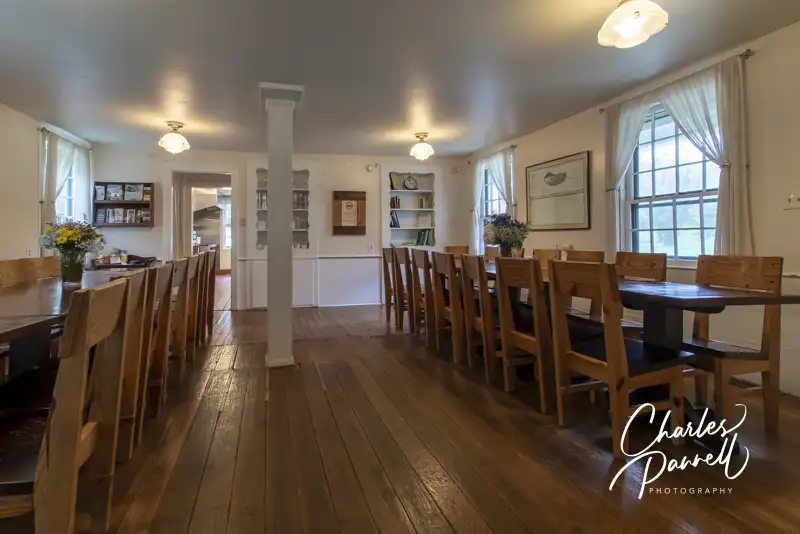
The dining room is massive and it includes two long wooden tables which each can each seat 30 people. There’s a small hutch which is filled with cups, plates, glasses and dishes; and the adjacent commercial kitchen is equipped with a refrigerator, freezer, microwave, and just about every small appliance and utensil you can imagine. And if you’d like to dine outside, there’s level access to a picnic table on the lawn, and the nearby fire circle.
Dining Room in the Stanford House
Access Features Galore
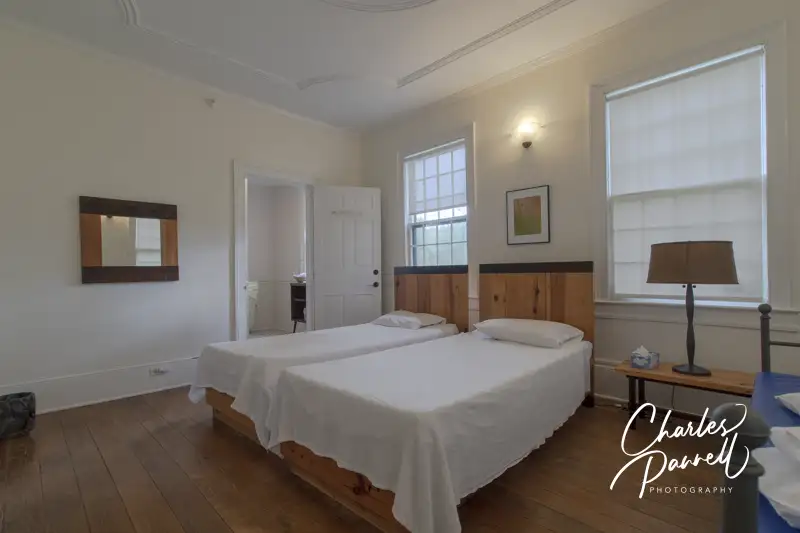
Although the bulk of the dormitory style sleeping areas are located upstairs, there’s also a wheelchair-accessible suite located on the first floor. It’s furnished with two 19-inch high twin beds (which can be pushed together) with access on both sides, as well as a trundle daybed. Truly wheelchair-users have their choice of beds in this home. Top it off with a lowered bedroom mirror and you have a nice accessible room.
Ground Floor Accessible Suite
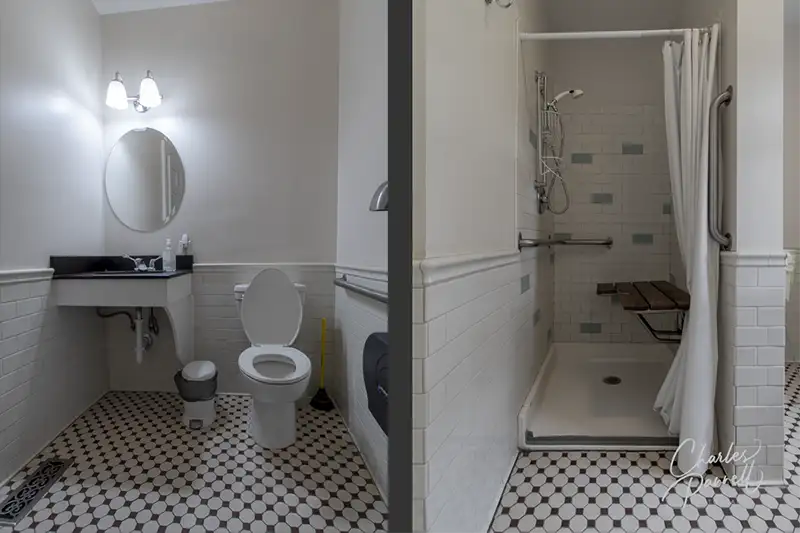
The adjacent bathroom features a full five-foot turning radius and is equipped with a 36-inch square transfer-type shower, with a fold-down shower bench, grab bars and a hand-held-showerhead. There’s ample floor space in front of the shower to transfer to the shower bench, and level access to roll-in to the unit. Other bathroom access features include a roll-under sink, and a toilet with a grab bar on the left side (as seated).
Bathroom in the Ground Floor Accessible Suite
The access features are well done, and truly this wheelchair-accessible suite will work for folks with a wide range of mobility disabilities. Additionally, the home is secluded and private, so your group will have the area all to yourself.
Explore Cuyahoga Valley National Park
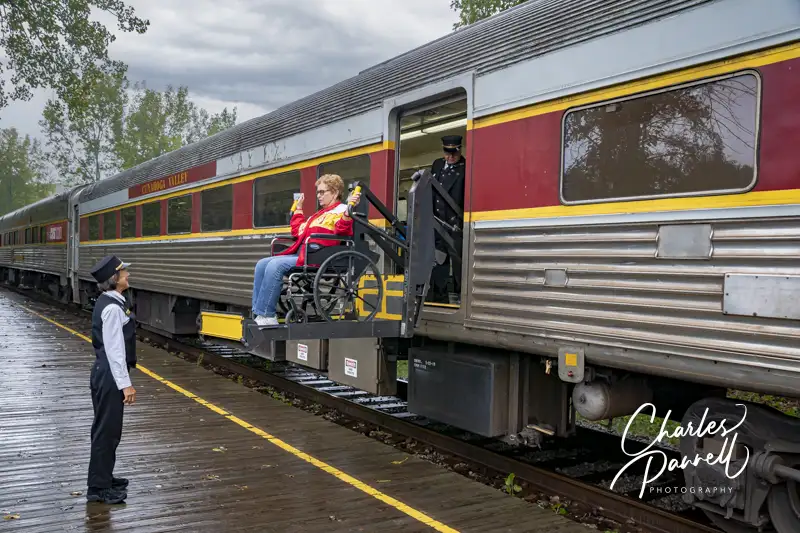
Boarding the Cuyahoga Valley Scenic Railroad
Stanford House also makes perfect home base for daily jaunts to some of Cuyahoga Valley National Park’s accessible attractions. At the top of the list is the Canal Exploration Center, which is located on the north end of the park. There’s accessible parking with level access to the front entrance of this former 1800s tavern, which now houses a store and an information center. And since the paved wheelchair-accessible towpath runs right in front of the building, you can take an accessible hike in either direction.
Brecksville Nature Center, which is located near the Station Road Bridge, is also worth a stop. Accessible parking is located next to an accessible picnic table, so pack along a lunch and enjoy a midday break. From there it’s a .15-mile walk on an accessible trail to the nature center. Accessible restrooms are located next door, and there’s level access to the nature center, which features a number of interpretive exhibits. The building also boasts floor-to-ceiling windows that overlook the garden bird feeders. It’s an excellent place to sit back and enjoy some of the 200-plus different avian visitors that have been spotted in the park.
And don’t miss a ride on the Cuyahoga Valley Scenic Railroad (www.cvsr.org). The three-hour scenic excursion winds through the park, and offers visitors a good overview of the area. Even better, the train has a lift-equipped car with plenty of wheelchair seating, and an accessible restroom. The trip begins at the Rockside Station in Independence and heads south along the Cuyahoga River, before it winds its way down to the Akron Northside Station. After that, it turns around and heads back to the Rockside Station. It’s a great way to explore Cuyahoga Valley National Park, and you just can’t beat the views.

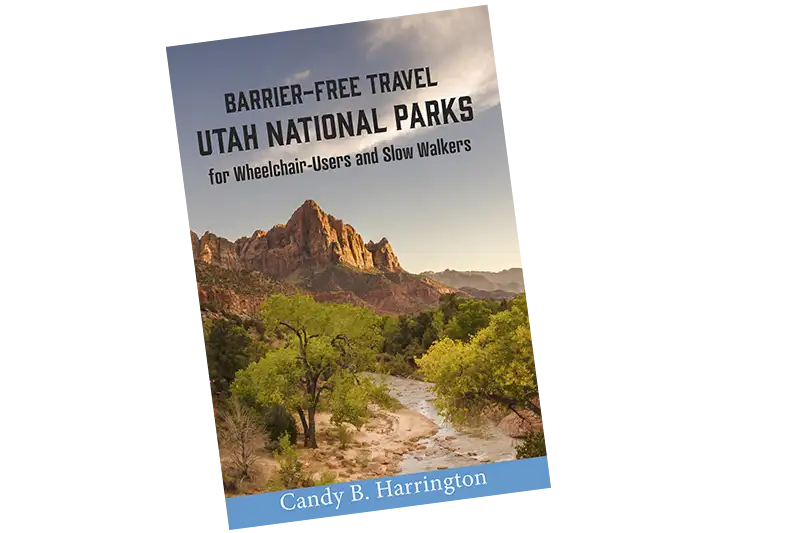 If you’re planning to visit Utah’s Mighty Five National Parks, and wondering if they are wheelchair-accessible, then pick up the newest edition of Candy B. Harrington’s Barrier-Free Travel; Utah National Parks for Wheelchair-Users and Slow Walkers. This essential resource offers essential insider tips to plan a wheelchair-accessible Utah national parks getaway.