Located just outside the West Entrance to Glacier National Park (emerginghorizons.com/glacier-national-park/), West Glacier Cabin Village (www.glacierparkcollection.com/lodging/west-glacier-village/ways-to-stay/west-glacier-cabins/) makes the perfect home base for a national park visit. This quiet cabin complex boasts the best of both worlds, as it’s far removed from the hubbub of West Glacier Village, yet it’s within easy walking distance of the shops and restaurants. Access wasn’t overlooked in the construction of the units either, as the complex includes two wheelchair-accessible cabins, which makes it an excellent lodging choice for slow walkers and wheelchair-users.
West Glacier Cabin Village
Nestled in a peaceful mountain forest, West Glacier Cabin Village features accessible parking next to the campstore, with level access to the entrance. Inside there’s plenty of room to maneuver a wheelchair over to the cabin check-in counter.
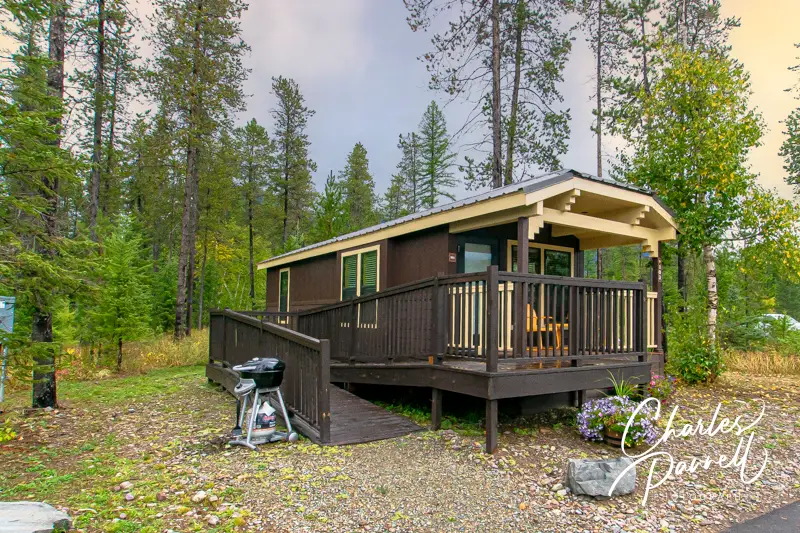
Accessible cabin 103 is located next door. There’s parking in a large level area across from the cabin, and level access over to the cabin. The cabin features ramp access up to a covered front porch that’s furnished with a small table and two chairs. There’s also a propane grill near the cabin.
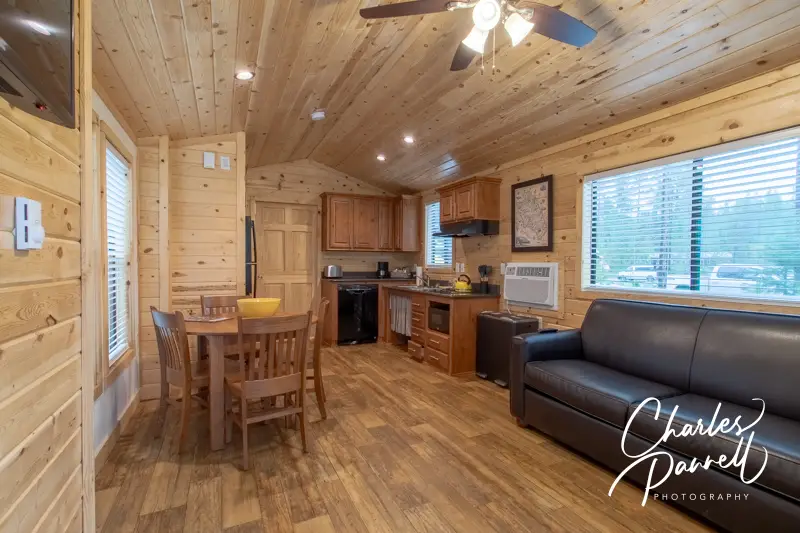
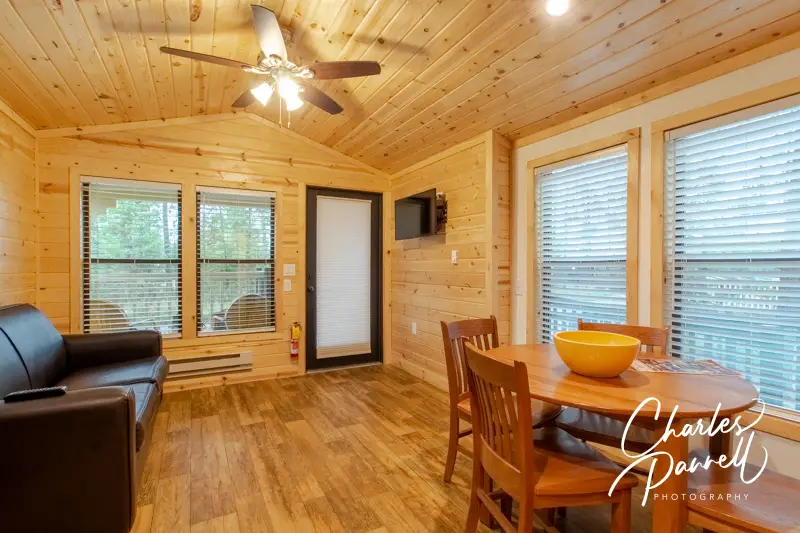
The cabin features a level threshold, and includes wide doorways, good pathway access and wood floors. The large living area is furnished with a 13-inch high sleeper sofa, a television, and a dining table with four chairs. The cabin also has reliable Wi-Fi, which is a hard-to-find feature in the area.
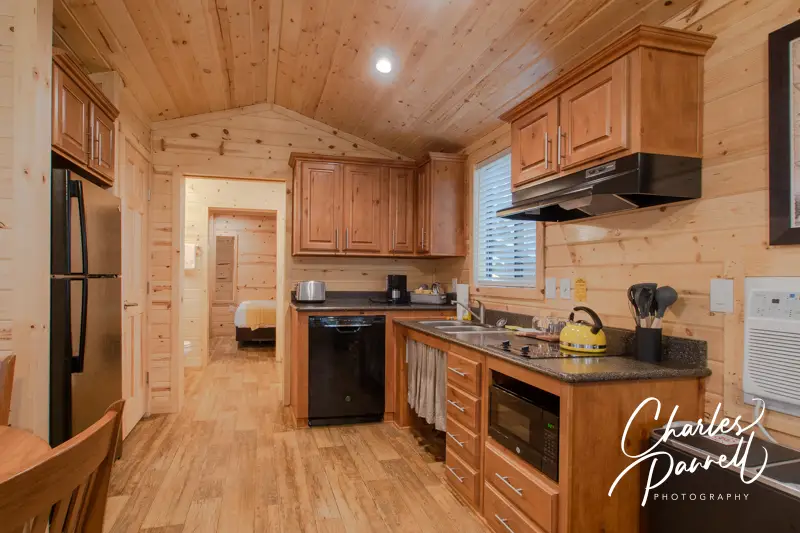
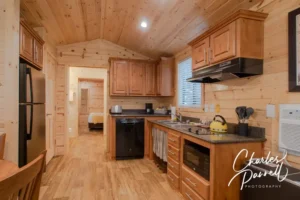
The kitchen is equipped with a refrigerator, a two burner cooktop, a lowered microwave, and a dishwasher. It also includes an ample selection of dishes, utensils and cookware. And to complete the access equation, the kitchen sink features a kneehole for wheelchair access.
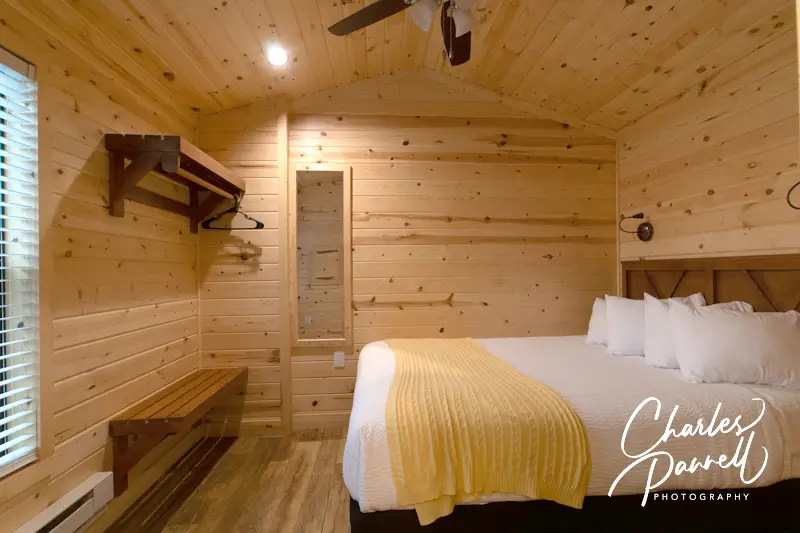
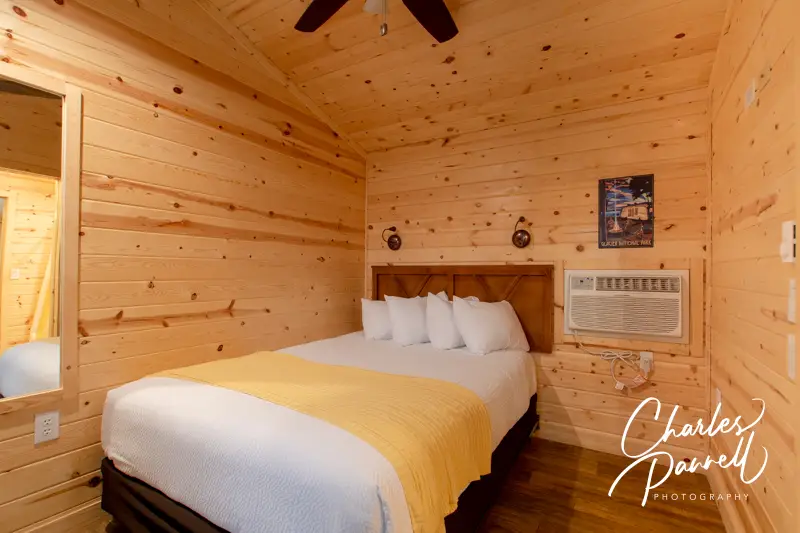
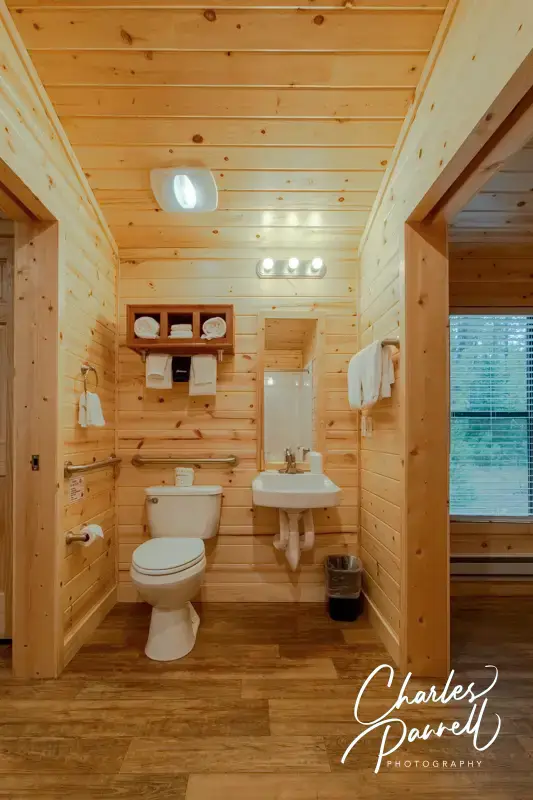
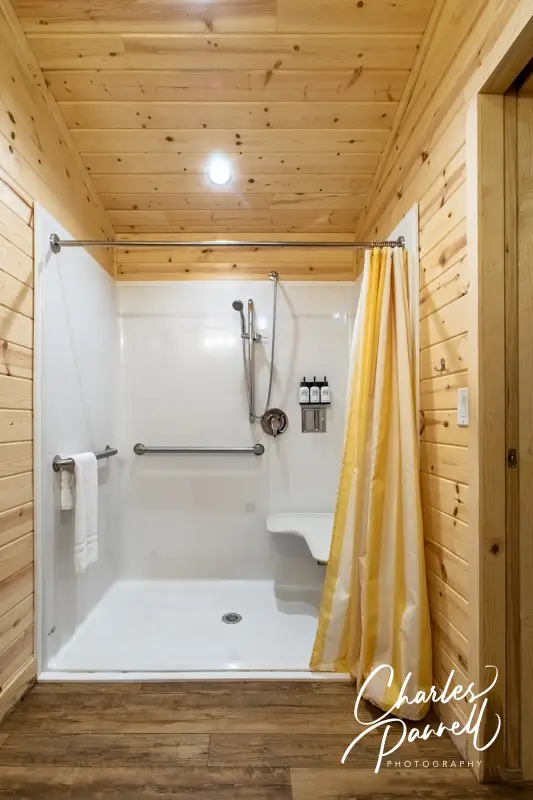
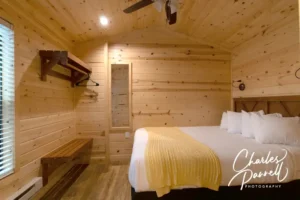
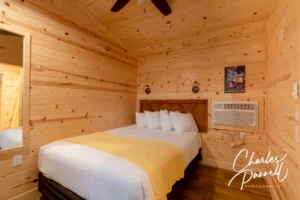
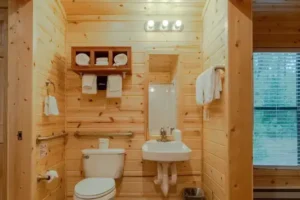
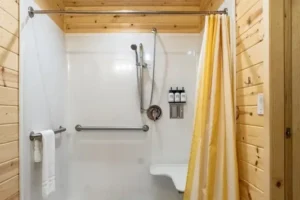
The bedroom, which is located in the back of the unit, is furnished with a 24-inch high queen-sized bed with wheelchair-access on the right side (as you face it). The bathroom includes a full five-foot turning radius and is equipped with a roll-in shower with grab bars, a hand-held showerhead and a padded fold-down shower bench. The toilet grab bars are located on the back and right walls (as seated), and the bathroom also includes a roll-under sink with a lowered mirror.
And if cabin 103 is booked, cabin 104 has the same access features. Either unit makes a comfortable, homey and accessible place to stay near Glacier National Park.
Living Room in Cabin 103 at West Glacier Cabin Village
Dining Area in Cabin 103 at West Glacier Cabin Village
Kitchen Area in Cabin 103 at West Glacier Cabin Village
Bedroom in Cabin 103 at West Glacier Cabin Village
Bedroom in Cabin 103 at West Glacier Cabin Village (view 2)
Toilet and Sink in Cabin 103 at West Glacier Cabin Village
Shower in Cabin 103 at West Glacier Cabin Village
Barrier-Free Travel Glacier, Yellowstone and Grand Teton National Parks for Wheelers and Slow Walkers
Yosemite has always been a popular destination, and in order to manage the crowds in previous years advance vehicle reservations were necessary. These were cheap and easy to get at www.recreation.gov. And once you got to the park at your appointed time, there wasn’t a wait, because the required vehicle reservations metered the traffic.
Fast forward to 2026, and vehicle reservations are no longer required (https://emerginghorizons.com/yosemite-entrance-reservations-not-required-in-2026-but-plan-ahead/). Why? Well it depends who ask, but there was a huge outcry from locals who opposed the reservations, and then apparently the park statistics showed they weren’t needed. In any case, no vehicle reservations are required in 2026, and that’s led to major traffic jams. Because traffic is no longer metered, there’s a huge back-up at the gates. Just last week there were reports of 90-minute waiting times at the gates – and it’s not even peak season.
Once you get in the park, finding parking is another issue, and of course finding accessible parking is always harder. To be honest, I’d really advise against a visit this year. And it’s not that I’m anti-Yosemite, but I’m just being pragmatic. I grew up in the mountains near Yosemite and for most of my life it was my “home national park”. And I love it. I just feel that with it’s over popularity, and non-metered traffic, it’s just really hard to enjoy this gem. Perhaps things will change next year.
That said, if you absolutely must visit Yosemite in 2026, here are a few tips for wheelchair-users, to help minimize your wait times, and more fully enjoy the park.
Spend the Night
Spending the night in the park is best way to maximize your sleep, and still get that much-needed early start in the morning. That said, lodging in Yosemite Valley can be extremely hard to get during peak season. Hard, but not impossible.
The cancellation period for Yosemite Valley hotels and lodges in seven days. That means that people can cancel their reservations with no penalty up to seven days before their visit. So, if you’re looking for Yosemite lodging in the peak months, and can do a spur-of -the-moment trip, then try searching for available properties early in the day, seven days ahead of time. It’s not guaranteed to work, but it’s the best shot at a vacancy. And yes, sometimes wheelchair-accessible rooms get cancellations too.
And my favorite wheelchair-accessible room in the park is room 421 at the Ahwahnee. It has a king bed, a roomy bathroom with a roll-in shower and an impressive view of Half Dome.
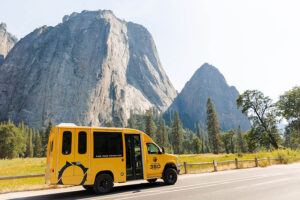
Yosemite Shuttle
Park and Walk (or Roll)
If you can’t spend the night inside the park, then you need to get an alpine start for a hassle-free wheelchair-accessible Yosemite visit in 2026. It depends on where you spend the night, but try to get to the park no later than 6 AM. Yes, you read that correctly, 6 AM.
Years ago, you could have the park to yourself at that time; but with the crowded entrance stations today, it only cuts down on the crowds. Still, that’s a good thing. Your goal after getting to Yosemite Valley is to find an accessible parking spot in the Yosemite Village parking lot. And then leave your car there for the day.
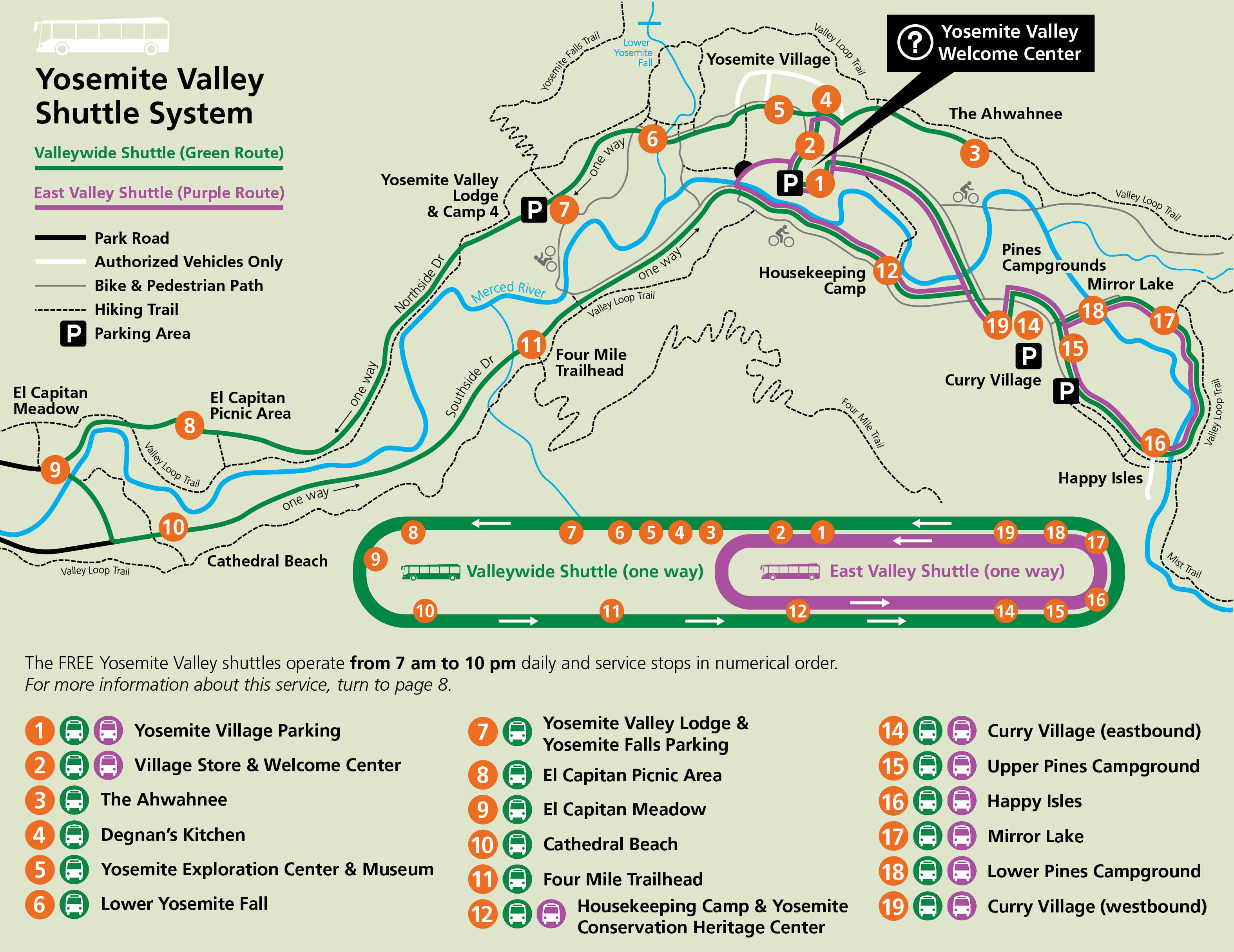
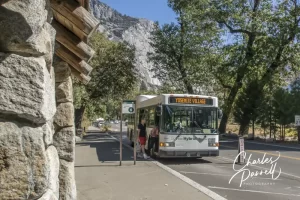
The good news is, there are a lot of sites, viewpoints, concessions and attractions in Yosemite Valley; and they are all connected on the wheelchair-accessible Yosemite Valley shuttle (https://www.nps.gov/yose/planyourvisit/images/valleyshuttle2.jpg). And there’s a shuttle stop near the parking area and in front of the Visitor Center.
The shuttles from 7 AM to 10 PM daily, and there’s usually about a 15-minute wait for a bus. There are two routes in Yosemite Valley – The Valley Shuttle, which covers the whole area, and the East Side Shuttle which stops at Yosemite Village, Curry Village and the campgrounds and trailheads on the east side of the valley
All of the shuttle buses are wheelchair-accessible, and they come equipped with wheelchair-lifts and tie-downs. They can accommodate wheelchairs up to 24 inches wide by 46 inches long, with a weight of up to 750 pounds.
Alternatively it you’d like to get a little exercise, rental handcycles are available at the Curry Village Bike Stand (209-372-8323) and the Yosemite Valley Lodge Bike Stand (209-372-1208). It’s best to reserve those in advance though, as supplies are limited and they go quickly.
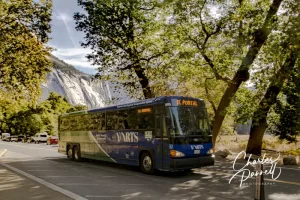
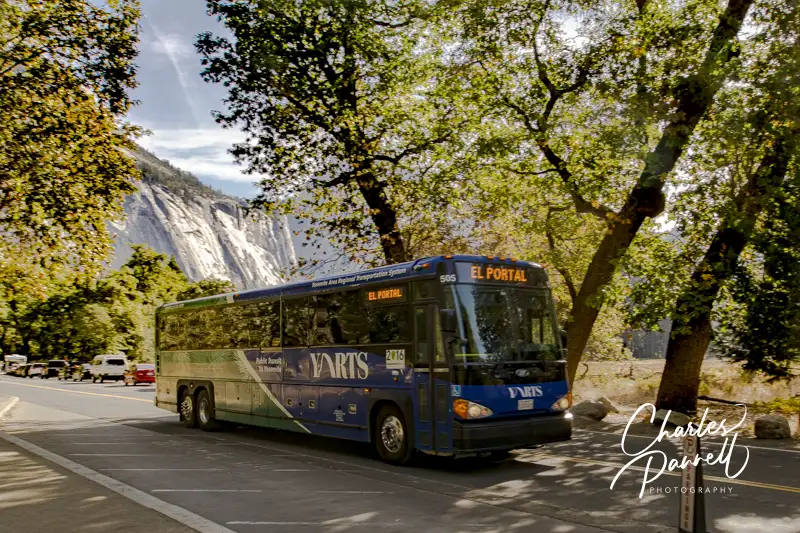
YARTS bus in Yosemite Valley
Ride YARTS!
Another way to to get the most our of your wheelchair-accessible Yosemite visit is to take public transportation to the park – more specifically YARTS (https://www.yarts.com/). Based in nearby Merced, YARTS stands for Yosemite Area Regional Transportation System, and it has four routes that lead to the park. So you can overnight in a nearby community, ride YARTS to the park, and not worry about any delays at the entrance (public transport takes an express lane) or finding an accessible parking space.
The routes run from Merced, Fresno, Sonora, and Mammoth Lakes to Yosemite Valley, and stop at mountain communities along the way. So you could overnight in a variety of places including, Mariposa, Groveland, El Portal, Oakhurst and June Lake. All YARTS buses are equipped with wheelchair lifts; however you either need to contact them 48 hours in advance, or indicate on your online reservation that you require wheelchair seating. And attendants traveling with a wheelchair-user get a 50 percent discount. So not only is riding YARTS accessible it’s also affordable.
Although the general public has to hike in to Mirror Lake, if you have an accessible parking placard or license plate, you can drive along the this road. Although you won’t have the lake to yourself, the hike in – even though it’s easy – eliminates a lot of folks. Even better – go early in the day to dodge the bulk of the visitors.
The road up to mirror lake is about a mile long, and motorists will be sharing the road with pedestrians and cyclists. You must travel with your hazard light on, and the speed limit is 15 mph along this road. And of course you need to watch out for pedestrians – especially kids – along the way.
About half way up, the roads gets steeper, and bicycles are prohibited beyond this point. Once you get to the top there’s accessible parking near the lake. There are some accessible vault toilets nearby and some picnic tables on level ground that may be doable for wheelchair-users. That said, Mirror Lake is seasonal and it usually dries up by late summer; however the granite views are spectacular from there. It’s well worth the drive.
Although they have some great wheelchair-accessible cabins (called havens) at adjacent Waybound Yosemite (operated by Tenaya Lodge) you don’t have to be a lodge guest in order to book one of their tours. The accessible tour bus has a lift and tie downs, so you can stay in your own wheelchair or transfer to a seat.
The day-long accessible tours feature stops at all the popular attractions, a picnic lunch, and time to explore Yosemite Valley on your own on the free wheelchair-accessible shuttle. Plus you don’t have to worry about parking, waiting in the entrance line or driving. Book early though, as this popular tour sells out quickly.
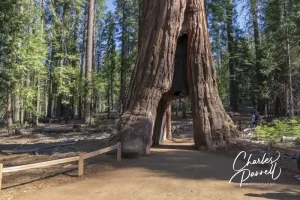
Walk-through Tree at Mariposa Grove in Yosemite National Park
Visit Mariposa Grove
Last but certainly not least, one of the best ways to enjoy a quieter slice of Yosemite is to get out of the valley and visit Mariposa Grove (https://emerginghorizons.com/escape-to-the-wheelchair-accessible-mariposa-grove/). You can access the grove on the Yosemite Shuttle Bus, but if you have a accessible parking placard, you can drive along the road that is reserved for shuttles, hiker and cyclists.
With an accessible parking placard, you can drive to the Mariposa Grove Arrival Center and check out the accessible Big Trees Loop. From there you can drive to the Grizzly Giant Trailhead and take part of the trail to the Grizzly Giant and the California Tunnel Tree. Not only are these massive trees, a must-see on any Yosemite itinerary, but you can dodge some of the crowds by driving there.
And as with any Yosemite itinerary, get an alpine start to beat some of the crowds. This is especially important in 2026, when there are no vehicle restrictions at the entrance stations. So plan ahead for a trouble-free wheelchair-accessible Yosemite visit this year.
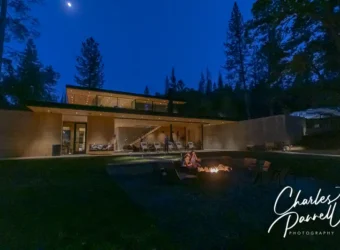
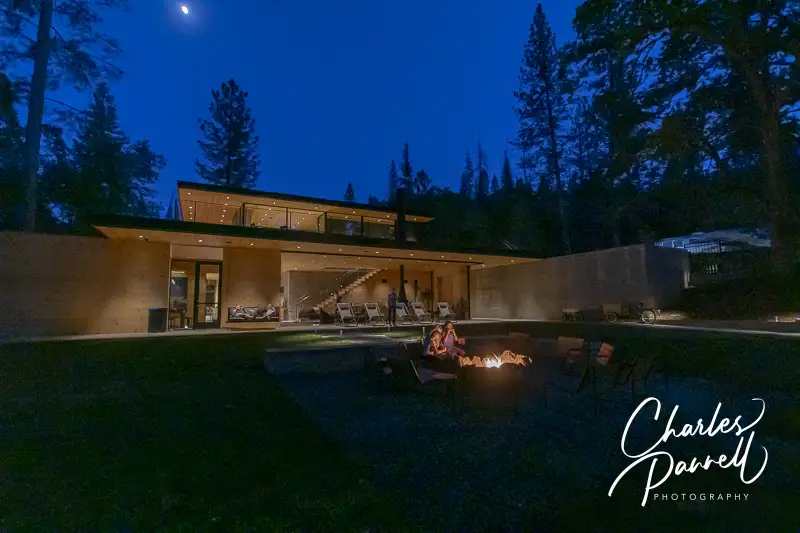
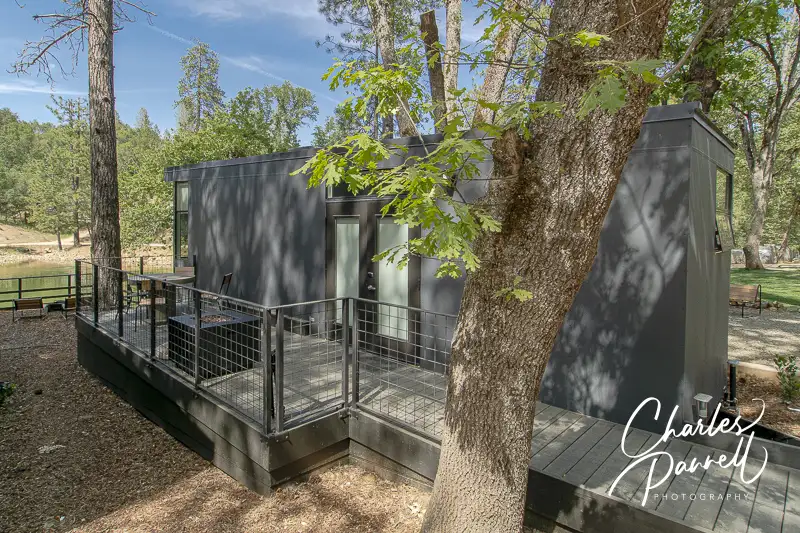
Located just east of Mariposa in Midpines, AutoCamp Yosemite is a great wheelchair-accessible lodging choice (autocamp.com/location/yosemite/) for a national park visit. Nestled on 35 wooded acres in the Sierras, this unique property features a collection of custom-built Airstream trailers, a few cozy cabins and some upscale luxury glamping tents.
And you just can’t beat the location as it’s only a 20-minute drive to the El Portal Entrance of Yosemite National Park, and another 40 minutes to Yosemite Valley. If, on the other hand, you’d prefer to leave the driving to someone else, you can take the YARTS (www.yarts.com) bus to the park, then use the free wheelchair-accessible Yosemite shuttle bus to explore the popular sites.
YARTS Bus in Yosemite Valley
AutoCamp Yosemite is a luxurious, wheelchair-accessible and convenient lodging option for the quintessential Yosemite visit.
Wheelchair-Accessible Suites
There’s accessible parking in front of the Clubhouse at AutoCamp Yosemite, with ramp access up to this mid-century modern building. Inside you can check-in and then pick up some essentials – including a s’mores kit — in the General Store. And in the evening don’t miss happy hour at the Clubhouse.
All of the accessible units are located near the Clubhouse, along a level paved pathway dotted with mature oaks and ponderosa pines. There are three accessible Premium Suites and two accessible Classic Suites. The main difference between these accessible suites is the location, as the Premium Suites overlook the pond and have more privacy.
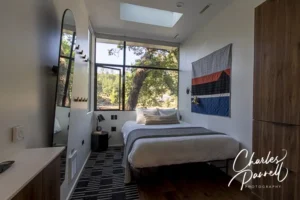
The accessible suites feature ramp access up to the spacious deck, wide doorways, wood floors, lowered environmental controls and lever handles. The bedroom includes a 25-inch high queen-sized bed with wheelchair access on the left side (as you face it), a wardrobe with a lowered clothing rod, a night table and some built-in shelving units.
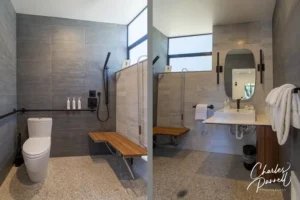
The bathroom, which is located at the other end of unit, is equipped with a Continental shower with an overhead showerhead, a hand-held showerhead, grab bars and a fold-down shower seat. The toilet grab bars are located on the back and right walls (as seated), and the bathroom also has a roll-under sink with a lowered mirror
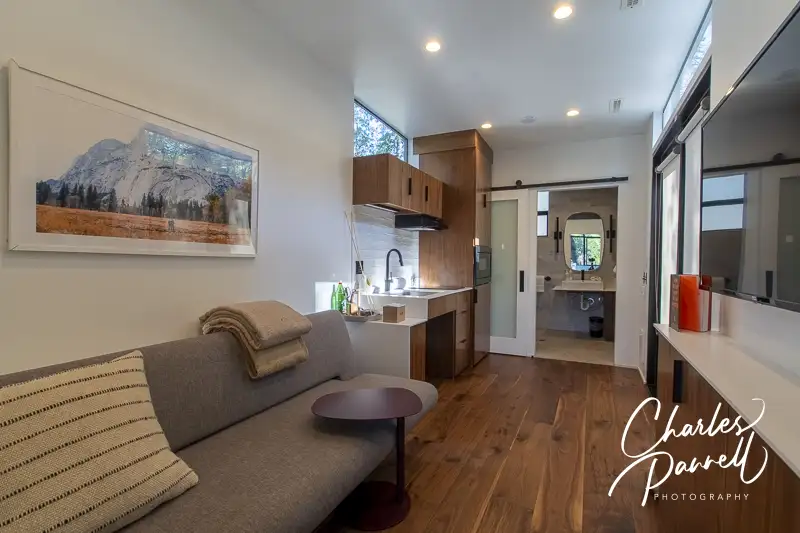
The living area is furnished with a 15-inch high futon, a small table and a television. The galley includes a roll-under sink, a two-burner cooktop, a microwave and a small refrigerator. It also includes dishes, utensils, pots, pans and wine glasses. Round out the unit with a few extras, like a coffee press and coffee, a flashlight, a lantern, a bottle of spring water and even a blue tooth sound system, and you have a very luxurious and accessible retreat.
(click image for slideshow)
Wheelchair-Accessible Suite at AutoCamp Yosemite
Living and Kitchen Space in Wheelchair-Accessible Suite at AutoCamp Yosemite
Bedroom in Wheelchair-Accessible Suite at AutoCamp Yosemite
Bathroom in Wheelchair-Accessible Suites at AutoCamp Yosemite
Accessible Adventure Tent
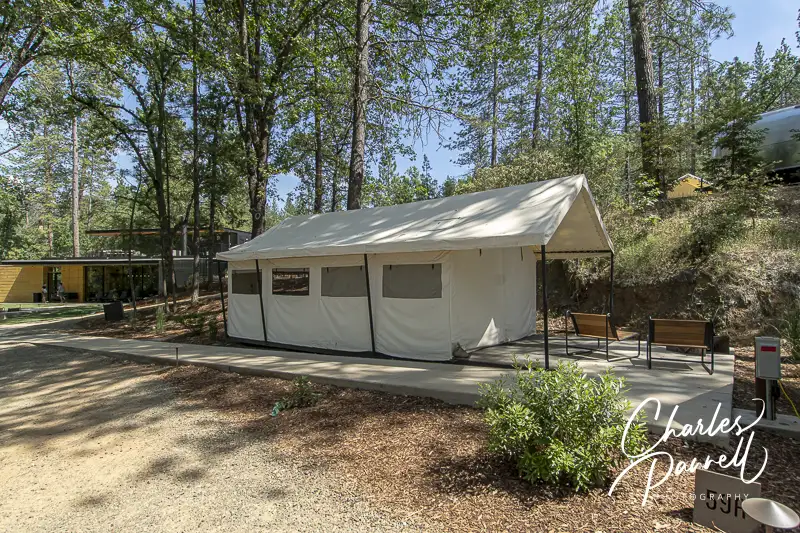
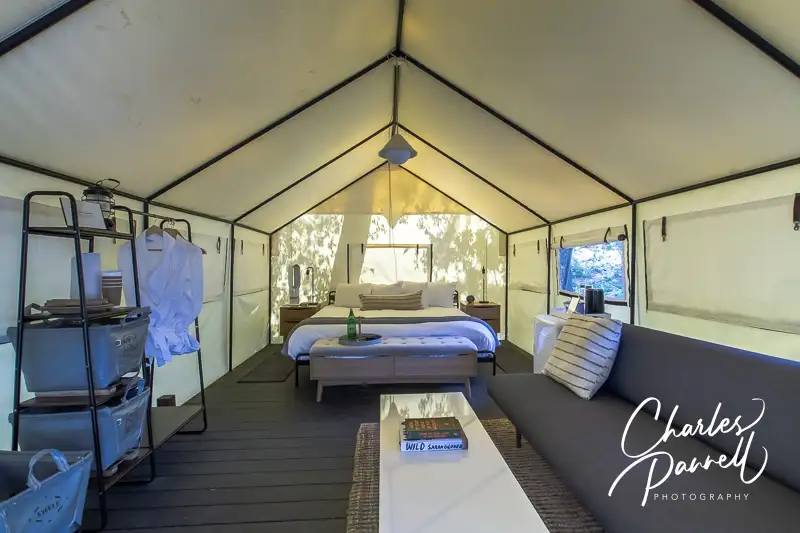
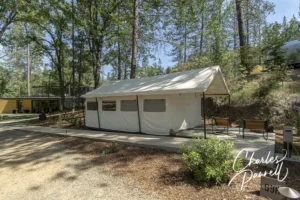
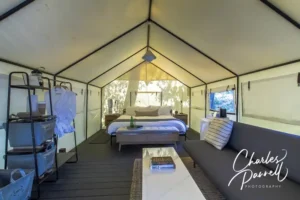
AutoCamp Yosemite also has a wheelchair-accessible Luxury Tent, which is located near the Clubhouse. There’s barrier-free access to the front porch from the sidewalk, and level access to the tent. Inside there’s wheelchair-access on both sides of the 23-inch high king-sized bed, and plenty of room to maneuver a wheelchair throughout the tent.
Other furnishings in the tent include a futon, a coffee table and a refrigerator. Towels, bath amenities, campfire cookware and utensils are also included; and the tent comes equipped with electrical outlets, a fan and a heater. Add in the requisite lantern, mineral water, plush bathrobes and an electric kettle and you’re good to go. And outside there’s level access to a pair of comfy chairs, a fire ring and a grill.
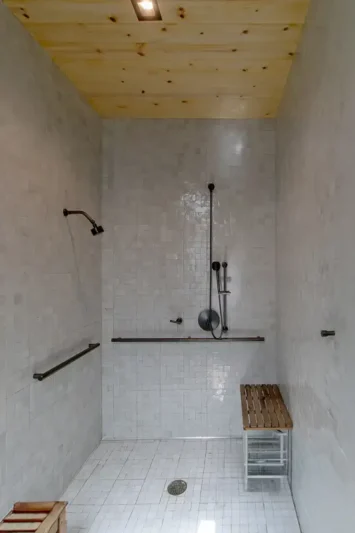
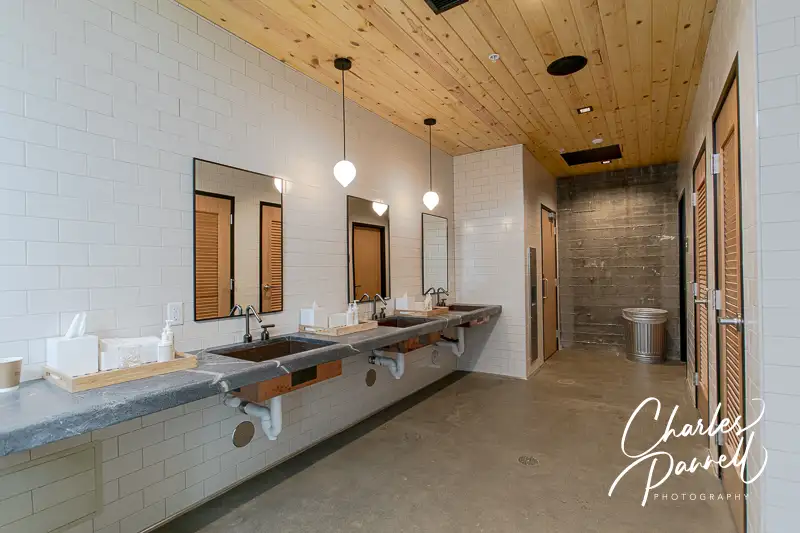
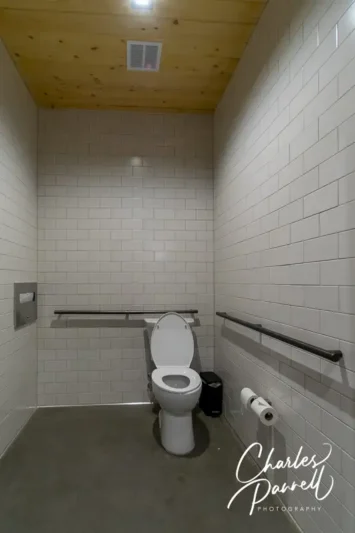
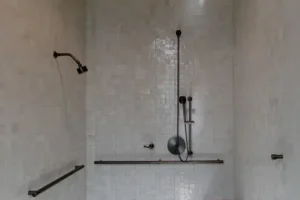
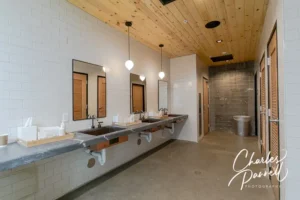
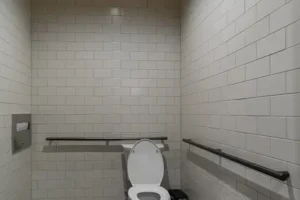
There’s no bathroom in the tent, but accessible facilities are located in the nearby Clubhouse. The men’s and women’s bathrooms both include an oversize accessible stall, and a private roll-in shower with grab bars, a hand-held showerhead and a fold down shower bench. Top it off with some roll-under sinks and lowered mirrors, and you have a very accessible setup.
In keeping with the AutoCamp design that fosters a community experience, a communal fire ring and a number of public spaces are located near the Clubhouse. There’s also a lift-equipped freshwater pool at the Clubhouse, as well as an ample assortment of lounge chairs and a comfortable rooftop BBQ area. In the end, there’s no shortage of accessible things to do in and around AutoCamp Yosemite, which makes it an excellent choice for wheelchair-users and slow walkers who want to experience the beauty of the California Sierras.
(click image for slideshow)
Accessible Adventure Tent at AutoCamp Yosemite
Interior of an Accessible Adventure Tent at AutoCamp Yosemite
Accessible Shower in the Clubhouse at AutoCamp Yosemite
Vanities in the Clubhouse at AutoCamp Yosemite
Accessible Toilet in the Clubhouse at AutoCamp Yosemite
Barrier-Free Travel Yosemite, Sequoia and Kings Canyon National Parks for Wheelchair-users and Slow Walkers
Named for the giant Rio Grande bend that carves out its southern border, Big Bend National Park is located more than 100 miles from the nearest freeway, hospital or shopping mall. And spring is the ideal time to visit this remote Texas park, as not only is the desert filled with colorful wildflower blooms, but the temperatures are also fairly mild. And despite its seemingly inhospitable environment, Big Bend also boasts wheelchair-accessible trails, overlooks, scenic drives, and even an accessible overnight lodging option. In short, Big Bend is the perfect road trip stop for wheelchair-users and slow walkers, who want to ditch the crowds and enjoy the wide open spaces of the Lone Star State.
Windshield Views Galore!
Sotol Vista Trail
The best way to enjoy this 800,000-acre expanse is to take a drive, and in that respect the Ross Maxwell Scenic Drive tops the list. This 30-mile route leads past the Castolon Historic District and Santa Elena Canyon, and passes through some historic and geologic treasures along the way. The drive takes about 45 minutes one-way, but be sure to allow extra time to stop and admire the scenery.
The drive begins just off the main park road, with a south turn at the Castolon – Santa Elena Junction. There are a number of scenic overlooks along the way, including the Homer Wilson Ranch Overlook and Mule Ears Viewpoint — both of which have accessible parking with barrier-free access out to the viewpoints. The former features views of the old ranch house and surrounding land, while the latter offers the best vantage point for a glance at the iconic Mule Ears rock formation.
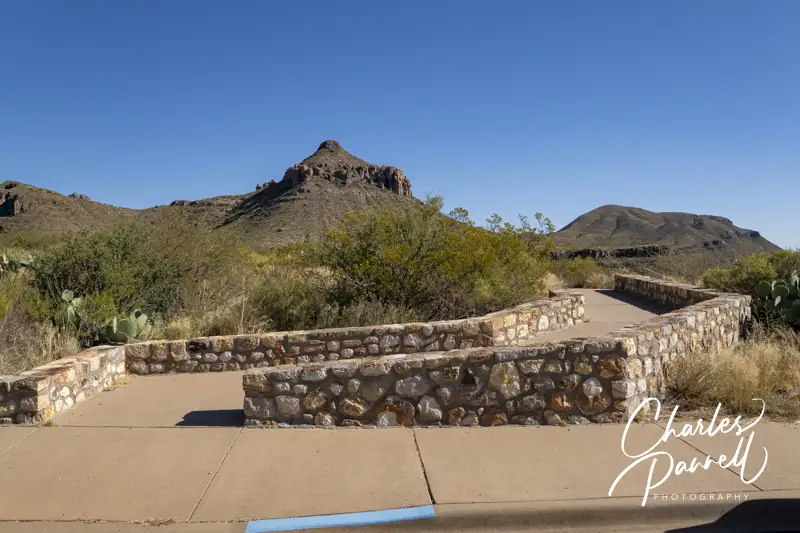
Located between those two overlooks, Goat Mountain Viewpoint, features accessible parking, with ramp access out to the overlook; while nearby Sotol Vista offers a panoramic southern view with accessible parking, an accessible vault toilet, and barrier-free access to the overlook.
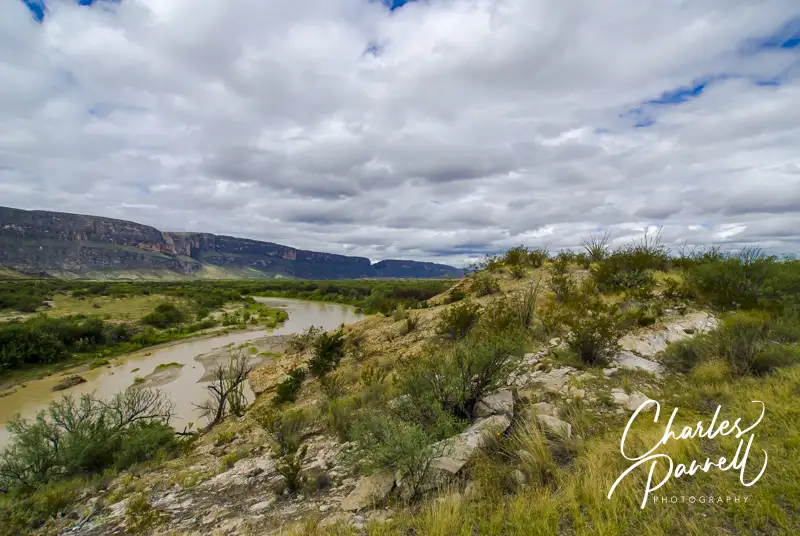
Last but not least, don’t miss the Santa Elena Overlook at the end of the road. From the overlook you can gaze down at the limestone canyon created by the Rio Grande, and look across into neighboring Mexico. Although there’s no curb-cut access from the parking area to the overlook, you can wheel down to where the curb ends and roll out to the overlook. Even though the ground is a bit bumpy in places, it’s still doable for most people, and the spectacular view is well worth the effort.
Scenic Desert Trails
Window View Trail
Although there’s no shortage of great windshield views in the park, there are also a few accessible trails. Panther Path, which is located next to the Panther Visitor Center offers a short – but accessible – introduction to some of the plants found in the park. Accessible parking is located near the visitor center, with level access over to this short 100 yard sidewalk that’s lined with interpretive plaques that identify desert plants.
A portion of the Rio Grande Village Nature Trail is also a good choice for wheelchair-users and slow walkers. It’s located in the southeast area of the park, near Boquillas Canyon. The trailhead is actually located in the campground at Rio Grande Village, across from campsite 18. The trail begins with a short dirt path to the quarter-mile boardwalk over the pond. Some folks may need a bit of assistance over the dirt trail, as it’s a bit bumpy, but the floating boardwalk offers excellent access, and it’s a great spot to enjoy the sunrise or sunset. It’s also an excellent birding location.
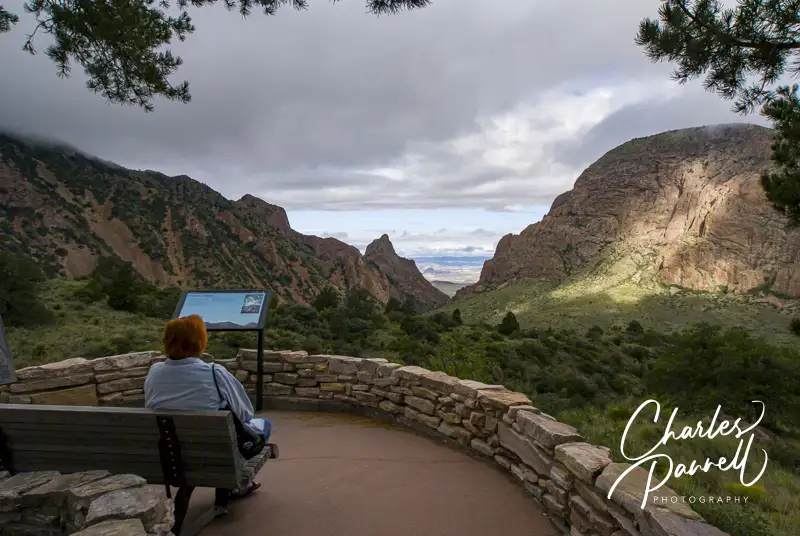
Sunsets are phenomenal in Big Bend National Park, and there’s no better place to enjoy one than from the Window View Trail (not to be confused with the inaccessible Window Trail). The trailhead is located near the Basin Store at Chisos Mountains Lodge. This .3-mile paved trail takes its name from the “window” opening in the canyon that affords a panoramic view of the valley below. It offers a gradual descent to the window viewpoint, which is a pleasant place to linger and enjoy views of the spectacular canyon walls and the Chisos Mountains. And if you need to stop and rest, there are also a few benches along the route.
Comfy Accommodations
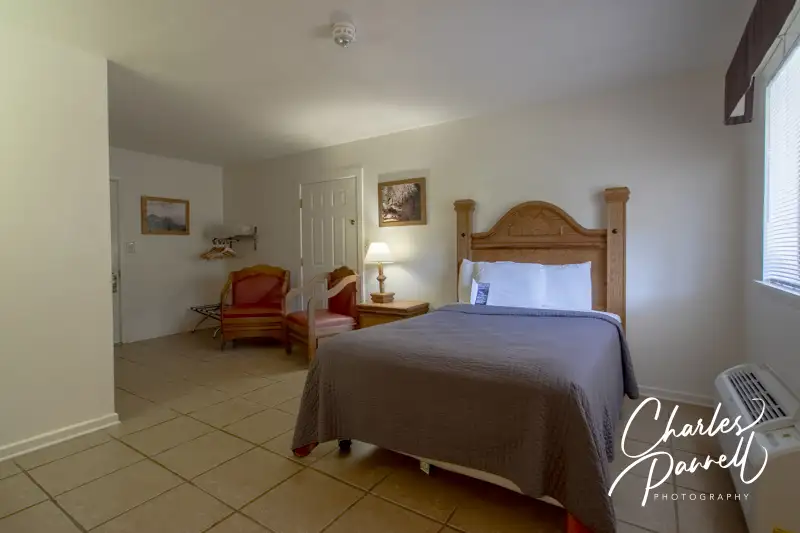
Because of its remote location, an overnight stay in Big Bend National Park is a must; and to that end Chisos Mountain Lodge (www.chisosmountainslodge.com) offers some comfortable accessible rooms. There’s accessible parking in front of the office, with level access to the main lobby through automatic doors. Inside there’s plenty of room to maneuver a wheelchair over to the front desk and the gift shop. The accessible rooms are located a short drive away in the Casa Grande section of the property.
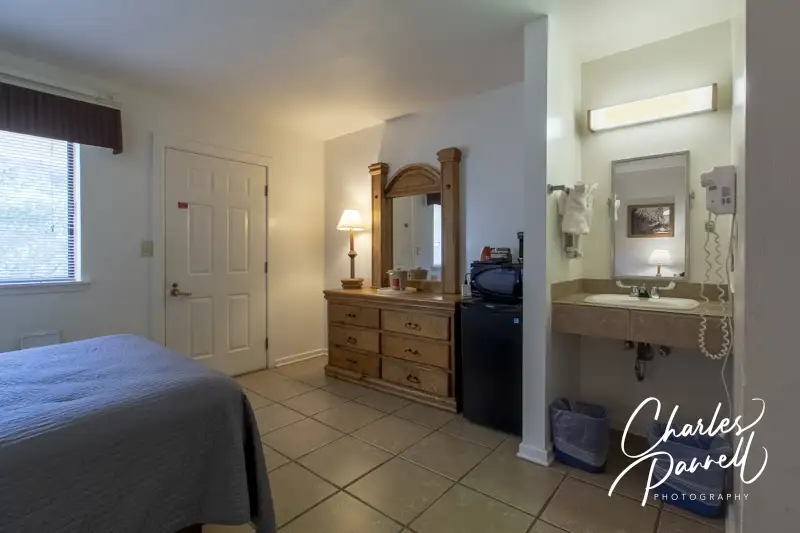
Accessible parking is located in front of room D2 — an accessible ground floor room – with sidewalk access over to the front door. Access features in room D2 include wide doorways, a lowered peephole, lever handles, good pathway access and tile floors for easy rolling. The room is furnished with a 25-inch high open-frame double bed with wheelchair access on the left side (as you face the bed). That said, there’s plenty of room to move the bed if you require wheelchair access on the opposite side. Other furnishings include a night stand, two easy chairs, a dresser, a refrigerator and a microwave.
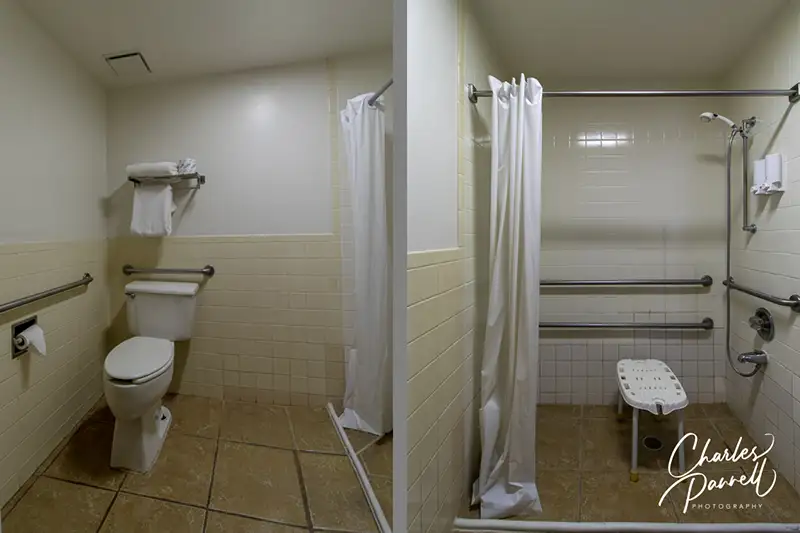
There’s barrier-free access to the bathroom, which features a roll-in shower with grab bars and a hand-held showerhead. The toilet grab bars are located on the back and right walls (as seated), and a portable shower bench is available upon request. A roll-under sink is located in the adjacent sleeping area, in order to free up more room space in the bathroom.
Best of all, this guest room also has level access out to the shared back patio, which is the perfect place to enjoy an sunset, and then take in another one of Big Bend’s natural features – the dark night sky.
(Click image for larger images of Room D2 at the Chisos Mountain Lodge)
Room D2 at the Chisos Mountain Lodge
Room D2 at the Chisos Mountain Lodge (view 2)
Bathroom in Room D2 at the Chisos Mountain Lodge
Barrier-Free Travel Utah National Parks for Wheelchair-users and Slow Walkers
My husband and I are planning a trip to Yellowstone National Park. We live in New Hampshire, so we plan to fly out west and rent an accessible van to explore the area. Can you tell me where I can find an accessible rental van in Yellowstone National Park? Also any suggestions for accessible hotels in the park would be greatly appreciated. I use a manual wheelchair and I absolutely love the outdoors.
Rent an Adapted Van
Well if you love the outdoors, then Yellowstone National Park is certainly the place for you. The scenery is beautiful and the park boasts a lot of accessible trails, picnic areas, sights and lodging options.
Unfortunately you won’t find an accessible rental van in Yellowstone National Park. Instead, you can rent one in one of the gateway cities. I suggest flying into Salt Lake City, Utah. It’s about a five-hour drive from the airport to the the West Entrance of Yellowstone National Park, where you can begin your visit. And you can rent an accessible van from United Access (www.unitedaccess.com) in Wood Cross, which is about 15 minutes from the Salt Lake City Airport.
Finally, let’s talk about accessible lodging in Yellowstone National Park. All of the major park hotels offer accessible rooms; however Canyon Lodge (www.yellowstonenationalparklodges.com/lodgings/cabin/canyon-lodge-cabins/) is one of my favorites. It’s the largest property in the park, with over 500 rooms, and it’s located near the Grand Canyon of the Yellowstone River. And even though it’s a large property, there is a wheelchair-accessible shuttle that runs between all the lodge buildings to the dining facilities, retail outlets and the visitor center in nearby Canyon Village. So, you can just park the car when you arrive.
Canyon Lodge offers a variety of accessible rooms. Room 1136 is furnished with two 26-inch high queen-sized beds with an access aisle between them, and has a bathroom that’s equipped with a tub/shower combination with grab bars and a hand-held showerhead. Add in a toilet with grab bars and a roll-under sink, and you have a very nice accessible room. If, on the other hand, you’d prefer an accessible room with a roll-in shower, room 4305 will work nicely for you.
Canyon Lodge also has an accessible cabin (cabin 32) which is furnished with with a 24-inch high twin bed (with a trundle), and a 26-inch high open-framed queen-sized bed. The bathroom is equipped with a roll-in shower with grab bars, a hand-held showerhead and a fold-down shower bench. The toilet is outfitted with grab bars, and there’s a roll-under sink in the guest bedroom. It’s a nice premium accessible lodging choice.
Truly, Canyon Lodge has a room to suit just about every taste and budget. There’s also barrier-free access to all the public areas at this property. It’s a great place to base yourself for a wheelchair-accessible Yellowstone adventure.
Barrier-Free Travel Glacier, Yellowstone and Grand Teton National Parks for Wheelers and Slow Walkers
Although Mesa Verde is now a national park, it was once home to the Ancestral Pueblo people. Today this Southwestern Colorado area boasts the remains of intricately crafted cliff dwellings, pueblos and pithouses that date back to 600 AD. And although there are some access obstacles, it’s still possible for wheelchair-users and slow walkers to explore portions of the ancient ruins. So here’s the scoop on how to plan a wheelchair-accessible Mesa Verde National Park (www.nps.gov/meve) visit.
Explore Mesa Verde
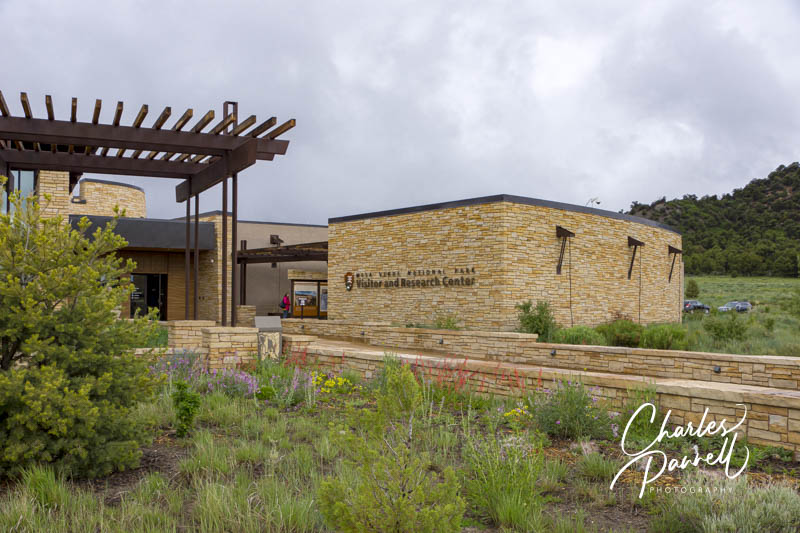
Mesa Verde Visitor and Research Center
The best place to begin your visit is at the Mesa Verde Visitor and Research Center, which is located near the park entrance. There’s accessible parking with ramp access up to the visitor center, and plenty of room to navigate a wheelchair around the interpretive exhibits, ranger information desk, and book store inside. The building also houses a research center, where visitors can catch a glance at the archaeologists at work through wheelchair-height observation windows. Top it off with a loaner wheelchair, accessible restrooms and an accessible picnic table with a view, and you have everything you need.
After you finish exploring the visitor center, grab a map and follow Mesa Top Ruins Road towards the high point in the park — Park Point. This scenic route winds across the mesa and offers several excellent photo stops along the way; but the most accessible choice is Montezuma Valley Overlook. Not only does this stop offer a superb valley view, but it also has an accessible picnic table and vault toilet.
Another must see are the Far View Sites, which are located a few miles south of Far View Lodge. At one time this area housed as many as 50 villages, but today the pueblo-style ruins includes Far View House, four other villages and a dry reservoir. Unfortunately, uneven terrain hampers wheelchair access to all of the ruins, but Far View House is doable for most folks.
You can also get a good view of Pipe Shrine House in the distance from the far corner of the site. Some slow walkers may also be able to access the entire 3/4-mile dirt loop trail that begins at the far corner of this site. The trail is fairly level, but it has some gravel, rocks and uneven spots along the way.
Visit Chapin Mesa Headquarters
Next up on your wheelchair-accessible Mesa Verde visit is Chapin Mesa Headquarters. From the Far View Sites, continue along Chapin Mesa Road and turn right at the stop sign. Chapin Mesa Headquarters has a large variety of services, including a museum, restrooms, ranger information, gift shops, a restaurant, a picnic area and some great views. The most convenient accessible parking is located in the main parking lot, across the street from the Chapin Mesa Archeological Museum.
From the parking lot, there’s an accessible pathway to the front door of the museum, which is housed in one of the oldest buildings in the National Park Service. And thanks to a multi-year renovation project, there’s wheelchair-access to the lobby, the bookstore, the auditorium and the galleries. Not only did the renovation provide improve physical access, but the historic structure was also preserved during the process.
Formerly the exhibits in this museum focused on the story of the park entirely from a 20th century archeological perspective. The new exhibits, which were designed in collaboration with the Colorado Museum of Natural History, offer an added perspective from the Native communities, who consider Mesa Verde a sacred place. It’s an excellent museum, and a must-see on any visit.
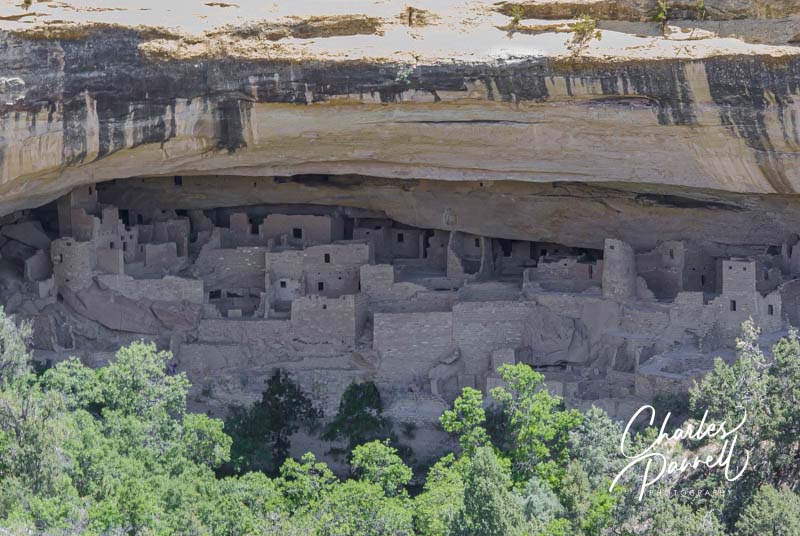
Save some time for a glance at Spruce Tree House, the third-largest cliff dwelling in the park. Although it’s not accessible to wheelchair-users and slow walkers, you can still get a good view of it from the back deck of the Chief Ranger’s Office. There’s a wheelchair-accessible pathway from the Chapin Mesa Archeological Museum, and plenty of room for large wheelchairs and scooters on the deck. As an added bonus, occasional ranger programs are also held there.
Drive the Mesa Top Loop
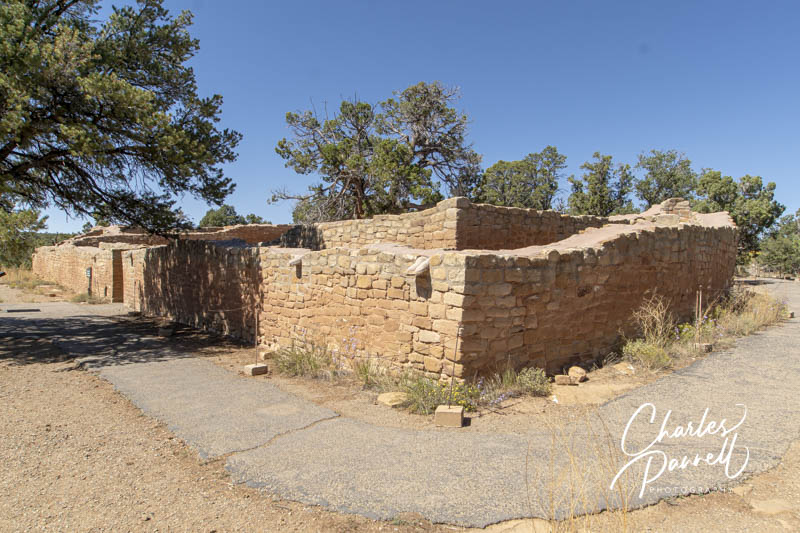
Sun Temple at Mesa Verde National Park
Although there are two scenic mesa drives, the Mesa Top Loop is the the best choice for a wheelchair-accessible Mesa Verde visit. This scenic six-mile drive features a variety of archeological sites grouped in chronological order, and offers a good representation of the variety of housing styles used by the Ancestral Pueblo people.
The first stop along the drive is the Pithouse site, which features one of the oldest permanent structures on the mesa. There’s a level pathway out to a covered structure which protects the excavated pithouses. These semi-subterranean structures, which date back to 600 AD, took advantage of the earth’s natural insulation.
The Pithouses & Pueblos site, which dates back to 700 AD to 950 AD is also a recommended stop. A short .2-mile loop trail leads out to the ruins, which includes standard pithouses as well as masonry structures. There’s level access to both structures, with plenty of room for wheelchairs inside. This stop offers a good overview of how the shelter styles evolved over a few hundred years.
The Mesa Top Sites, which date back to 900 AD are just up the road. A .1-mile trail leads out to the ruins, which was home to three different villages that were were built on top of one another. The three circular towers, which are the most intact features, were part of the last village built on the site in 1075 AD.
Make a quick stop at Sun Temple, and follow the paved path to the ruins, but don’t miss Cliff Palace View, near the end of the drive. There’s a paved path out to a lowered viewing scope, which offers an excellent view of Cliff Palace in the distance. And if you can’t manage the short walk, there’s also a good view of the cliff dwelling from the parking area.
Spend the Night
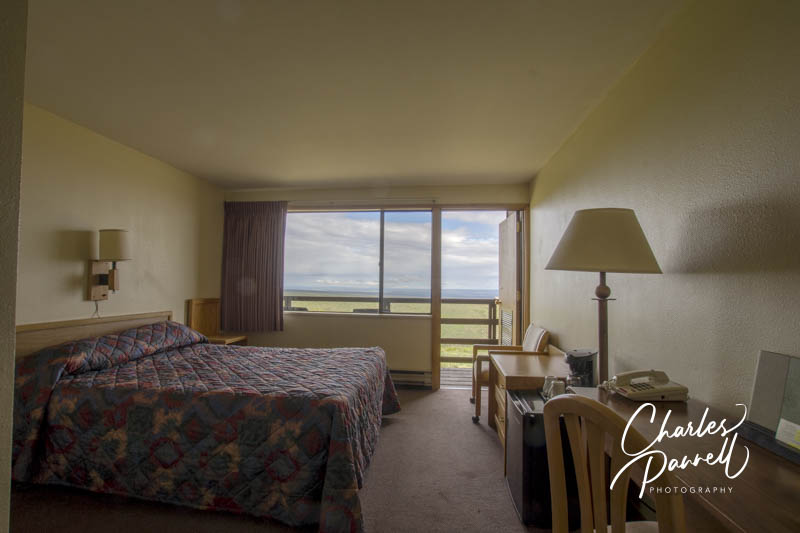
A great way to top off a wheelchair-accessible Mesa Verde visit is to spend the night in the park. Of course you can always camp out at Morefield Campground, but if you’d prefer a few more creature comforts, then Far View Lodge (www.visitmesaverde.com) is the perfect choice. Located about a mile north of the Far View Sites, this 150-room property features good wheelchair access and great views of the surrounding countryside.
There’s accessible parking near the main lodge building, with level access to the lobby. From there is just a short drive to accessible room 159. The room includes a threshold ramp, wide doorways, a lowered clothing rod and good pathway access. Decorated in a decidedly western theme, it’s furnished with a 22-inch high queen-sized bed with wheelchair access on both sides, a chest of drawers, a desk and a refrigerator.
The spacious bathroom is equipped with a three-foot-square transfer-type shower with a fold-down shower bench, grab bars and a handheld showerhead. The toilet grab bars are located on the back and right walls (as seated), and there is a roll-under sink just outside the bathroom. The room is very nicely done, and they even remembered to lower the towel bars.
On of the best features of this room is the private balcony, which offers level access and plenty of room for a wheelchair. Even if it’s too cold to sit outside, you can still enjoy the view from the large picture window. And since there’s no television in the room, you can occupy your time by star gazing and enjoying all that Mother Nature has to offer — and that’s reason enough make Far View Lodge your home base in Mesa Verde National Park.
Although most folks associate national parks with hiking, camping and outdoor activities, a few of our nation’s natural showplaces also have active railroads running through or near them. Be it a short train excursion in a national park or a longer rail journey to get there, riding the rails is a fun and accessible option for all visitors. So check out these wheelchair-accessible national park railroads on your next visit to these popular sites.
Grand Canyon National Park
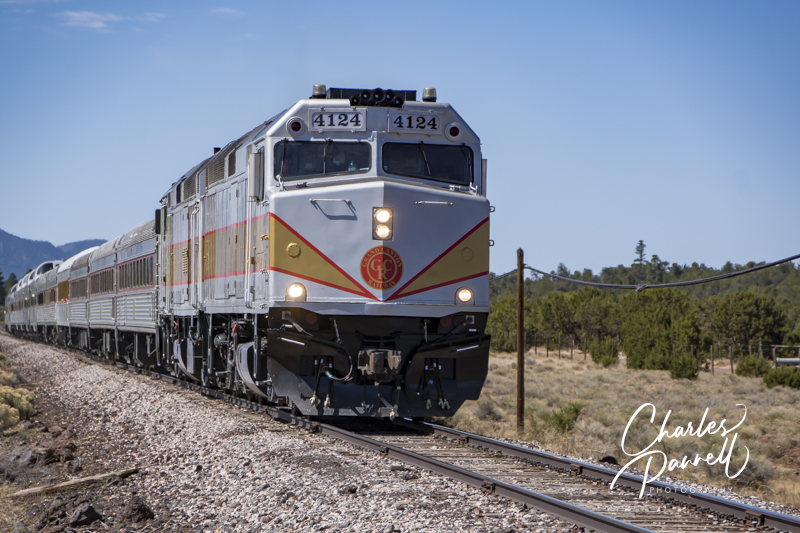
Grand Canyon Railway on its Way to the Grand Canyon
emerginghorizons.com/grand-canyon-without-a-car The Grand Canyon Railway departs from Williams and travels north to the Grand Canyon’s South Rim. Along the way this historic train passes through a Ponderosa Pine forest before it drops down to an open prairie, and then climbs back up to the Pinyon Pine forest near the South Rim. There are six classes of service, with Pullman, Coach and First Class being the most accessible, All of the cars can be accessed by a portable lift, and they are outfitted with wheelchair-tie downs and nearby companion seats. Passengers can do this excursion as a day trip, or opt to spend a night or two on the South Rim before returning to Williams. And if you’d like a longer rail journey, Amtrak’s Southwest Chief offers service to Flagstaff, with transfers available to Williams.
Yosemite National Park
Amtrak / Yarts Transfer Bus in Yosemite Valley
emerginghorizons.com/a-wheelchair-accessible-yosemite-rail-excursion/ If you’d like to ride the rails to Yosemite National Park, then hop aboard Amtrak’s Gold Runner. This route travels from Northern California and Southern California to the Merced Amtrak Station. From there passengers are transferred to an Amtrak Connection bus (operated by YARTS) for the rest of the journey to Yosemite National Park. All Amtrak trains feature lift boarding and have wheelchair tie-downs abord; and although all YARTS busses are accessible, it’s important to note your access needs on your Amtrak reservation. And once you get to Yosemite National Park it’s easy to get around, as the free shuttle stops at all of the popular attractions in Yosemite Valley. And all the park shuttles are wheelchair-accessible.
Cuyahoga National Park
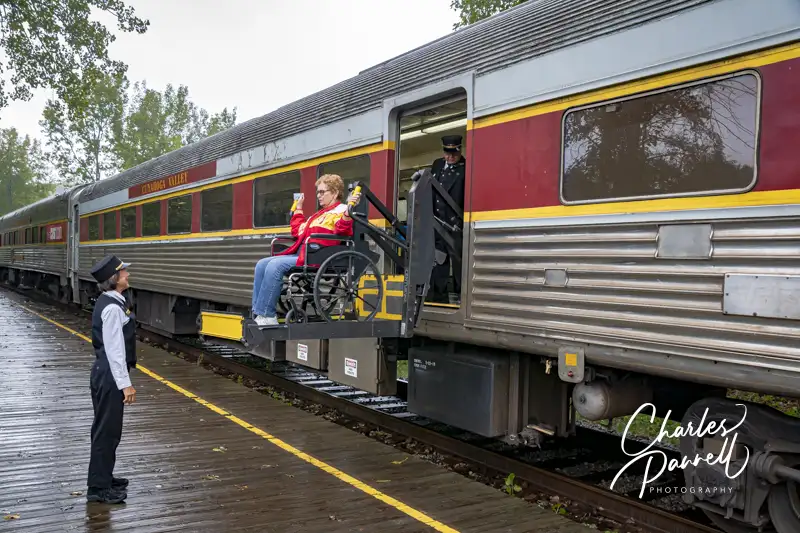
Boarding the Cuyahoga Valley Scenic Railway Train
emerginghorizons.com/plan-a-wheelchair-accessible-reunion-at-cuyahoga-valley-national-park/ Next up on our list of wheelchair-accessible national park railroads is the Cuyahoga Valley Scenic Railway. This Northeastern Ohio scenic railway dates back to the 1800s, and today it operates excursions through Cuyahoga National Park. The 3.5-hour excursion begins in the Rockside Station and passes south along the Cuyahoga River through Brecksville, the Boston Store Visitor Center and Peninsula Depot, before it winds its way down to the Akron Northside Station. After a short stop, it then returns north to the Rockside Station. Access on board is great, with lift access to the accessible car which has 60 seats, all of which can be flipped up to accommodate wheelchair-users. It’s a scenic excursion through the national park, with plenty of opportunity for wildlife viewing, including catching a glance or two at the resident bald eagles.
Glacier National Park
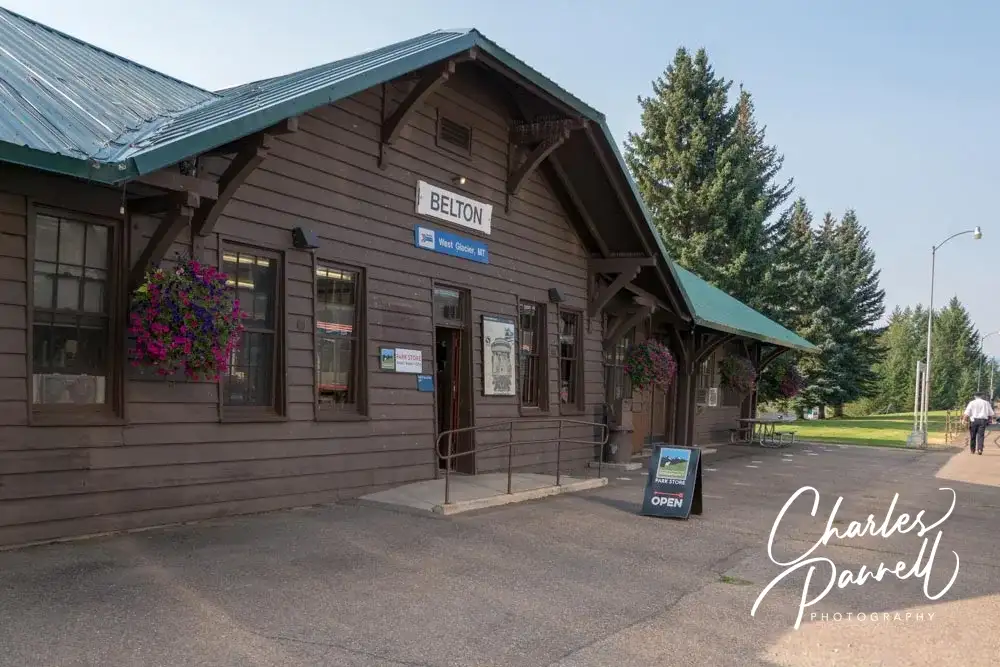
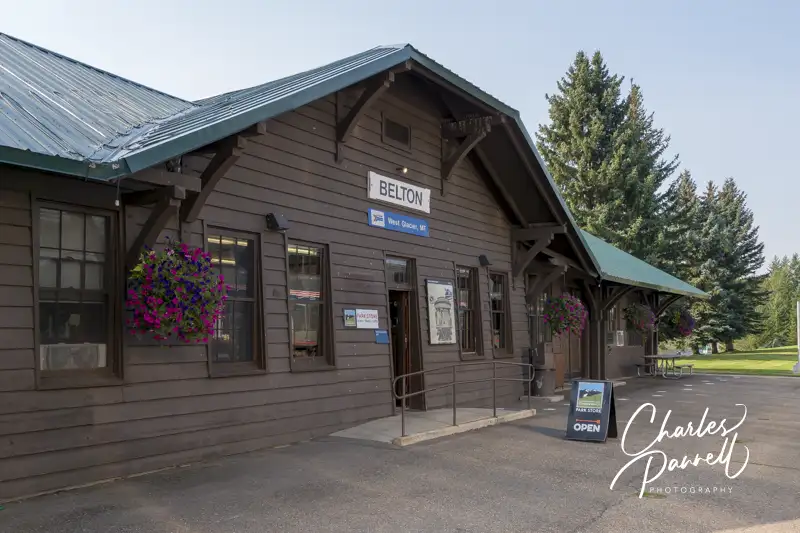
Belton Depot in West Glacier
Glacier National Park is another national park that you can get to without a car. Amtrak’s Empire Builder runs from Chicago to Spokane, with connections to Portland and Seattle. There is lift access to the train, with wheelchair-seating on board. The train stops at both West Glacier and East Glacier; and wheelchair-accessible shuttle transportation is available at both stops to connect to select lodges. And after you are settled in, you can use the Going-to-the-Sun Road shuttle or sign up for Red Bus tour to explore the park.
Mount Rainier National Park
View from the Mount Rainier Scenic Railroad
emerginghorizons.com/all-aboard-the-mt-rainier-scenic-railroad/ Although the namesake Mount Rainier Scenic Railroad does not go into the national park, it’s still worthy of a mention here because of the scenery and iconic Mount Rainier views. The train departs from Elbe, which is about 15 minutes from the Nisqually Entrance of the national park. This daily excursion train features historic cars which are pulled by a Polson Logging No. 70 steam locomotive. That said, historic does not mean inaccessible, as a manual wheelchair lift is available at the station. Two excursions are available on the railway, both of which travel through the countryside, as attendants share the history of the area and points of interest along the way. And if the weather cooperates and the clouds clear, you’ll also be treated to an impressive Mount Rainier view.
Denali National Park
Alaska Railroad’s Denali Star
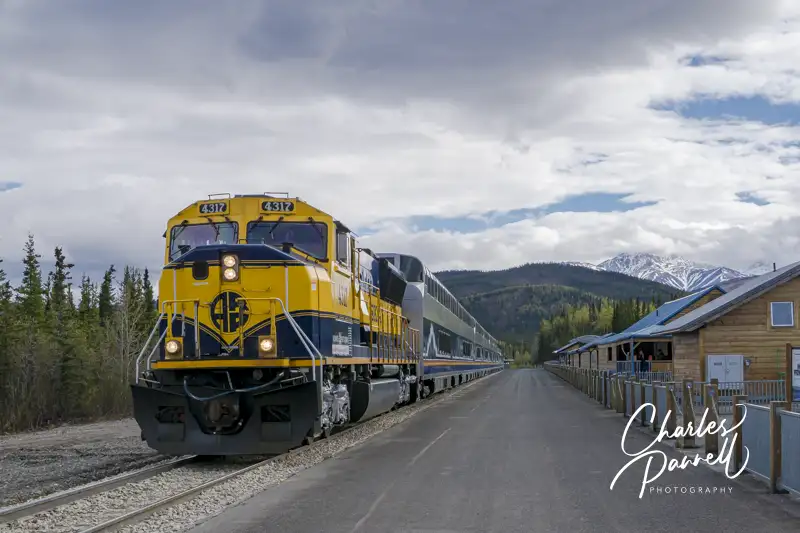
emerginghorizons.com/wheelchair-accessible-denali-national-park/ Last but certainly not least on our list of wheelchair-accessible national park railroads is the Denali Star up in Alaska. Operated by Alaska Railroad during the summer months, this line runs from Anchorage and Fairbanks to Denali National Park. All stations as well as the GoldStar dome cars are wheelchair-accessible. It’s a great way to get to this remote park, and most cruise lines also offer it as a post-cruise excursion. And you just can’t beat the scenery along the way. It’s a great prelude to a Denali National Park visit.
Barrier-Free Travel Glacier, Yellowstone and Grand Teton National Parks for Wheelers and Slow Walkers
Located at 7,100 feet along Southern Oregon’s Cascade Crest, Crater Lake was created over 7,700 years ago after a massive eruption of Mount Mazama. The resulting caldera filled with melted snow and rainwater, and subsequently the 1943-foot-deep lake took on a deep blue — if not somewhat ethereal — hue. Add in the surrounding cliffs that are nearly 2,000-feet high, two picturesque islands, and an old growth forest, and you have all the ingredients for a scenic national park experience. And although the lake itself isn’t wheelchair-accessible, there are many other areas in Crater Lake National Park (www.nps.gov/crla) that wheelchair-users and slow walkers can enjoy.
The Rim Drive
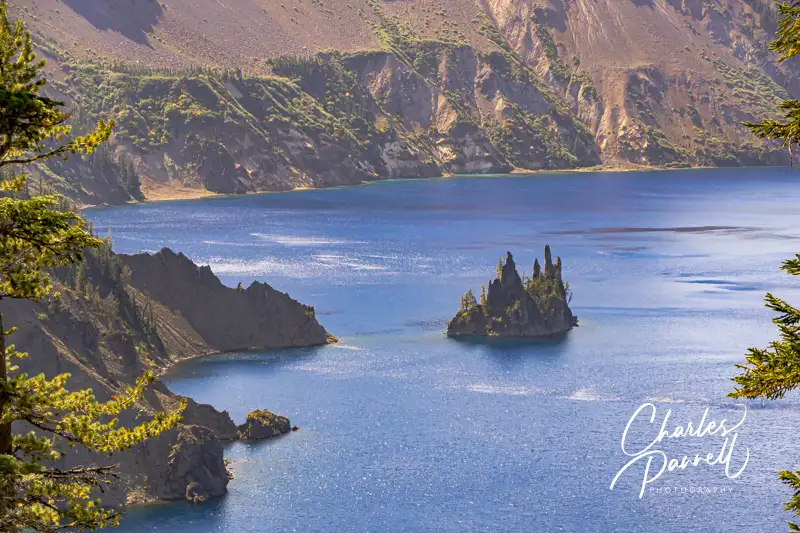
View from the Phantom Ship Overlook
A good way to enjoy Crater Lake National Park is to take the 31-mile Rim Drive that circles the caldera. For the best windshield views take the drive in a counterclockwise direction starting on West Rim Drive. There are a number of overlooks and pullouts along the drive, but the windshield views are also spectacular.
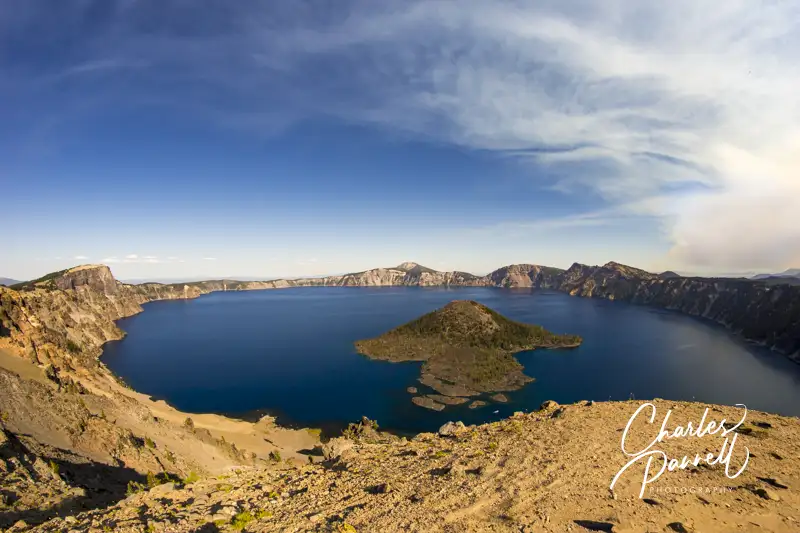
Be sure and stop at Watchman Overlook, which offers an excellent view of Wizard Island. There’s accessible parking near the accessible vault toilet, with curb-cut access to a sidewalk over to the lower overlook. The upper overlook is only accessible by stairs or a steep path, but don’t fret if you can’t make it to the top, as you’ll catch some of the best views from the road. Cloudcap Overlook and Phantom Ship Overlook also offer some great windshield views of the lake. And don’t miss Vidae Falls on the last section of East Rim Drive, as this 100-foot waterfall can be easily seen from the pullout.
If you’d like to leave the driving to someone else, Crater Lake Trolley (craterlaketrolley.net) offers an accessible tour which travels along Rim Drive and stops at five to seven viewpoints. This two-hour tour departs from Rim Village, and the lift-equipped trolley has space for one wheelchair. At least 24-hours advance notice is required for wheelchair accessibility (541-882-1896). It should be noted that wheelchairs must be no wider than 28-inches and have a combined weight limit of no more than 400 pounds.
Explore the Forest
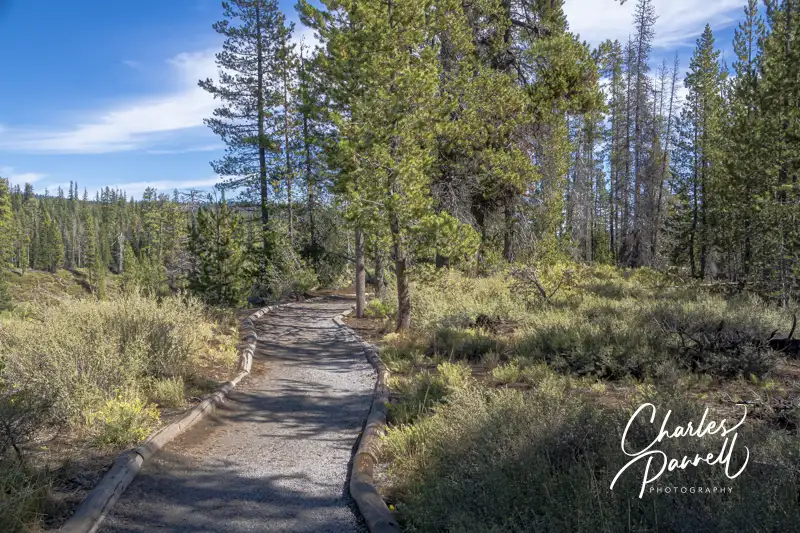
The Godfrey Glen Trail
Although the lake is the crown jewel of the park, the surrounding forest also offers some impressive vistas. To that end, one of the most accessible trails in the park– the Godfrey Glen Trail — is located near the south park entrance, on Munson Valley Road between Mazama Village and Park Headquarters.
This hard-packed dirt trail passes through an old growth hemlock and fir forest; and although there are some ruts and roots along the way, most are easy to dodge. The biggest obstacle along this 1.1-mile loop is the steep grade at the halfway point. Best bet it to travel in a clockwise direction, and double back when it gets too steep. Even if you can’t complete the whole trail, you’ll still get some nice canyon views along the way.
Pinnacles Road Trails
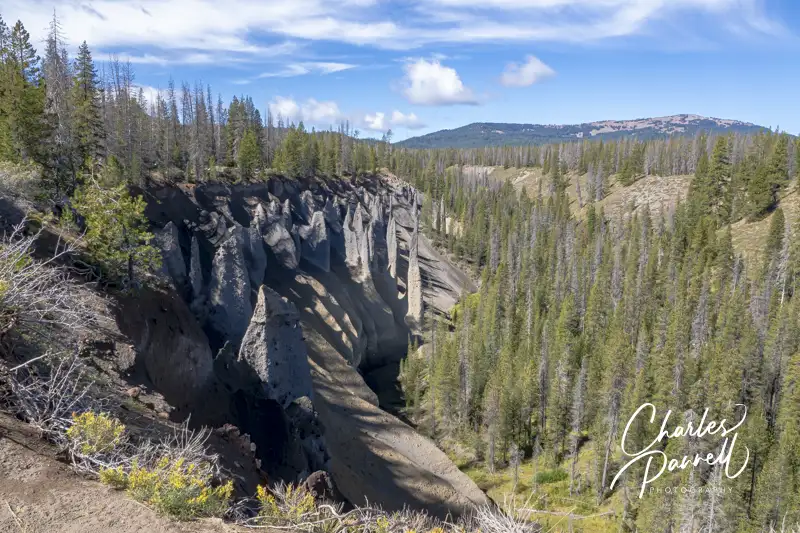
View from the First Overlook on the Pinnacles Trail
Although the Rim Drive is a must-do on any Crater Lake National Park visit, save some time to hop off-the-beaten-path and explore two accessible trails off of Pinnacles Road. Located on the south side of the lake, this seven-mile road begins near Phantom Ship Overlook, and runs out to Pinnacles Overlook, near the southeastern border of the park. The road and the overlook are named for the spire-like pumice formations that dot this river valley. Accessible parking is located next to the Pinnacles Trail, which offers a closer look at these unusual formations, that were created when hot volcanic gases shot up through the ash.
The Pinnacles Trail passes by several overlooks that offer good views of the formations. The hard-packed dirt trail is covered in crushed rock, and although it’s not entirely level, the undulations are doable for most wheelchair-users. Even if you can’t manage the whole half-mile hike to the park boundary, at least take the level 250-foot walk out to the first overlook. You won’t be disappointed.
The Plaikni Falls Trail, which is located near the beginning of Pinnacles Road is also worth a stop. Accessible parking is located near this trail that winds through an old growth forest to the base of the falls. That said, the last quarter-mile is extremely steep, and probably not doable for most wheelchair-users and slow walkers. On the other hand, the stroll through the forest is fairly level, and there are numerous wheelchair turn-outs and benches located along the way.
And although Pinnacles Road makes a nice outing, be forewarned that there are no accessible toilets at either trailhead. Best bet is to plan ahead and make a rest stop at White Bark Pine Picnic Area or the Crater Peak Trail Picnic Area before hitting the trails.
Rim Village
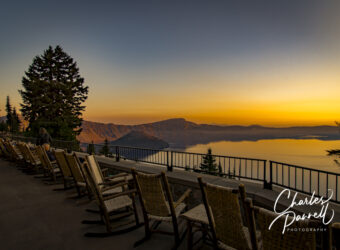
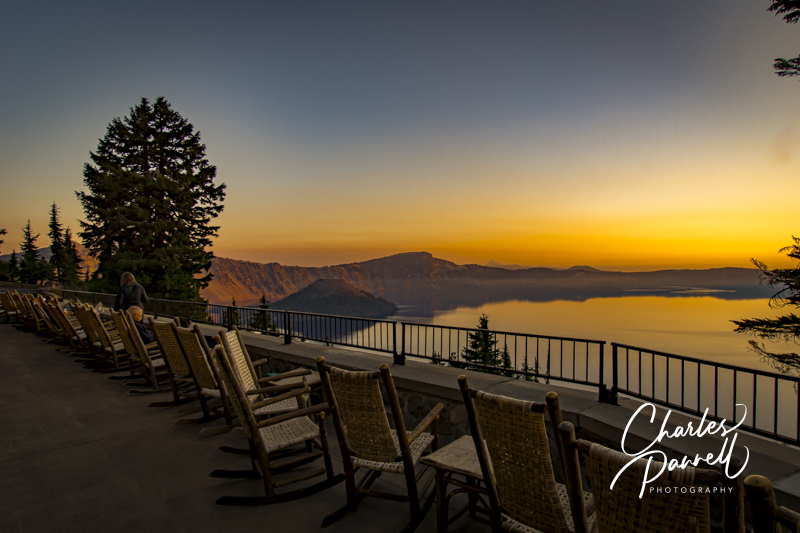
Sunrise on the Back Terrace at Crater Lake Lodge
Last, but certainly not least, save some time to enjoy the rim view on foot on the accessible section of the Rim Village Promenade. This level trail runs alongside the rim from the Rim Village Café and Gift Shop to the back terrace of Crater Lake Lodge. Accessible parking is located near the gift shop, with paved access to the trail behind the gift shop. When you get to the rim, make a right and continue along .3-miles until you hit the lodge.
Interpretive plaques are located along the way, and it’s the perfect spot for a selfie or two, as the views are grand. The trail is mostly paved, and undulating, with a slight change in elevation just past Kiser Studio. Still, most manual wheelchair-users can manage the grade with a little assistance. Alternatively, there’s ramp access down to the trail from the back terrace at Crater Lake Lodge. Either way, the views at both ends of the trail are equally impressive. Alternatively, if you don’t feel like hiking, then just sit and enjoy the lake view from the terrace. And, if you’d like to spend the night at the lodge, they do have a wheelchair-accessible room. (emerginghorizons.com/spend-the-night-at-wheelchair-accessible-crater-lake-lodge/). So pack your bags, and head to Crater Lake – it’s a great accessible destination.
In most cases a national park visit requires a vehicle, which can add extra time and expense to a fly-drive itinerary. Factor accessibility into the equation and it becomes even more complicated, as adapted rental vans are sometimes not readily available at gateway airports.
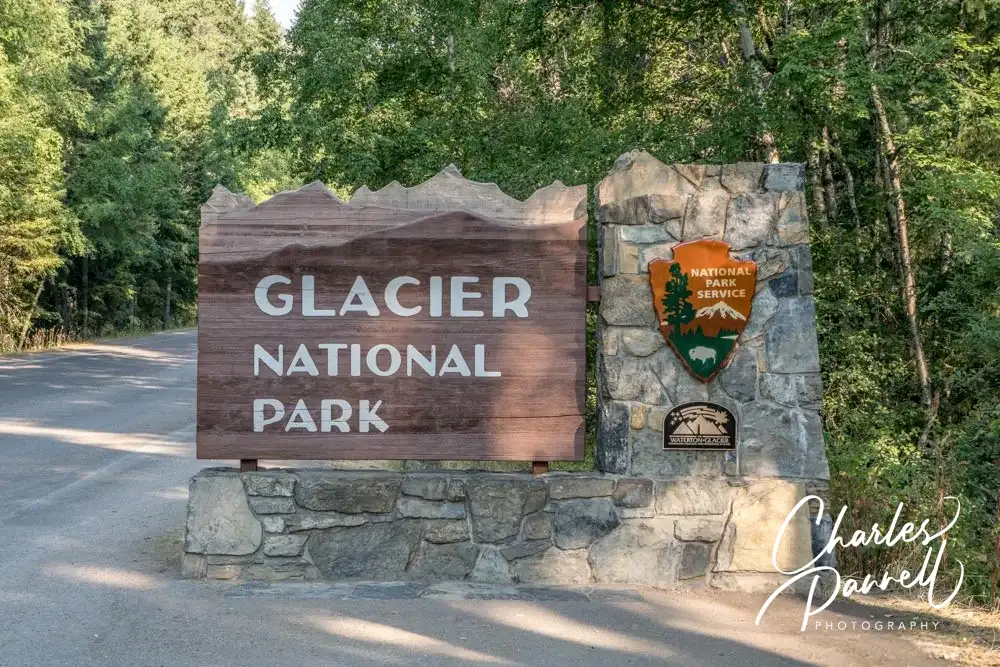
So what’s a traveler to do? Well if Glacier National Park (www.emerginghorizons.com/glacier-national-park) is on your bucket list, it’s now possible to enjoy a seamless accessible national park visit without a car, van, or even an airplane. Thanks to accessible rail connections, as well as a local network of accessible transportation providers, wheelchair-users and slow walkers can now get to, get around and get out and enjoy Glacier National Park without a car.
All Aboard
The first step to visiting Glacier National Park without a car is finding accessible transportation. To that end, wheelchair-accessible rail service is available to Glacier National Park on Amtrak’s Empire Builder train that runs from Chicago to Spokane. The train stops in West Glacier and East Glacier, and also connects to Portland and Seattle from Spokane. The Empire Builder train features an on-board lift, but station lifts are also available at both Glacier park stations.
The east-bound train departs Seattle in the late afternoon and rolls into West Glacier the next morning. The west bound journey is considerably longer — it takes almost 30 hours to reach East Glacier from Chicago. And although the West Glacier station is open year-round, the East Glacier station is closed during the winter months.
Accessible shuttle service is available at both stations to select park lodges. On the west side, Xanterra operates an accessible shuttle to and from Lake McDonald Lodge and the Village Inn at Apgar (both of which have accessible rooms). For more information or to make shuttle reservations, call (855) 733-4522. The East Glacier Train Depot is conveniently located across the street from Glacier Park Lodge; however accessible transfers are available to lodge guests with 24-hours notice. This lodge also has wheelchair-accessible rooms. For more information, contact Pursuit at (844) 868-7474.
Getting Around Glacier
Getting around Glacier National Park without a car is fairly easy too, thanks to a number of accessible shuttles and tours. The National Park Service operates the Going-to-the-Sun Road shuttle on both the east and west sides of the park. The wheelchair-accessible shuttles depart from Apgar Visitor Center and Lake McDonald Lodge on the west side and the St. Mary Visitor Center and the Rising Sun Picnic Area on the east side. It only operates during the summer months. Advance tickets are required for the shuttle, and they can be purchased at www.recreation.gov.
It’s just a short walk to the shuttle stop at Apgar Visitor Center from the Village Inn at Apgar; and the East Side Shuttle connects Glacier Park Lodge guests with the Going-to-the-Sun Road shuttle at the St. Mary Visitor Center. Wheelchair-accessible vehicles are available with 24 hours notice on the East Side Shuttle (844-868-7474).
Take a Tour
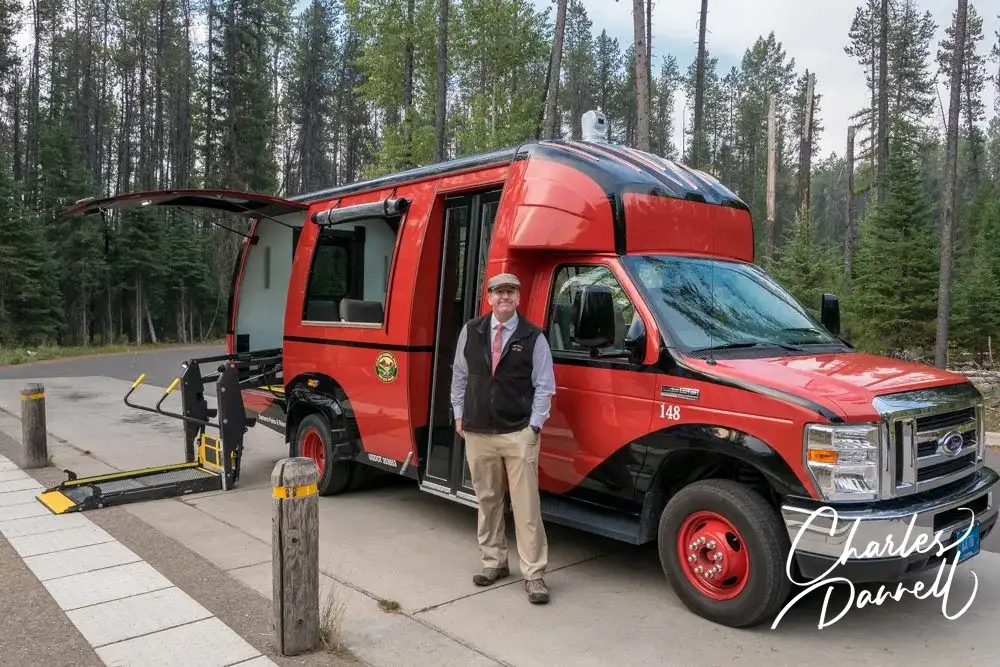
Accessible Glacier Red Bus Tour vehicle
Although the historic Red Buses of Glacier National Park are not wheelchair-accessible, Xanterra Parks also has two wheelchair-accessible vehicles in their fleet. These lift-equipped vehicles have two-wheelchair spaces with tie-downs, and can accommodate a total of 14 passengers.
The accessible tours generally follow the same itinerary as the standard tours; however they tend to spend more time at the accessible stops, such as the Trail of the Cedars and Logan Pass. The western tours depart from the Apgar Visitor Center and Lake McDonald Lodge, and the eastern tours depart from the St, Mary Visitor Center. For more information, visit www.glaciernationalparklodges.com, call (855-733-4522 or e-mail redbustours@xanterra.com. Remember to book early though, as these popular tours sell out quickly.
Additionally, Glacier Sun Tours also offers tours of the west and east sides of Glacier National Park in air-conditioned vehicles during the summer months. The tours depart from Apgar Visitor Center and St. Mary Visitor Center. Tour guides are lifetime residents of the Blackfeet Indian Reservation, and they offer visitors a good overview of the natural history of the park, and also integrate their own tribal history and culture into the interpretation. Advance reservations are required, and wheelchair-accessible vehicles are available upon request. For more information on Glacier Sun Tours offerings, visit www.suntours.co/.
Barrier-Free Travel Glacier, Yellowstone and Grand Teton National Parks for Wheelchair-Users and Slow Walkers
The powers that be just announced that Yosemite entrance reservations will not be required for the popular national park 2026. What does this mean? Well although visitors won’t have to buy a special entrance reservation permit for a specific time to gain entrance to the park, there will still be a few restrictions.
2026 Yosemite Entrance Plan
Although you will be able to pass through the entrance gate to Yosemite National Park without any additional documentation in 2026, the park will “will continue to utilize strong traffic management strategies to support visitor safety, access, and resource protection.” More specifically, “If Yosemite Valley reaches capacity, vehicles will be redirected to other areas of the park, including Wawona, the Mariposa Grove, Tuolumne Meadows, and Glacier Point Road.”
So what does that mean? Even though you will be able to get in the gate, you may not be able to access Yosemite Valley (where the bulk of the favorite attractions are) if there’s too much traffic. And with Yosemite Valley being a favorite destination, this could be a daily occurrence.
So, the best advice to visitors is to get an alpine (early) start if you are planning to visit Yosemite Valley. To be honest, that’s the best plan of action anyway, as the afternoon crowds tend to detract from the Yosemite experience. And if you want a real time update on parking , text YOSEMITE to 333111. Additionally, for information about wheelchair-accessible things to do in Yosemite, visit Accessible Yosemite.
And although it hasn’t been officially announced, it’s assumed that folks with campground and lodging reservations will be allowed access to their accommodations.
So, get there early, park your car and take the wheelchair-accessible Yosemite shuttle to enjoy Yosemite Valley.


 In most cases a national park visit requires a vehicle, which can add extra time and expense to a fly-drive itinerary. Factor accessibility into the equation and it becomes even more complicated, as adapted rental vans are sometimes not readily available at gateway airports.