The hottest, driest and lowest point in North America, Death Valley is the largest national park in the lower 48 states. And with over three million acres of wilderness area, there’s a huge diversity in the flora and fauna throughout the park. From majestic sand dunes and salt flats, to snow capped peaks, a lush oasis and even a massive crater, there’s something for just about everyone at this remote national treasure.
Insider Tips
A stop at Badwater – the lowest point in the US — is a must do on any Death Valley itinerary. There’s boardwalk access out to the salt flats, and from there you can roll as far as you like. It’s best to hit this area in the morning though, as it can get quite hot later in the day. Additionally, don’t forget the insect repellent, as the biting flies that are common in Death Valley really like this area of the park – especially in the summer.
Many visitors flock to Zabriskie Point and Dantes View, off of Highway 190; while most folks entirely pass up the scenic 20 Mule Team Canyon Drive, which is located between the two. This 2.5-mile scenic drive winds up and down the colorful eroded badlands, and offers an off-the-beaten-track experience without having to trek through the desert for days.
Although there’s no shortage of food offerings at Furnace Creek, head on over to Timbisha Shoshone land and try something different for lunch. Just follow the signs to Timbisha Village Tacos from highway 190, between the Furnace Creek Inn and Furnace Creek Ranch. There aren’t many choices on the menu – Indian tacos, burritos, taco salad and shaved ice – but the food is tasty and the prices are reasonable. And although their hours vary, they are usually open for lunch. To-go food is also available.
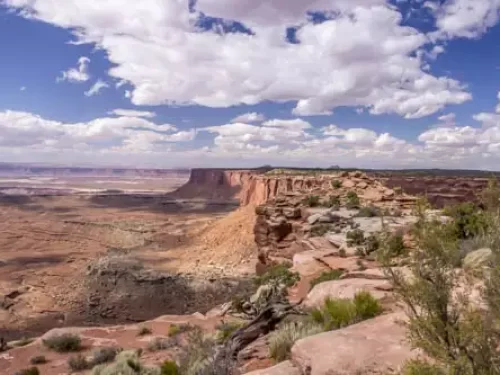
Located on the east side of the state, about five hours from Zion, Canyonlands National Park is the largest of Utah’s “mighty five”. That said, it’s also a pretty rugged park, and you’ll need a four-wheel-drive vehicle to access some of the more remote areas. There are however two sections of the park that are easily accessible in a standard car or truck — the Needles District and the Island in the Sky District. Both of these areas offer scenic drives on paved roads, with overlooks and viewpoints along the route.
Insider Tips
Don’t miss Newspaper Rock which is located just outside the Needles District, about 12 miles from the intersection of Highway 191 and Highway 211. This massive rock contains an impressive collection of historic petroglyphs, which date back some 1,500 years. There’s a 30-foot long level trail next to the petroglyph panels that offer visitors an up-close-and-personal look at these Puebloan and Ute relics.
For the best view in the park, head over to Grand View Point Overlook. From there, you’ll get a very accessible view of the La Sal Mountains and the Colorado River Canyon, and you can even catch a gander of The Needles District in the distance.
Be sure and stop at Shafer Canyon Overlook on your way out of the park. Although there are also turnouts near this overlook on the way in, it’s best to catch the view as you head north– near where the final scene of Thelma and Louise was filmed. Impressive is an understatement.
Named for Ebenezer Bryce, a Scottish immigrant who settled in the Paria Valley in 1875, Bryce Canyon National Park is known for the spire-like hoodoos that seem to magically rise from the canyon floor. Created by a combination of freezing, thawing and erosion, these unusual limestone formations were sculpted over millions of years. Today, this Utah national park is often described as a cave without a ceiling; as the hoodoos bear a striking resemblance to stalagmites found on cavern floors.
Insider Tips
Free wheelchair-accessible shuttle bus transportation through the park amphitheater is available from April through the end of September. Although cars are allowed along this route, parking is at a premium during the busy summer season, so taking the shuttle bus is the easiest way to see the park.
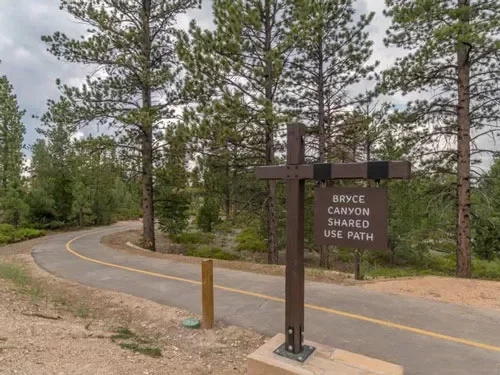
Don’t miss the Bryce Canyon Shared Use Path – the longest accessible trail in the park. This paved trail begins outside of the park at the shuttle staging area at Ruby’s in Bryce Canyon City, and travels 2.4 miles to the park entrance, then continues another 2.6 miles to Inspiration Point. It also connects with the shuttle system at the visitor center, general store, lodge, Sunset Point, Sunset Campground and Inspiration Point, so you can do as much of the trail as you like, then hop on the accessible shuttle to return to your car.
The historic Lodge at Bryce Canyon, which dates back to 1925, offers four wheelchair accessible rooms – two with roll-in showers and two with tub/shower combinations. This rustic property was the brainchild of Gilbert Stanley Underwood who also designed Old Faithful Lodge at Yellowstone, the Ahwahnee at Yosemite, and Jackson Lake Lodge at Grand Teton National Park.
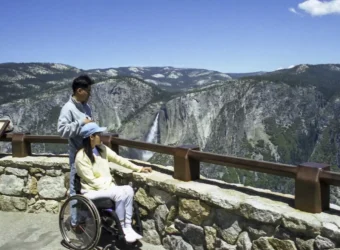
Thinking about visiting a US national park in a wheelchair? Although most of the parks have rugged back country areas, the majority have also added access upgrades so that wheelchair-users and slow walkers can enjoy these national treasures. As an added bonus, admission discounts are available to seniors and people with a permanent disability. That said, advance planning greatly enhances any national park visit; so with that in mind, here are some tips and tricks to help save time, money, and avoid disappointment on your next national park adventure. Top of Menu
Admission Passes
If you’d like to save a few bucks on your next national park visit, then pick up one of these discount passes at any national park entrance station. They all provide free admission to the passholder and all passengers in the same vehicle, but they each have different eligibility criteria.
The America the Beautiful Access Pass is available to U.S. citizens or residents with a permanent disability. Proof of disability and residency is required in order to obtain this free lifetime pass. It’s also available by mail for a small handling charge.
The America the Beautiful Military Pass is available to all active duty service members and veterans of the US Armed Forces. There’s no charge for this yearly pass, but a Common Access Card, military ID, veteran ID or a veteran designation on a driver’s license is required to obtain one. This pass also available by mail for a small handling charge,.
The Senior Pass is available to U.S. citizens or permanent residents who are at least 62 years old. This lifetime pass costs $80. An annual Senior Pass is also available for $20, and the cost of that annual pass can be applied to the purchase of a lifetime pass. Proof of age and residency or citizenship are required to obtain either pass. These passes are also available by mail for an additional handling charge.
The National Park Annual Pass is available to anyone and it’s a good choice if you plan to visit many national parks. The pass costs $80 and it’s valid for admission to all national parks for a year. An annual pass for each individual park is also available, and the price for these passes varies depending on the park. This park-specific pass is an attractive choice for folks who live near a national park and plan numerous visits. Both passes are available though the mail for an additional handling charge.
Finally, the free Annual 4th Grade Pass is available to all 4th graders. It’s valid for the duration of the 4th grade school year and the following summer. Paper vouchers can be obtained at everykidoutdoors.gov and exchanged for an Annual 4th Grade Pass at any national park entrance. This pass is also available to home-schooled students.
For more information about these passes, visit store.usgs.gov.
A nonresident fee will be charged to each non-US resident aged 16 or older who visits these popular national parks.
Acadia
Bryce Canyon
Everglades
Glacier
Grand Canyon
Grand Teton
Rocky Mountain
Sequoia & Kings Canyon
Yellowstone
Yosemite
Zion
Non-US residents will pay the standard park entrance fee, plus a $100 surcharge for each person aged 16 or older. Alternatively, non-US residents can purchase a non-US resident annual pass for $250, which covers all passengers in the vehicle.
Even if you don’t have a park pass, you can still get free admission on one of the “fee free days” each year. During these days, the park gates swing open and no entrance fees are collected. Unfortunately the parks get pretty crowded on those days. Fee free days are only for U.S. residents. Non-U.S. residents will have to pay the entrance fee and nonresident fee. Here’s a list of the fee-free days, but it’s best to visit www.nps.gov for the exact dates, as some do change slightly every year.
In an effort to control the crowds, some of the more popular national parks require advance reservations during peak seasons. These reservations are required even if you have a national park pass. They are not available at the parks, and visitors who don’t have one will be turned away. The following parks currently require advance entrance reservations.
Arches National Park Carlsbad Caverns National Park Glacier National Park Rocky Mountain National Park Yosemite National Park
Timing is everything, when it comes to a national park visit. Generally speaking, most parks experience peak visitation between Memorial Day and Labor Day. Unfortunately many parks also have abbreviated seasons, so it’s difficult to visit outside of prime time. If you must visit during the high season, try to avoid summer weekends and holidays, as parking, lodging and campsites are difficult — if not impossible — to find at those times.
Additionally, an early morning visit will help circumvent the crowds. The magic hour is usually 10 AM, after which the bus tours start to roll in to the parks. It’s also not unusual to wait an hour in the entrance queue at the more popular national parks, if you arrive in the afternoon during peak season. On the other hand, if you get an early start, you’ll have a more relaxing visit, and you won’t have to fight the crowds. The best way to have a more enjoyable experience is to plan for several morning excursions, if you plan to visit a national park in a wheelchair. Top of Menu
Road Closures
Although many parks are open year-round, some experience seasonal road closures. For example, Going-to-the-Sun Road, which traverses Glacier National Park, is closed from late fall to late spring due to heavy snow. Sections of the road open incrementally, and the entire length is not passable until June or July. Likewise, Tioga Road in Yosemite National Park is usually closed from November to May, and the park is inaccessible from the Tioga Pass Entrance at that time.
Some parks may also experience temporary road closures due to extreme weather conditions. It’s not unusual for Yosemite to close some roads during heavy snow; and the park has closed entirely a few times during heavy floods. And although Bryce Canyon National Park is open year-round, there may be temporary road closures after snow storms, until the roads are cleared.
It’s a good idea to always carry chains or cables when traveling through the western national parks, as spring and fall snow storms are not uncommon. Most parks also have a weather and road condition telephone number posted on their website; however it’s also a good idea to monitor the park’s twitter and Facebook feeds for breaking news about road closures. Top of Menu
Altitude
It’s a good idea to take note of the elevation of the places you plan to visit in the national parks, especially in the Western U.S. Although the symptoms of altitude sickness generally do not appear at elevations under 8,000 feet, wheelchair-users, slow walkers and people with compromised immune systems may feel the effects of increased altitudes at significantly lower elevations. Symptoms can include headaches, dizziness, shortness of breath, lethargy, insomnia and gastrointestinal disturbances.
If you are unfamiliar with the effects that higher elevations have on your body, it’s best to take it slow and drink plenty of water for the first few days at any increased elevation, especially if you live at sea level. Additionally, you may want to consult your doctor regarding the effects that increased elevations may have on your specific condition, before you visit a national park in a wheelchair. Top of Menu
Loaner Wheelchairs and More
Many national park visitor centers have free loaner wheelchairs for visitors who can’t walk for or who tire easily. In most cases the loaner wheelchairs cannot be taken to other areas of the park. Additionally, they are available on a first-come basis, so if you absolutely need an assistive device to get around, it’s best to bring one with you.
Some parks go a step or two beyond providing a standard wheelchair. For example, Redwood National Park has beach wheelchairs and all-terrain track chairs available at many locations; while Great San Dunes National Park has a sand wheelchair available. Additionally, Yosemite National Park has a handcycle rental concession, so everyone can explore the 12 miles of paved bicycle trails that wind through the park. And if you plan to visit Rocky Mountain National Park, be sure and pick up a free loaner track chair at the Estes Park Mountain Shop (www.estesparkmountainshop.com/) to explore the park. Top of Menu
Service Animals
If you are planning to visit a national park in a wheelchair, and you have a service animal, there are no restrictions on the areas that you and your service animal may visit. This includes public buildings, lodges, shuttle buses, campgrounds and outdoor areas. Under the ADA, a service animal is defined as a dog that is individually trained to do work or preform a task for a disabled person. Furthermore, the work or task that the dog provides must be directly related to the person’s disability.
Dogs whose sole function is to provide comfort or emotional support — Emotional Support Animals — do not qualify as service animals under the ADA. Emotional Support Animals are subject to the park’s pet regulations and restrictions.
It should also be noted that although some organizations sell “service animal registration” documents on-line, these documents do not convey any rights under the ADA, and the Department of Justice does not recognize them as proof that a dog is a service animal.
For more information on the ADA definition of a service animal, visit www.ada.gov/. Top of Menu
Wheelchair-Accessible Lodging
Many national parks have hotels or lodges; and although many of the properties are historic, access upgrades have been added over the years. As a result a good number of in-park lodges offer updated wheelchair-accessible rooms with roll-in showers.
All of the in-park lodgings are managed by authorized concessionaires, who have contracted with the National Park Service, and operate under strict guidelines. They are responsible for the daily operations of the facilities, as well as improvements and upgrades. It’s important to deal with these concessionaires directly when you make a reservation; as not only will you get the best price there, but you will also have access to employees who can block the accessible rooms and describe the access details of each available unit.
Unfortunately these concessionaires do not always come up first in internet searches because paid advertisements appear before them. Some of these paid advertisements even list “national park lodges” that are located many miles outside the parks, which is misleading to people who are unfamiliar with the local geography. The authorized concessionaires for all the national park lodges are listed below, so look for their branding on any booking engine for national park properties. To avoid disappointment, deal directly with these concessionaires when making plans to visit a national park in a wheelchair.
Badlands National Park (Cedar Pass Cabins) Big Bend National Park (Chisos Mountains Lodge) Bryce Canyon National Park (The Lodge at Bryce Canyon) Grand Canyon National Park (Grand Canyon Lodge at the North Rim) Grand Teton National Park (Signal Mountain Lodge) Isle Royale National Park (Rock Harbor Lodge) Mesa Verde National Park (Far View Lodge) Olympic National Park (Lake Crescent Lodge, Sol Duc Lodge, Log Cabin Resort) Yosemite National Park (Curry Village, Yosemite Valley Lodge, The Ahwahnee, Wawona Lodge)
Grand Canyon National Park (Yavapai Lodge) Kings Canyon National Park (Cedar Grove Lodge, John Muir Lodge, Grant Grove Cabins) Olympic National Park (Kalaloch Lodge) Sequoia National Park (Wuksachi Lodge) Shenandoah National Park (Skyland Lodge, Big Meadows Lodge, Lewis Mountain Cabins)
Death Valley National Park (Inn at Death Valley, Ranch at Death Valley) Glacier National Park (Swiftcurrent Motor Inn, Many Glacier Hotel, Lake McDonald Lodge, Rising Sun Motor Inn, Village Inn Motel) Grand Canyon National Park (El Tovar Hotel, Kachina Lodge, Thunderbird Lodge, Maswik Lodge, Bright Angel Lodge) Yellowstone National Park (Canyon Lodge & Cabins, Lake Yellowstone Hotel, Lake Lodge Cabins, Mammoth Hot Springs Hotel, Roosevelt Lodge, Old Faithful Lodge, Old Faithful Snow Lodge, Old Faithful Inn, Grant Village Lodge) Zion National Park (Zion Lodge) Top of Menu
Wheelchair-Accessible Transportation
Some of the busier national parks offer shuttle bus transportation within the parks, to cut down on traffic. And although they are not mandatory, it’s a good idea to make use of them when they are offered, as parking is at a premium during peak season in the more popular national parks.
Grand Canyon National Park, Yosemite National Park, Sequoia National Park, Bryce Canyon National Park, Denali National Park and Zion National Park all have accessible shuttle buses. And although most of the shuttles are optional the Zion shuttle is mandatory, north of Canyon Junction from March to October, on weekends in November, and during the holiday season in December. Zion Lodge guests are given special passes at the entrance station that allow them to drive to the lodge parking lot. Visitors who need to carry along additional medical equipment or who cannot ride the Zion shuttle for medical reasons are eligible for a Yellow Pass Permit, which allows them to drive their personal vehicles on Zion Canyon Drive. The pass is free and is available at the Zion Canyon Visitor Center.
Some parks — such as Yosemite and Grand Canyon — also allow disabled visitors to drive on roads that are normally closed to vehicles. Yosemite visitors who have a disabled placard can drive on Happy Isles Road and Mirror Lake Road; while Grand Canyon visitors who have a mobility issue can get a Scenic Drive Accessibility Permit, that allows them to drive on Yaki Point Road and Hermit Road when it’s closed to private vehicles. A disabled placard is not required in order to obtain this permit; however vehicles are prohibited from parking in accessible parking places in the park without a disabled placard or license plate. The permit is available at the visitors centers and park hotels.
Some communities also offer shuttle transportation from gateway cities to the national parks. Groome Transportation (groometransportation.com/flagstaff/) provides accessible transfers between the Flagstaff Amtrak Station and Pulliam Airport to Maswik Lodge on the South Rim of the Grand Canyon. Accessible vehicles are available but they must be requested at least 24 hours in advance. And over in California, YARTS (yarts.com) provides fixed route public transportation to Yosemite from the surrounding gateway communities. There are four YARTS routes, which enter the park through each of the main park entrances. All YARTS buses are wheelchair-accessible; however passengers must contact YARTS at least 48 hours in advance insure availability. Top of Menu
Camping
Most national parks have campgrounds with accessible campsites that are operated by the National Park Service or private concessionaires. These sites usually include a paved parking space, a level tent site, a raised grill and an accessible picnic table. They are located near an accessible shower house which usually has a roll-in shower, an accessible toilet stall and a roll-under sink.
Some accessible campsites also have raised tent platforms, which are built at wheelchair height for easier transfers. Grand Teton offers the raised tent platforms at Jenny Lake Campground and Signal Mountain Campground; while they are available in Yosemite at Upper Pines Campground, Lower Pines Campground and Wawona Campground.
Some parks may require proof of disability in order to occupy an accessible campsite. If nobody has a need for an accessible site, able-bodied campers may be asked to move to a non-accessible site if a qualified person with a disability has a need for the accessible site. In most cases, accessible campsites may not be reserved by able-bodied campers unless they are the only sites left at the time of reservation.
Reservation for accessible campsites may be made at www.recreation.gov or on the concessionaire’s website. Top of Menu
Ranger Programs
Free ranger-led programs are available throughout the day at most national parks. The programs include lectures about the local environment, guided hikes and evening campfire programs. Most of the lectures and campfire programs are wheelchair-accessible, but some of the ranger-led hikes take place on inaccessible trails. Consult the park newspaper or check at the visitor center for a current schedule and the accessibility details of the ranger-led programs.
Some national parks also offer special ranger programs that require advance registration, For example, the excellent Ride with a Ranger accessible bus tour is offered twice a day in Zion National Park. There is no charge for the tour, but reservations must be made in person at the Zion Canyon Visitor Center. Seating is limited and reservations can be made up to three days in advance.
Likewise Arches National Park sporadically holds night sky viewing programs in their nicely accessible viewing space at Panorama Point. The space includes interpretive panels, bench seating and a presentation bay. It’s a great vantage point day or night.
And don’t forget about the Junior Ranger Program, which isn’t just for kids. Pick up a junior ranger field manual at the park visitor center, complete the activities and get a junior ranger badge upon completion. There’s no cost for the field manual or the badge, and some parks even throw in a cool extra treat, like the moose eraser I picked up at Isle Royale National Park. Even if you don’t go the full nine yards and get the official badges, you’ll still learn a lot about the national parks you visit by completing the activities in the junior ranger field manuals. Top of Menu
Wheelchair-Accessible Trails
Most national parks have at least one wheelchair-accessible trail; however that doesn’t mean it’s a completely level trail. According to ADA guidelines, accessible trails must be wide and on firm ground; and although most of the trail will most likely have a slope of less than 5%, no more than 30% of the the total length of an accessible trail may have a running slope greater than 8.33%. Additionally, running slopes between 8.33% and 10% are only allowed in 30-foot segments, with resting intervals at the top and bottom of each segment. And the running slope of an accessible trail may never exceed 12%. On the plus side, many accessible trails also include signs that list their length, width, grade and cross slope.
The most accessible trails are usually located near visitor centers. For example, up in North Cascades National Park, the extremely accessible .05-mile Sterling Munro Boardwalk starts in the back of the visitor center and winds through the forest out to a scenic viewpoint. This trail is wide and level, and doable by most people.
Boardwalks are also popular around wet areas; in fact Yellowstone National Park has a number of accessible boardwalks near the park’s geothermal features. Midway Geyser Basin is a mile-long boardwalk that gains some elevation but the slope is gradual, and there are level spots to stop and rest along the way. There are wide level viewing spots along this trail that circles Excelsior Geyser, Turquoise Pool, Opal Pool and Grand Prismatic Spring – the largest hot spring in the park. It’s truly one of the nicest — and most colorful – geothermal areas in the park.
Don’t overlook multiuse trails either, as many of them are wide, paved and wheelchair-accessible The Bryce Canyon Shared Use Path is an excellent example. The trail begins outside of the park at the shuttle staging area at Ruby’s in Bryce Canyon City, and travels 2.4 miles to the park entrance, then continues another 2.6 miles to Inspiration Point. And the good news is, the entire five-mile length is paved, level and wheelchair-accessible. It also connects with the shuttle system at the visitor center, general store, lodge, Sunset Point, Sunset Campground and Inspiration Point, so you can do as much of the trail as you like, then hop on the shuttle to return to your car.
Many national parks also feature accessible trails to some of their top attractions. Such is the case in Yosemite National Park, which boasts the nicely accessible Lower Yosemite Fall Trail. This wide paved half-mile trail leads through the forest to the base of Lower Yosemite Fall. A short boardwalk section of the trail also covers a muddy stretch, and has low bumpers for unobstructed wheelchair viewing. There are benches and interpretive plaques along the way, and it’s a pleasant spot to just sit back and enjoy Mother Nature. Plus you just can’t beat the feel of mist on your face as you admire the roaring falls. Top of Menu
Accessible Tours
Although it’s entirely possible to see most national parks on your own, some concessionaires offer guided tours for a more in-depth experience. These accessible tours vary from park to park, but here are a few examples.
In Grand Canyon National Park, Xanterra (www.grandcanyonlodges.com) offers a number of narrated bus tours that depart from Grand Canyon Village on the South Rim. Tour choices range from the Sunrise Tour that covers the west side or the park, the Hermits Rest Tour which travels along Hermit Road, the Desert View Drive Tour which focuses on sights in the east end of the park, and the Sunset Tour which concludes with a stop at one of the South Rim’s most panoramic viewpoints. Accessible buses are available for any of the tours with 48-hours advance notice, but it’s best to reserve space as far in advance as possible, as these popular tours fill up quickly.
Over in Glacier National Park, Xanterra (www.glaciernationalparklodges.com) also offers a wheelchair-accessible alternative to the historic Red Bus Tours. These tours are conducted in luxury lift-equipped buses with two wheelchair spaces and tie-downs. Passengers get a full view of everything around them, thanks to an on-board camera and monitors, and roll-up plastic flaps on the windows. Tours are available on the west and east sides of the park, with stops at accessible trails and viewpoints along the way. And although these tours are a great option for wheelchair-users, they are available to slow walkers, people who use canes, or anyone who feels they can’t manage the two narrow 18-inch high steps and the bench seats on the historic vehicles. Even better, you get the entire bus to yourself, so it’s almost like a private tour.
Thr Zion Lodge Tram Tour (www.ZionLodge.com) is also a great option for wheelchair-users and slow walkers. The open-air tram tour departs from Zion Lodge in the late afternoon, and travels along Zion Canyon Scenic Drive. The hour-long tour features ramp access with wheelchair and companion seating aboard the tram. The tour is usually available from spring to fall, and tickets can be purchased at the front desk at Zion Lodge. Visit the Zion Lodge website for tour times and more information.
Last but not least, Aramark (www.travelyosemite.com) offers the incredibly scenic Valley Floor Tour in Yosemite National Park. This two-hour naturalist-led tour introduces visitors to the highlights of Yosemite, and presents a good primer on the natural history of the park. During good weather the tours are conducted in open-air trams which offer magnificent views of the surrounding natural features; but in inclement weather, buses replace the trams. Accessible tour vehicles for this popular tour should be requested at least 48 hours in advance, so book early to avoid disappointment. Top of Menu
Resources
All of the parks have an official National Park Service page, which can be found at www.nps.gov. Although they contain maps and general information about each specific park, these pages are not updated daily.
For updated information about road closures or other time sensitive information, it’s best to visit the Facebook page or follow the twitter feed of the national park in question. Many concessionaires also maintain a strong social media presence and are quite responsive to questions. Top of Menu
Additional Information for Exploring a National Park in a Wheelchair
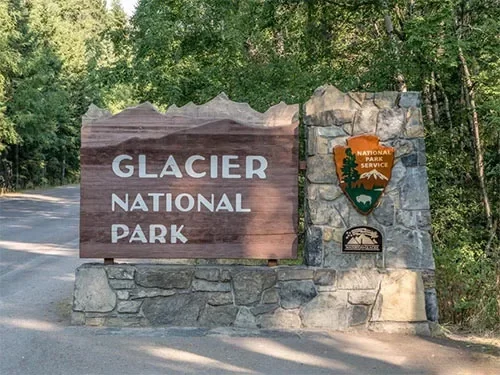
Known as the “Crown of the Continent” because the Continental Divide bisects the park, Glacier National Park encompasses more than a million acres of coniferous forests, alpine meadows, pristine lakes and glacier-carved peaks. The wildlife in the park is just as diverse at the landscape that supports it, and it includes elk, bighorn sheep, moose, and one of the largest remaining grizzly populations in the lower 48 states.
Insider Tips
A well kept secret along Going-to-the-Sun Road, Red Rock Point offers a beautiful view of McDonald Creek cascading down over the massive red rocks. The turnout is located about a mile north of the Trail of the Cedars on the left side of the road. Keep your eyes peeled when you get close, as there is absolutely no signage to mark the overlook. There’s accessible parking near a hard-packed dirt path that leads .06 miles out to a boardwalk viewing platform.
Although the historic Red Buses of Glacier National Park are not wheelchair-accessible, Xanterra Parks and Resorts has two wheelchair-accessible vehicles in their. The lift-equipped buses have roll-up plastic flaps on the windows, and passengers get a full view of everything around them, thanks to an on-board camera and monitors Even better — the accessible vehicle is booked solely for your party, so you get a private tour at the regular tour price.
In addition to an entrance fee or a park pass, a day use entrance reservation is also required for Glacier National Park visitors during peak visitation periods in the summer. Entrance reservations are currently required for the West Entrance Station, the Camas Entrance Station and Many Glacier Valley. That said the park adjusts the system annually, so check the park website for the most current information. Entrance reservations are not available at the park. They must be purchased at recreation.gov in advance. Visitors without an entrance reservation will not be admitted.
Generally speaking, caves are not usually a great recreational choice for wheelchair users-and slow walkers. That said, there are a few exceptions. And in that respect Mammoth Cave National Park tops the list. Not only do wheelchair-users and slow walkers have their choice of several accessible trails above ground; but thanks to some recent repairs and renovations, they can also explore the subterranean chambers of this Southwestern Kentucky national park.
A Wheelchair-Accessible Mammoth Cave Tour
Elevator to the accessible Mammoth Cave tour
Mammoth Cave has something that most caves lack — an elevator. Unfortunately it was out of service for several years; but after a massive $2.2 million repair project, it’s once again operational. And after the repairs were completed, an Accessible Cave Tour was added to the roster.
This two-hour tour begins at the visitor center, where participants then drive their own vehicles to the elevator on Cave City Road. There’s accessible parking in the lot, and barrier-free access over to the elevator. The tour of this gypsum cave travels over level cement pathways and visits the Snowball Room, and includes portions of Cleveland Avenue. This accessible tour is an extremely manageable half-mile in length, and it can also accommodate large power wheelchairs and scooters. Additionally, there are benches along the way for slow walkers who need to take a break.
Tickets for the Accessible Cave Tour can be purchased at recreation.gov or by calling (877) 444-6777. They are available up to six months in advance, and it ‘s best to purchase them as soon as possible to avoid disappointment. Some walk-up tickets may be available; however due to the popularity of the tour that’s not always the case. For more information about the Accessible Cave Tours, contact the visitor center at (270) 758-2180.
Accessible River and Forest Trails
The Heritage Trail at Mammoth Cave National Park
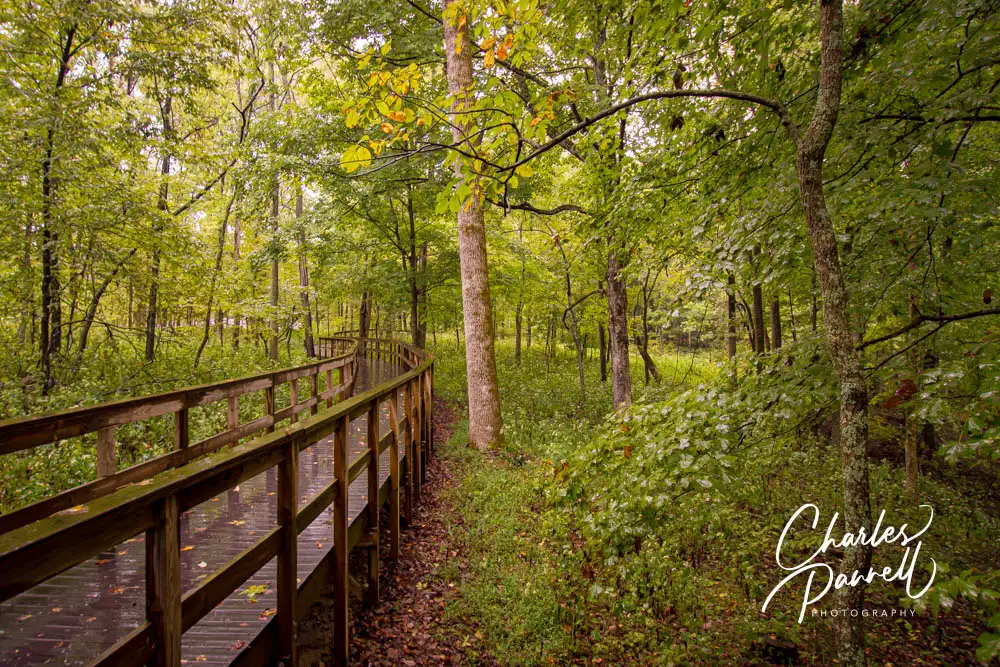
There are also a number of trails to include on a wheelchair-accessible Mammoth Cave itinerary. The Heritage Trail, which begins near the visitor center, tops the list. This three-quarter-mile trail starts off as a wide level path, before it transitions to a boardwalk that loops through the forest. There are several scenic stops along the way, including Sunset Point, which offers a panoramic view of the rolling hills of the Green River drainage basin.
There’s also a short 300-foot trail out to the Old Guides Cemetery from the Heritage Trail. The level trail leads over to a abandoned graveyard, where Stephen Bishop — a guide who died in 1857 — was laid to rest. Even if you can’t do the entire trail, it’s still a pleasant stroll, and there are plenty of benches to stop and take a break and enjoy the view along the way.
Echo River Spring Trail at Mammoth Cave National Park
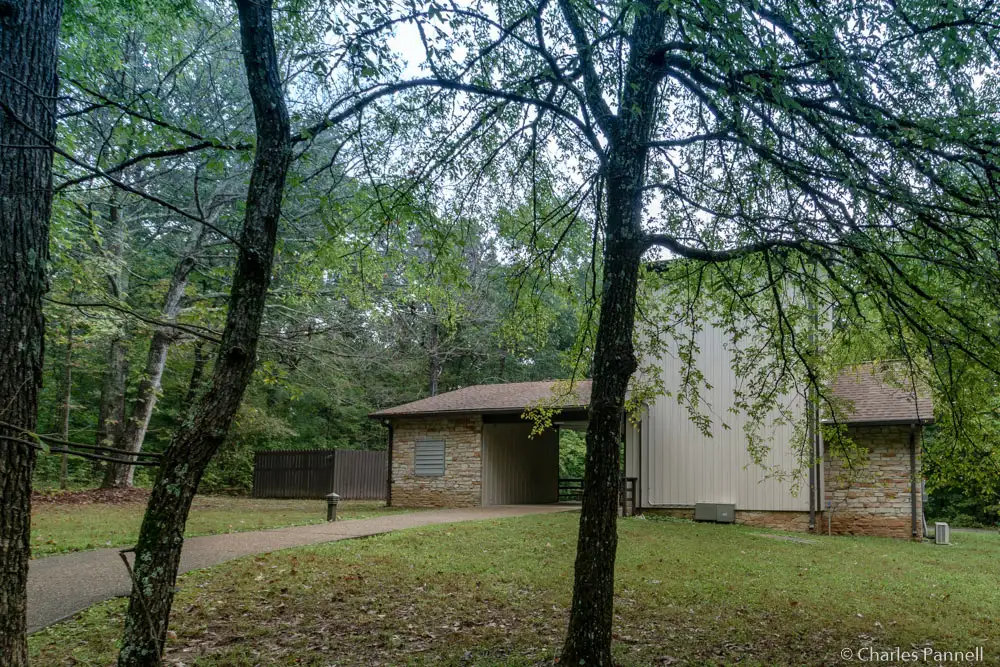
The Echo River Spring Trail is also a good choice for wheelchair-users and slow walkers. The trailhead is located a short drive from the visitor center, in the Green River Ferry parking lot. Accessible parking is available near the trailhead, and there’s also an accessible porta-potty and an accessible picnic table nearby. This .6-mile trail begins as a wide cement walkway, before it transitions to a short boardwalk through the forest. Along the way it passes Echo River Spring, before it loops back to the parking lot. It’s a pleasant stroll, and there are several overlooks with benches to sit back and enjoy the peaceful forest.
More Wheelchair-Accessible Trails!
Sloan’s Crossing Pond Walk at Mammoth Cave National Park
Another couple of wheelchair-accessible trails are located a little further from the visitor center. At the top of that list is Sloan’s Crossing Pond Walk. From the visitor center follow Mammoth Cave Parkway for about three miles, and look for the trailhead on the right, just past Brownsville Road.
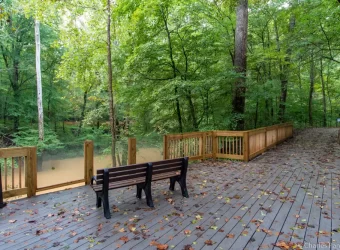
This .4-mile boardwalk that circles the shaded pond was completely renovated in 2023. It’s wide and level, and dotted with accessible viewing platforms, benches and interpretive plaques. Even if you can’t do the whole trail, there’s an excellent pond view from the first overlook, which is just steps from the parking area. As an added bonus there’s also an accessible picnic area there.
Last but certainly not least on our wheelchair-accessible Mammoth Cave National Park itinerary, is a stop at the Sand Cave Trail. Located near southeast park entrance, this short trail makes a good stop if you are heading towards Cave City. The .1-mile boardwalk winds through the forest and features low bumpers which open up the views for wheelchair-users. The trail terminates at an overlook, which has a view of the Sand Cave rescue site.
Floyd Collins, who was an avid cave explorer, was trapped at that site for 17 days in 1925. Unfortunately rescuers were not able to reach Collins before he succumbed from exposure. His body was later removed and interred near his family’s Crystal Cave home. Today the story of his life and death is detailed at the wayside exhibit near the Sand Cave Trail. Although it’s a sad — and somewhat gruesome — tale, the trail actually offers a pleasant stroll; and it’s a great way to top off a Mammoth Cave visit.
Barrier-Free Travel National Park Lodges for Wheelers and Slow Walkers
Located about 240 miles north of Anchorage and 120 miles south of Fairbanks, Denali National Park (www.nps.gov/dena/index.htm) is one of the crown jewels of the 49th State. One of Alaska’s eight national parks, Denali occupies just over six million acres of wild land bisected by a seasonal road. And if all that sounds a bit rugged for your taste, rest assured it is possible to plan a wheelchair-accessible Denali visit. Granted, scaling the 20,310 namesake mountain may not be on your to-do list; however the park also offers a nice selection of wheelchair-accessible trails, attractions and tours suitable for non-mountaineering visitors.
Getting There
A top concern about a wheelchair-accessible Denali National Park visit is actually getting to the park. Although there’s no airport there, Denali is easily accessible by rail and car. The peak visit time is from late May through early September, but that’s primarily because of the train schedules and the unpredictable weather. Still if you have a vehicle, and a bit of a sense of adventure, late spring and fall can also be beautiful times to enjoy Mother Nature’s majesty in Denali.
Alaska Railroad
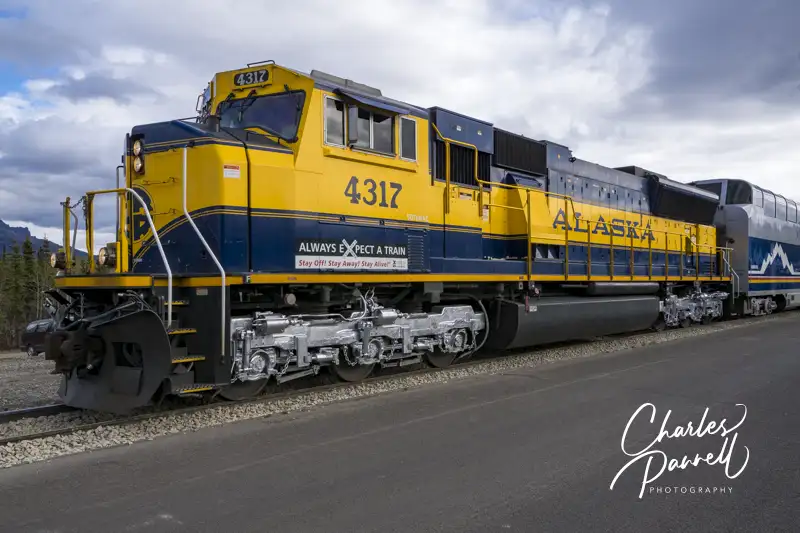
Daily train service is available from Anchorage and Fairbanks on Alaska Railroad’s (www.alaskarailroad.com) Denali Star during the summer months. The northbound train departs from Anchorage, and takes three hours to get to Denali. It stops in Wasilla and Talkeetna along the way. The southbound Fairbanks to Denali nonstop route takes four hours to get to Denali. And the good news is, all the stations include lift boarding, and the GoldStar Dome Cars feature elevator access, accessible seating and accessible lavatories downstairs. Additionally, most of the major cruise lines also offer cruise tour packages that include a Denali stop, on their own accessible railcars.
If you’d prefer to drive, accessible rental vans are available in Anchorage from Alaska Mobility (www.alaskamobility.com). After you pick up your van, just hop on The George Parks Highway (Highway 3). Also designated as a National Scenic Byway, this well traveled route runs between Fairbanks and Anchorage, and offers access to the park. The drive on this well maintained paved road is doable in a day from Anchorage; but plan for extra time as there’s no shortage of viewpoints and roadside stops along the way. And for information on places to stop en route, visit themilepost.com, an excellent Alaska road trip resource.
Wheelchair-Accessible Denali Shuttles
Accessible shuttle bus
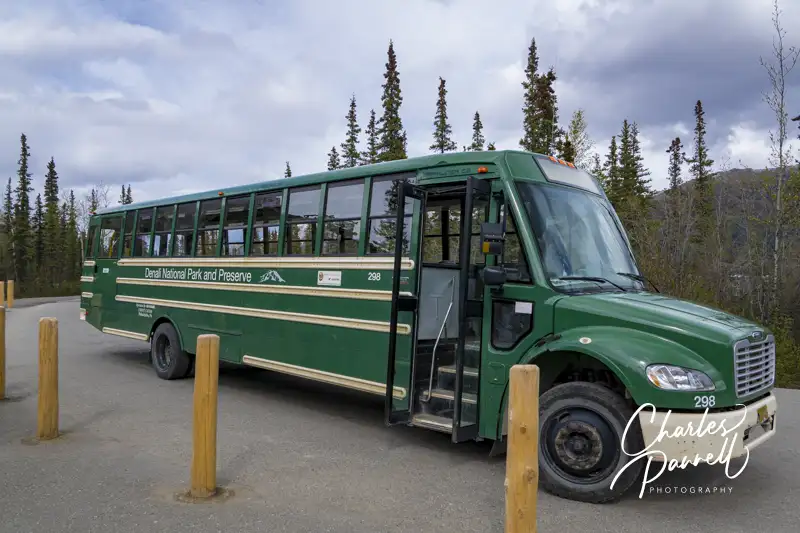
Another wheelchair-accessible Denali feature is the free accessible shuttle bus system. After the winter snow is cleared in late spring, the road into Denali National Park is open to private vehicles to the Savage River area. Transportation further into the park is only available from concessionaires, and it’s largely dependent on road conditions.
That said, the free shuttle bus system operates in the Riley River area near the park entrance, and in the Savage River area 15 miles down the road. And all of the shuttle buses and shuttle bus stops wheelchair-accessible. The Savage River Loop and the Riley Creek Loop shuttles run all day and stop at a number of trails and attractions along the way. The Sled Dog Demonstration Shuttle, which runs from the Denali Visitor Center to the sled dog kennels, departs 40 minutes prior to the demonstrations, and returns shortly after they are completed.
The shuttle bus schedule is available at www.nps.gov/dena/planyourvisit/courtesy-shuttle-buses.htm, and it’s also posted at all the shuttle stops. Printed schedules are not available in the park, and cell phone service is limited, so it’s best to save a screen shot of the schedule for planning purposes.
Riley Creek Hikes
McKinley Station Trail
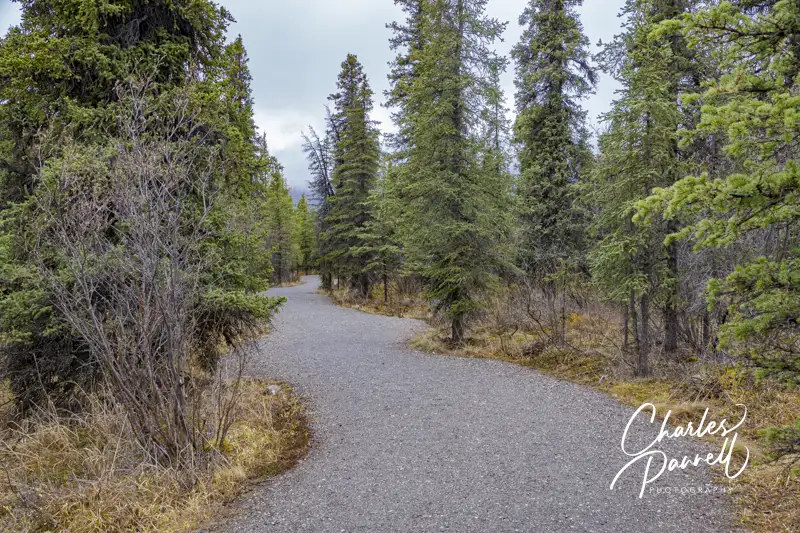
If you’d like to try a hike in the Riley Creek area, then hop on the shuttle, get off at the Riley Creek Campground and explore the McKinley Station Trail. This 1.6-mile hard-packed dirt trail runs from the campground to the visitor center. Although it’s not completely level, it offers an undulating — and accessible — route through the forest. There are also a few accessible boardwalk sections along the way. Be forewarned though — there’s a short cut to the visitor center about half-way along the route, but it goes straight uphill. Stick to the original trail for a gradual accessible path to the visitor center.
If you’d prefer a shorter walk, check out the Spruce Forest Loop, which is located right behind the visitor center. This .15-mile trail meanders through the forest, and offers visitors a good introduction to the vegetation and wildlife found in the park. It’s also very convenient, as you can just take the shuttle to the visitor center and hop on the trail from there.
Sled Dog Demonstration
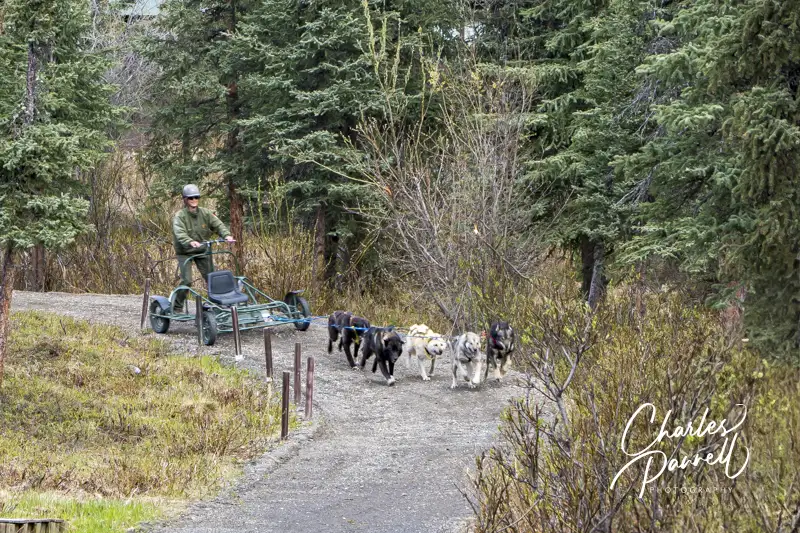
Sled dog demonstration
The Sled Dog Demonstration is another wheelchair-accessible Denali must-do. Although accessible shuttle service is available from the visitor center, you can also drive over to the kennels. There’s plenty of accessible parking available at the kennels; however it’s a longer jaunt from the parking lot than it is from the bus stop, so slow walkers might want to opt for the shuttle. It should also be noted that the Roadside Trail that runs from the visitor center to the kennels has a steep grade and numerous obstructions, and it’s definitely not an accessible option to get to the kennels.
The sled dog demonstration is fun to watch, as the team is hitched to a wheeled sled that speeds around a dirt track. Accessible seating for wheelchair-users and slow walkers is available in the front, so everyone is guaranteed a good view. A ranger is on hand to answer questions about the sled dogs — which are still used in the winter in the park — and folks can walk though the sled shed and around the kennels after the demonstration. Best of all, there’s no charge for this educational demonstration.
Savage River Hikes
Mountain Vista Trail
Last but not least, save some time to explore the Savage River area of the park, which offers a few accessible trails, and some great scenery. The shuttle stops at the Mountain Vista and Savage trailheads; and if Mount Denali is “out” (not obscured by cloud cover), you’ll get a great view from several vantage points along the way.
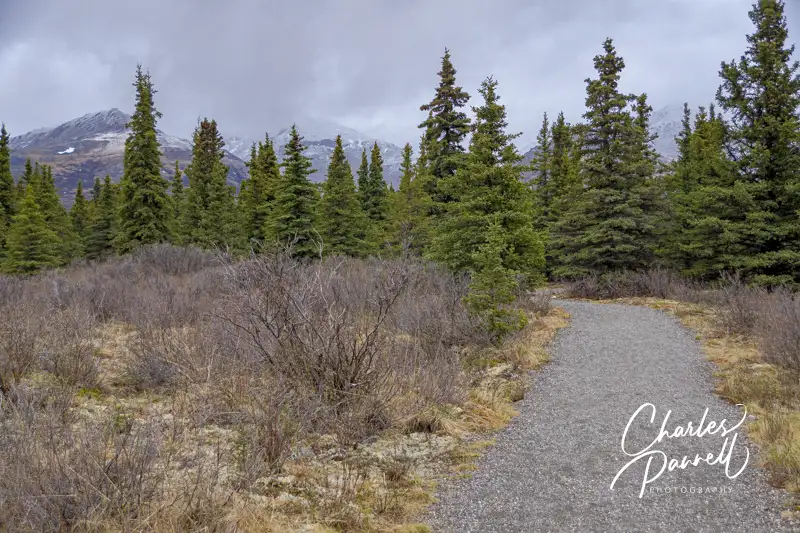
The Mountain Vista Trail is the most accessible trail in the area. This .6-mile hard-packed dirt trail begins near the shuttle stop, behind the accessible vault toilets and picnic shelter. It winds through the tundra, and offers several impressive views of the Alaska Range along the way. And you never know what wildlife you’ll run across, so keep your ryes peeled. Pack along a picnic lunch and enjoy it at one of the accessible tables at the picnic shelter, while you wait for the shuttle to Savage River.
Savage Cabin Trail
The shorter Savage Cabin Loop begins just to the left of the Savage River Campground shuttle bus stop, near the accessible vault toilet. The .3-mile loop is fairly level — with a few undulations — and is covered in compacted gravel. Midway along the route, you’ll find a historic cabin that was constructed by the Alaska Road Commission in 1924. It was originally used as a ranger cabin, but today it’s an interpretive site. Although the cabin isn’t accessible, you can still get a good glance at the inside from the doorway. And the docent programs are usually presented outside, in an accessible space. Even if there aren’t any docents at the cabin it still make a nice stop on this short jaunt.
Wheelchair-Accessible Denali Lodging Resource
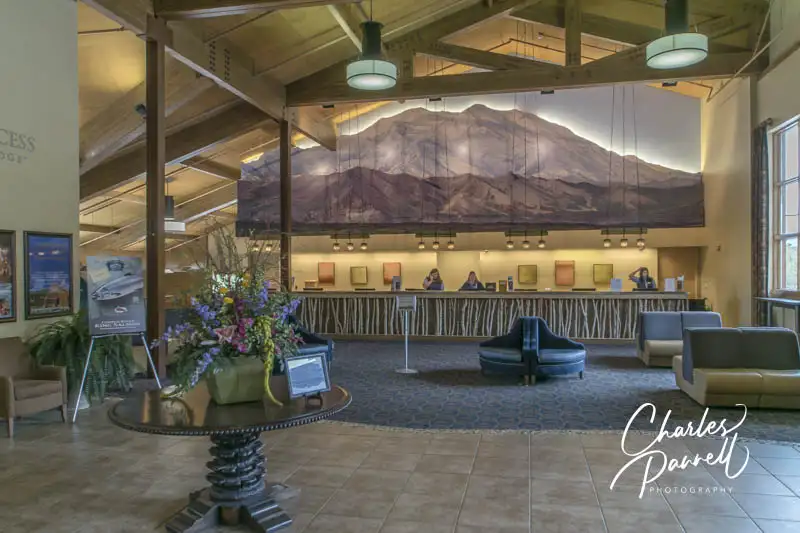
Lobby at the Denali Princess near Denali National Park
Of course, the final piece of the access puzzle in Denali National Park is lodging. There are no hotels or lodges in the park, but the campground has accessible spaces, and there are a number of accessible lodging choices nearby. Visit emerginghorizons.com/wheelchair-accessible-denali-lodging-options for more information.
Barrier-Free Travel Glacier, Yellowstone and Grand Teton National Parks for Wheelers and Slow Walkers
At first glance it appears that Northern California’s coastal redwoods are out of reach for wheelchair-users and slow walkers. After all, these majestic giants are located in some pretty remote areas. Granted, many redwood groves present some formidable access barriers; however these three coastal stands offer a nice selection of accessible trails, picnic areas and even camping cabins. So check out these wheelchair-accessible coastal redwoods on your next California road trip
Redwood National Park
Lost Man Creek trail in Redwood National Park
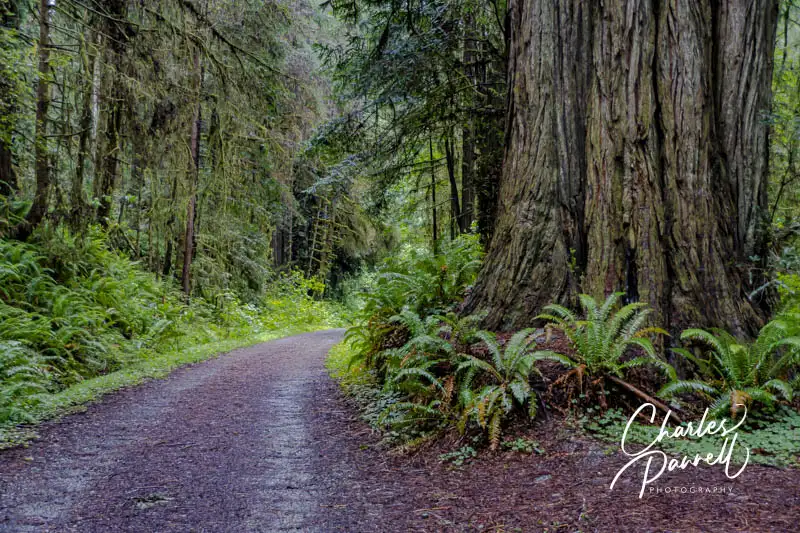
Located about 320 miles north of San Francisco, Redwood National Park (emerginghorizons.com/redwood-national-and-state-parks/) tops the list of the Golden State’s wheelchair-accessible coastal redwoods. Although the drive through the park offers some stunning windshield views, the Lost Man Creek Trail is definitely worth a stop. The trail is easy to find — just follow Highway 101 north for about five miles from Orick, and turn on Lost Man Creek Road. The trailhead is about a mile down the road.
There’s accessible parking near the trailhead, next to an accessible vault toilet, with level access over to the trail. This former logging road is wide, level and free of obstacles for the first half-mile. After that the grade becomes steeper and there are rocks and other obstacles along the way, until the last bastions of access are obliterated at the ¾-mile point. Still, it makes a lovely out-and-back one-mile hike.
Additionally, there’s an accessible picnic table on a level dirt pad near the trailhead, so bring along a lunch and enjoy your repast in the shaded grove. It’s the ideal way to top off this very accessible hike.
Trees of Mystery
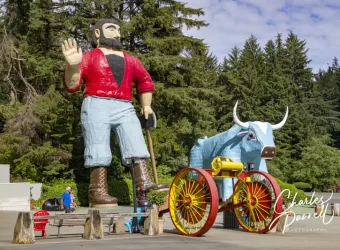
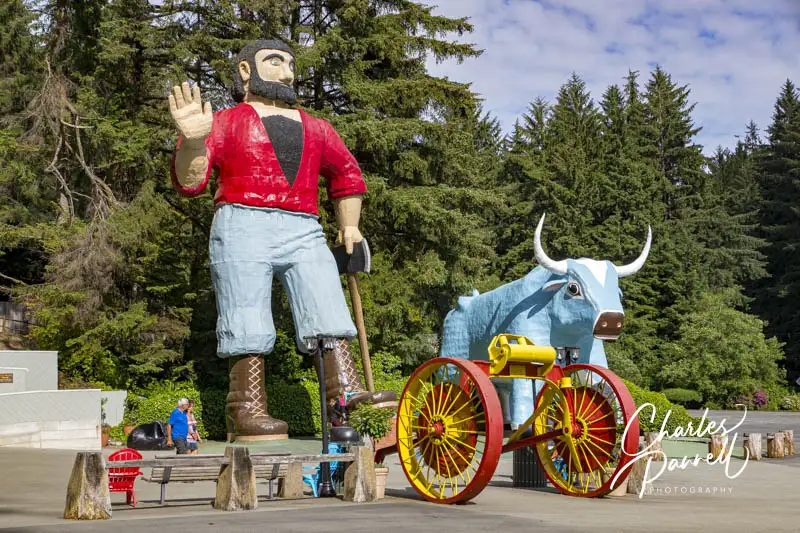
Paul Bunyan and Babe the Ox at the Trees of Mystery
The Trees of Mystery (www.treesofmystery.net) is another fun stop on Highway 101. It’s located about 25 miles north of the Lost Man Creek Trail, up in Klamath. You can’t miss it, as a giant statue of Paul Bunyan and Babe the Ox mark the site of the kitschy yet cool roadside attraction.
There’s plenty of accessible parking in the large lot, and barrier-free access over to the gift shop and ticket booth. The main attraction at this site is the Sky Trail, an aerial tramway which takes visitors on a scenic journey through the tree tops. There is a .8-mile trail that leads from the parking lot to the upper Sky Trail station; however it has a steep grade and a substantial cross slope in a few places, so it’s not a good option for wheelchair-users and slow walkers. Alternatively, accessible transportation in a lift-equipped vehicle to the upper Sky Trail station is available for anyone who can’t manage the trail.
There’s ramped access up to the upper Sky Trail station, with roll-on access and plenty of room for a wheelchair in the individual gondola cars. Be sure and stop for a view from the adjacent observation deck before you board though, as the bird’s eye view is magnificent. From the upper Sky Trail station, it’s a seven-minute 1570-foot descent back down to the lower station. And when you get there, treat yourself to some fudge or ice cream, and take time to browse through the gift shop. It’s a fun stop and definitely a unique way to experience the coastal redwoods.
Jedidiah Smith Redwoods State Park
The Simpson-Reed-Trail at Jedidiah Smith Redwoods State Park
Last but not least on the list of wheelchair-accessible coastal redwoods is Jedidiah Smith Redwoods State Park (www.parks.ca.gov/?page_id=413). This Northern California state park is located about 20 minutes north of Klamath along scenic Highway 199, near Crescent City.
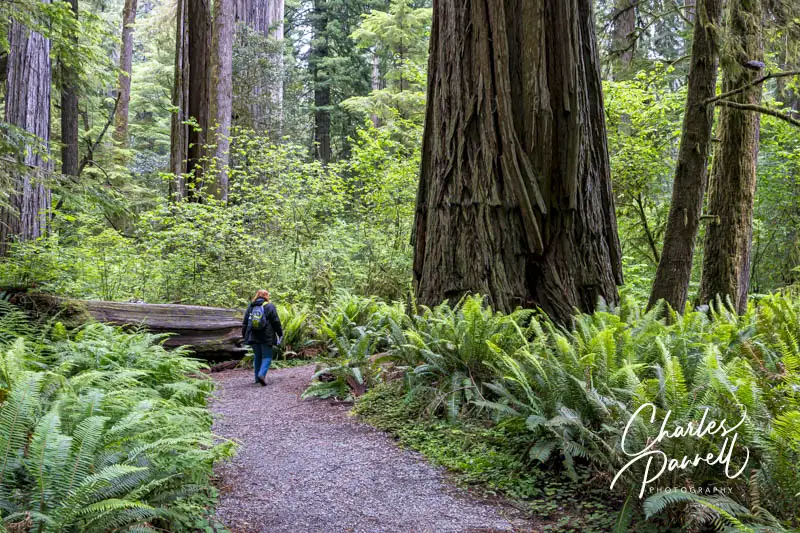
One of the highlights of this park is the accessible Simpson-Reed Discovery Trail, which can be found near the end of Walker Road, off of the main highway. Accessible parking is located next to the accessible vault toilet, near the trailhead. This one-mile loop, passes a number of fallen giants as it weaves through the forest and along the Smith River. It’s a very pleasant — and accessible — stroll.
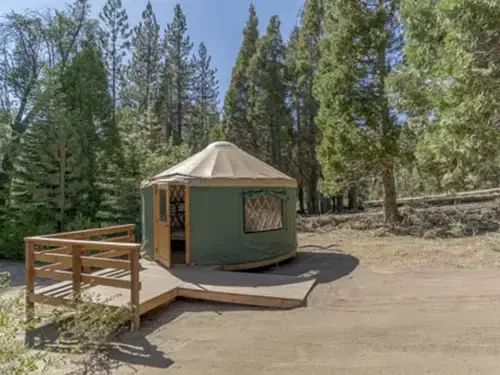
And if you’d like to spend the night in the park, there are four accessible camping cabins in the campground. Cabins 24, 26, 30 and 105 feature accessible parking with ramp access up to the front porch. They are each furnished with two bunk beds, with a single on top and a double on the bottom. Other cabin features include, electricity, lights, a heater, a raised grill and an accessible picnic table.
Guests need to bring their own bedding, and an air mattress or mattress pad is also recommended. There’s no water in the cabins, but an accessible showerhouse with a roll-in shower is located nearby. It’s a beautiful campground, and the perfect place to top off a visit to California’s wheelchair-accessible coastal redwoods.
Barrier-Free Travel California National Park Road Trips for Wheelchair-Users and Slow Walkers
is now available. And I’m happy to report that there’s been improved access in — and around — all three parks.
The second edition includes updated information on:
Accessible trails and attractions
Access upgrades, details and photos of all in-park lodges
Accessible lodging options in gateway communities
Barrier-free campgrounds
Accessible bus, snowcoach and boat tours
Accessible shuttles to and around the parks
Insider access tips
Fly-drive suggestions with accessible rental vehicle resources
National park discounted pass information
This national park access guide was a challenging title for me, as of course Charles and I made numerous treks to all three parks (which we always do); but this time we also had to work our travels around our roles as owner/builders while finishing the construction of our new home. To say that it was delicate balancing act is a huge understatement. And although I wrote a good deal of the book at a picnic table on-site while supervising the construction, I’m pleased to announce that we are now finally settled in our new abode. The other good news is now we are even closer to Glacier, Yellowstone and Grand Teton National Parks, so it will be easier to update future changes.
Access Improvements Galore!
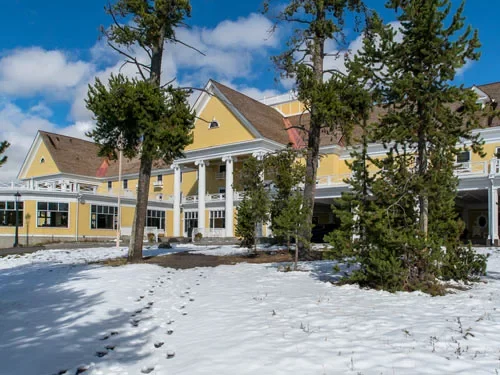
There are of course a lot of changes since the first edition of this national park access guide, but they are good changes. For example Mammoth Hot Springs Hotel renovated their main lodge rooms, and they now have five accessible guest rooms, including three with roll-in showers. And outside the Parks, the new William Bridger Cabins and Glacier Cabin Village both have nice accessible units with roll-in showers.
The in-park concessionaires are doing a great job too, from Xanterra’s accessible Glacier Red Bus Tours to the accessible boat tours down in Grand Teton offered by Jenny Lake Boating. Access is really improving thanks to their efforts.
So grab a copy of my new edition and plan an accessible road trip this year. And don’t forget to get your required entrance permit for Glacier National Park. Plan ahead to avoid disappointment!
Located in Southwestern Utah, Zion National Park was the Beehive State’s first national park. Although a good percentage of the park is designated as wilderness, there are many developed areas which can be visited with a minimal effort. At the top of the list is Zion Canyon, a 15-mile drive bordered by spectacular sandstone cliffs. Over on the west side of the park, Kolob Canyons offers a more bucolic view of the Colorado Plateau; while the eastern Zion-Mt. Carmel Highway connects Zion with Bryce Canyon and the Grand Canyon. No matter where you look, there’s no shortage of breathtaking scenery in this national park.
Insider Tips
Don’t miss the free Ride with a Ranger Tours that are offered twice daily on the park shuttle buses. These two-hour narrated tours include several stops along the Zion Canyon Scenic Drive. Advance reservations are required, and they can be made up to three days in advance. And the good news is, all park shuttle buses are lift-equipped, so everyone can enjoy these tours.
If you want to dodge the crowds, then explore the five-mile long Kolob Canyons Scenic Byway, located in the northwestern corner of the park. This scenic route climbs 1,000 feet in elevation and offers great views of the red Navajo sandstone canyon walls along the way. There are a number of paved pullouts on the route, and although none of them are striped, they are strategically placed so you can get good windshield views.
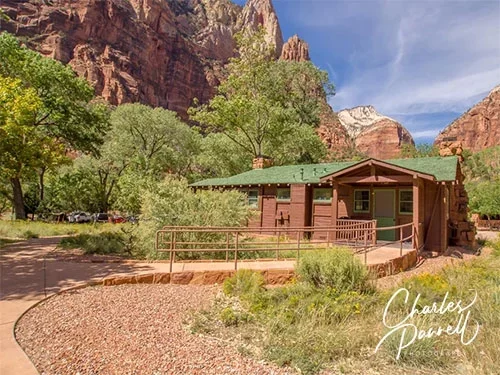
For a very accessible place to rest your head, consider staying in cabin 529 at Zion Lodge. This historic cabin dates back to the 1920s, and it includes a queen-sized bed and a bathroom with a roll-in shower. As an added bonus, this lodge is one of the most scenic national park properties around, as it’s surrounded by Zion Canyon.

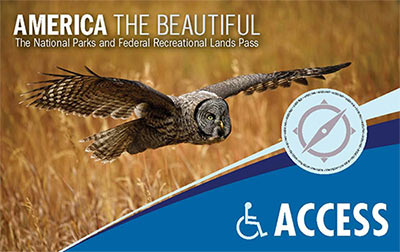 If you’d like to save a few bucks on your next national park visit, then pick up one of these discount passes at any national park entrance station. They all provide free admission to the passholder and all passengers in the same vehicle, but they each have different eligibility criteria.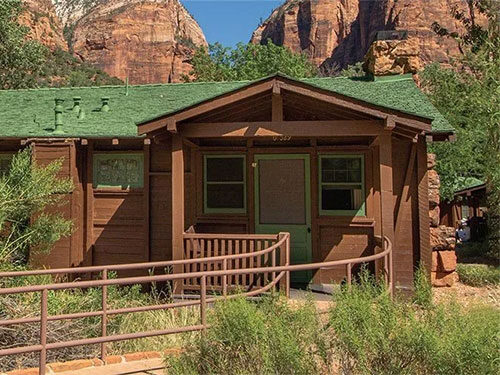














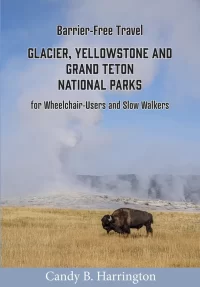
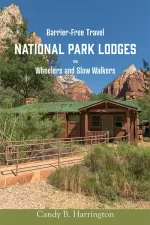
 I’m thrilled to announce that my newest national park access guide was just released. The second edition of Barrier-Free Travel; Glacier, Yellowstone and Grand Teton National Parks for Wheelchair-Users and Slow Walkers (